Cambodia can be strategic agri-investment gateway for Canada’s Indo-Pacific vision
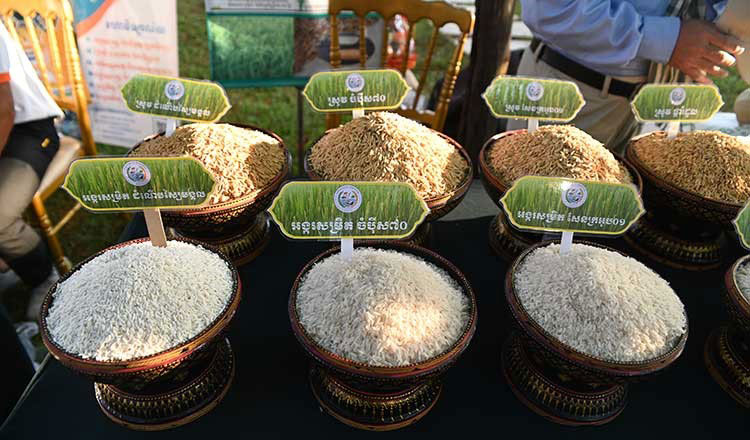 [Cambodian agricultural products. KT/Pann Rachana]
[Opinion]
We recently witnessed what a geopolitical flare-up can do. Cambodia’s border disputes with Thailand in mid- 2025 were not just political incidents; they served as an economic stress test, challenging our vital economic arteries. Overnight, nearly a million of Cambodian migrant workers in Thailand were forced to go home. At the same time, the border closure exposed our deep dependence on imported necessities. Our reliance on Thailand for substantial volumes of food and non-food related FMCG (fast-moving consumer goods). This crisis illuminated the pivotal turning point that we cannot rely on neighbours for finished goods derived from our own raw materials. Now is the critical time for us to accelerate our domestic production and generate high-standards in agri-processing to achieve true self-sufficiency.
But in this crisis, a crucial clarity emerged. The government’s rapid commitment to job forums and vocational re-skilling shows exactly what we need is immediate, sustainable, productive employment. This is where partners like Canada come in. For long-term international investors, this moment is a demand-driven invitation. By channelling Canadian capital and advanced expertise into processing facilities that align with our national goals, we can leverage our newly motivated, returning workforce. This partnership isn’t just about short-term relief, it’s about constructing a formidable foundation for durable economic resilience. The Cambodian government’s long-term national vision, guided by the Pentagonal Strategy, is well positioned to transform our agricultural sector from a supplier of basic raw commodities into an exporter of high-value, processed goods. Right now, two critical missing links constrain this transformation, and they align perfectly with Canada’s strengths.
First, while we actively target strategic commodities including rice, cashews, cassava, and mangoes, However, our limited application of sanitary and phyto-sanitary (SPS) measures remains a critical barrier. Cambodia’s high-quality products are often absent from the premium global markets due to basic hygiene and contamination concerns. This is where Canadian expertise becomes invaluable. By investing in and operating Canadian-standard agro-processing facilities, and transferring world-class food safety regulation expertise, Canada allows us to leapfrog over competitors. We stop exporting geopolitical risk in the form of raw commodities and start exporting certified, high-value finished goods.
Second, climate change is a harsh reality for our region. Our long-term productivity is constantly threatened, demanding urgent investment in robust, resilient infrastructure. This means rehabilitating irrigation systems, upgrading water management, and developing climate-resilient road networks with improved drainage and bioengineering. Simple but crucial technologies, like on-farm drip irrigation for our high-value mango crops, are essential for securing our yields against changing rain patterns. Canada, with its global leadership in sustainable agriculture and R&D, is the ideal partner to fund and implement these crucial climate focused agri-solutions. We see Canada’s Indo-Pacific Strategy (IPS) not just as a strategic initiative, but as a commitment, backed by a $500 Billion Investment Vision at the ASEAN Summit.
However, to truly earn the title of an agriculture and food superpower, Canada must move beyond merely exporting its own commodities. Its true prowess lies in driving technological progress and deploying its intellectual property (IP) within the region. We know Canadian investment interest already includes agro-food processing and machinery here. By funding and implementing Canadian-standard climate-smart solutions—precision irrigation and certified processing equipment—in our market, Canada doesn’t just make a transactional deal. It establishes a high-visibility, successful proof-of-concept for its entire ASEAN strategy. Deploying this technology in a nation highly vulnerable to climate shocks strengthens Canada’s position as a solution-oriented partner, distinguishing it from competitors and building durable diplomatic influence across the Indo-Pacific.
Integrating Canadian capital and technology into our agri-food sector positions our Kingdom as a stable, certified supply node, fundamentally accelerating Canada’s ability to act as a regional food security superpower.
The volatility exposed by the 2025 border conflict emphasises the imperative of diversifying our logistics away from a primary dependence on the Southern Economic Corridor. We must enhance port capacity in Sihanoukville and strengthen links with Vietnam via the Bavet-Moc Bai corridor. This is where Canadian institutional strength can shine. Large Canadian pension funds, which already utilise Singapore as a gateway for infrastructure investment across ASEAN, should be mobilised to finance the development of these alternative eastern and southern corridors.
This strategic investment in diversified logistical infrastructure secures Canada’s own regional supply chain against future bilateral political instability. When this infrastructure is combined with our efforts to re-skill the 900,000 returning workers for stable, high-value employment within these Canadian- backed processing facilities, the resulting supply node becomes structurally resilient. This stability validates Canada’s IPS goal of building regional resilience and firmly positions Cambodia as a key, dependable food security provider for the Mekong subregion, substantially elevating Canada’s profile as a stabilising and strategic partner in Southeast Asia.
Our urgent need for economic stability and Canada’s strategic drive for Indo-Pacific diversification are perfectly aligned. We need Canadian institutional financing for climate-resilient infrastructure, the farm roads and water systems paired immediately with robust technical and vocational education and training (TVET) programmes. These training initiatives must be explicitly designed to reintegrate our returning workforce into the new, certified food safety and agro-processing value chains that Canadian investment establishes. By acting decisively, Canada not only secures a resilient regional supply base but cements its reputation as a committed, solution-oriented partner, transforming Cambodia’s moment of vulnerability into a powerful engine for regional food security.
The author is the Director, Chair of Investment and Trade Committee, Canadian Chamber of Commerce in Cambodia.
-Khmer Times-