Why Do Many Thais Seem to Support Conflict Over Peace?
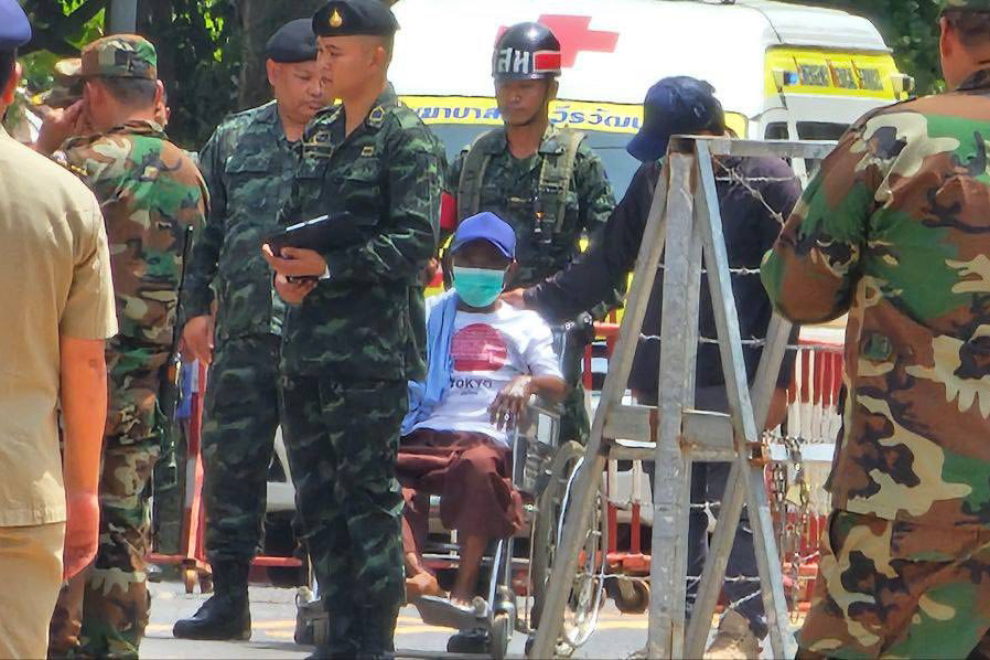 Thai soldiers return an injured Cambodian soldier who was captured the day after a ceasefire was declared. Months later, 18 men remain in Thai custody. TVK
-Opinion-
Tensions between Thailand and Cambodia have resurfaced in recent months, bringing old border disputes back into the spotlight. What’s especially worrying is how many Thais across social media, public forums and even mainstream news outlets seem to support confrontation over peaceful resolution. Rather than calling for dialogue, many urge their leaders to take a tougher, more aggressive approach.
Why is peace being rejected?
A large part of the answer lies in national pride. Many Thais view their country as wealthier, stronger and more advanced than Cambodia. This sense of superiority fuels the belief that Thailand has the right to reclaim disputed territory or historic sites. But such thinking ignores Cambodia’s sovereignty and undermines international law.
This was evident in the response to the capture of 18 Cambodian soldiers, even after a ceasefire had been agreed. Rather than questioning the violation, many in Thailand praised the act as patriotic. Peace agreements took a back seat to nationalistic pride.
Calls for diplomacy from the international community have been largely dismissed. Even figures like US President Donald Trump, who has publicly advocated for a ceasefire and peaceful negotiations, have received little support in Thai public discourse. Other countries urging restraint and cooperation are often ignored or seen as outsiders interfering in regional affairs.
In fact, some Thai media and commentators continue to mock Cambodia, using insulting terms like “beggar” or “slave nation”. This kind of language is not only offensive but dangerous. It deepens division, stirs resentment and makes reconciliation harder.
Underlying all this is a belief among many Thais that their country belongs among global superpowers on par with the US, China, Russia or Israel. This inflated self-image creates a dangerous overconfidence, especially in how Thailand treats smaller neighbours like Cambodia. But true leadership isn’t just about strength, it’s about humility, fairness and responsibility.
Meanwhile, much of the international media based in Thailand has remained silent. These outlets should be speaking truth to power, not turning a blind eye to growing nationalism and biased narratives.
Peace is not weakness. Respecting a neighbour is not surrender. Real leadership means choosing dialogue over domination, and cooperation over conflict.
If Thailand hopes to be seen not only as powerful but as responsible, it must confront these dangerous attitudes at home. Cambodia, like any nation, deserves respect, dignity and peace.
In the end, the choice between war and peace isn’t just up to governments. Ordinary people must speak up too. The more we raise our voices for peace, the harder it becomes for anyone to justify war.
Neang Sopheap is a Phnom Penh-based analyst. The views and opinions expressed are his own.
-The Phnom Penh Post-