Guns go silent, but peace still eludes Cambodia and Thailand
 Guns go silent, but peace still eludes Cambodia and Thailand
Synopsis: Despite global praise for the Cambodia-Thailand ceasefire, experts say more diplomacy needed to restore trust.
As international leaders and diplomats congratulate Cambodia for the ceasefire with Thailand, experts say stepped up diplomatic efforts are needed to turn the calm at the border into lasting peace.
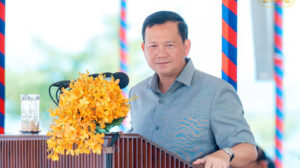
In a social media statement on Monday night, Prime Minister Hun Manet revealed that he received a personal phone call from US President Donald Trump shortly after returning to Cambodia from Malaysia, where he and his Thai counterpart reached an agreement on an unconditional ceasefire.
According to a Facebook message post by Mr Hun Manet an hour before the ceasefire came into effect at midnight, Trump called to congratulate him on the success of the emergency truce negotiations, which were facilitated by Malaysian Prime Minister Anwar Ibrahim and supported by major international stakeholders.
“President Trump considers this a crucial issue and personally monitored the developments,” Mr Hun Manet said in the post. Trump praised the swift diplomatic breakthrough and reaffirmed the United States’ commitment to promoting peace and stability in the region, Mr Hun Manet added.
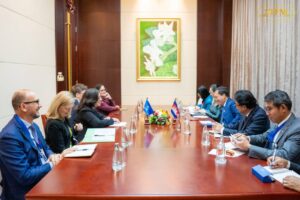
The Cambodian premier also praised Trump for playing a key role in initiating and encouraging the ceasefire dialogue. Washington, under Trump’s directive, co-organised the special meeting held in Putrajaya earlier in the day, which ended five days of escalating military clashes along the Cambodia-Thailand border.
“To ensure the full and lasting implementation of the ceasefire agreement, there must be a clear and effective monitoring mechanism,” the premier wrote, citing a point of consensus reached during the trilateral talks. In response, Trump agreed to have the United States monitor the implementation process alongside Malaysia, which will oversee the mechanism’s coordination.
In a message posted on his Truth social media, Trump confirmed he spoke to the acting prime minister of Thailand and the prime minister of Cambodia.
“I am pleased to announce that, after the involvement of President Donald J. Trump, both countries have reached a CEASEFIRE and PEACE,” he wrote.
“Congratulations to all! By ending this war, we have saved thousands of lives. I have instructed my trade team to restart negotiations on trade. I have now ended many wars in just six months. I am proud to be the President of PEACE!”
Meanwhile, Malaysia, in its capacity as the ASEAN Chair, has showed its readiness to coordinate the formation of a monitoring team to ensure the implementation of the ceasefire. It will consult other member states to participate in the observation mission, which reflects a strong regional commitment to supporting genuine peace.
“This peaceful resolution reflects the true spirit of the ASEAN Charter, which is rooted in mutual respect, dialogue, and the rejection of violence in favour of humanity,” Malaysian Prime Minister Anwar Ibrahim said on X.
Just before and shortly after the ceasefire came into effect yesterday, country leaders and diplomats, including those from France, the UK, Germany, Japan, and Indonesia, congratulated Cambodia.
“The Federal Foreign Office has welcomed the ceasefire agreement between Cambodia and Thailand as an important step towards peace,” the German Embassy wrote in a post on its Facebook page—adding that the German government is optimistic that complete peace and normalcy will return to both sides.
“We are hopeful that the ceasefire would pave the way towards normalcy in Cambodia-Thai relations,” Indonesian Ambassador to Cambodia Santo Darmosumarto told Khmer Times yesterday.
“I am convinced that the rest of Southeast Asia is keen to support efforts towards this goal.”
However, experts point out that a ceasefire is not equal to the pre-clash peace enjoyed by the two neighbours.
Pou Sothirak, a retired academic and distinguished senior advisor at the Cambodia Centre for Regional Studies, said that while the ceasefire is a good start, more diplomatic efforts are needed to restore the trust and fix relations between Cambodia and Thailand.
He said ASEAN has to exercise intense effort in pushing for diplomatic initiatives to ensure that Cambodian and Thai leaders agree to talk without any more bloodshed.
“Once a bullet is fired, it cannot turn back, and it may hurt someone,” Sothirak said. “Therefore, both countries have to look forward and focus on repairing their relationship.”
The US and China, he added, can continue to contribute to future diplomatic dialogue, given their major influence in the region.
Documentation Centre of Cambodia Director Youk Chhang suggested that Cambodia use military diplomacy and history to neutralise Thailand’s aggression, which is rooted in politics.
“Military diplomacy is the military’s use of strategic engagements and diplomacy to build partnerships and opportunities for coordination and cooperation across all domains and dimensions of peacekeeping, peacebuilding, and warfare,” he said.
“One dimension of war is past military conflicts because history shapes present and future battlefield conditions and how military forces, both friendly and enemy, view each other.”
Military diplomacy, Youk added, can operate as a bridge to learn from and engage allies, partners, and potential adversaries on military history.
“Leaders can combine military diplomacy and military history to create strategic opportunities in operational environments and strategic insights into potential operational scenarios,” he explained.
According to Youk, the combination of military history and military diplomacy creates new knowledge, foresight, and partner building at the individual, unit, and national levels.
“When Cambodia and Thailand agreed to stop fighting after Malaysia peace talks, and we now can look back, we can see clearly that it took place because of a real intention from one over the other rather than a misunderstanding between the two,” he added.