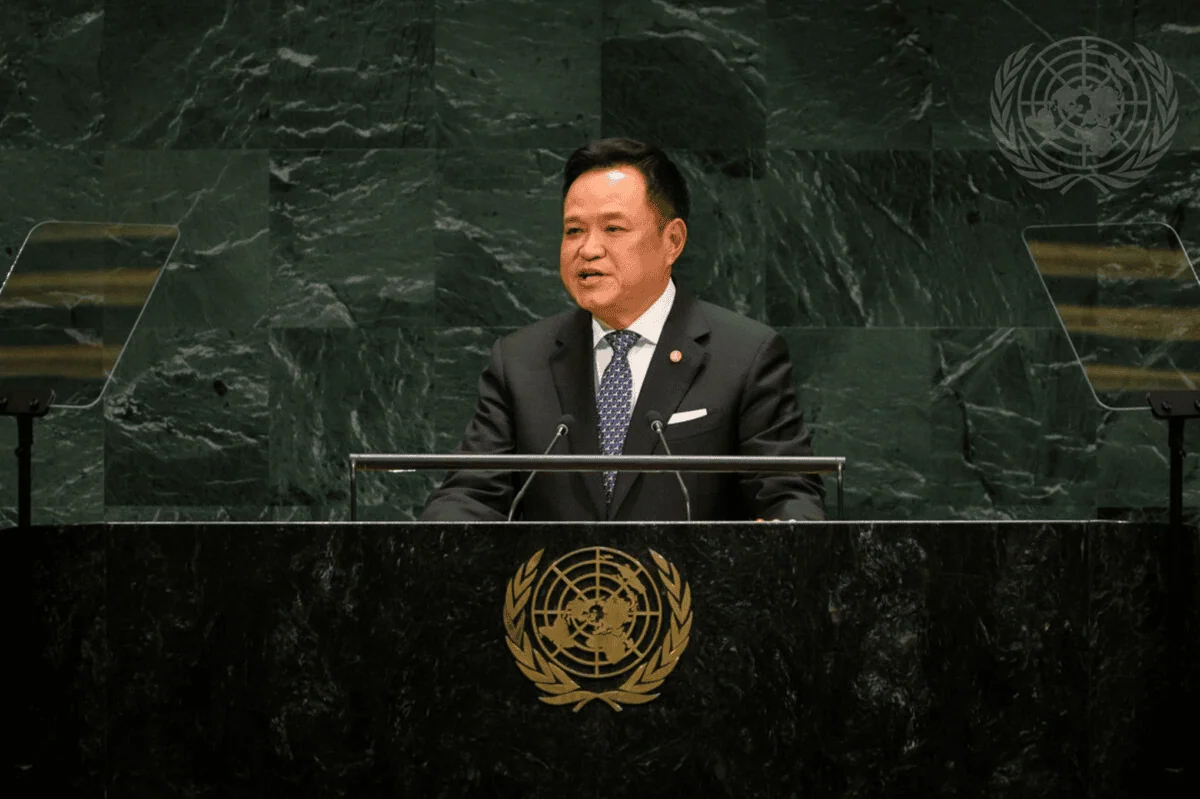
Speaking at the UN in New York on September 24, Anutin said he had spoken with Cambodian Prime Minister Hun Manet in May and that the two sides had agreed that border issues should be resolved through bilateral mechanisms. However, he claimed that Cambodia had instead initiated compulsory conciliation proceedings under the UNCLOS mechanism.
“Nevertheless, Thailand has engaged in good faith, but our position is clear: this process concerns only the maritime boundary. At the same time, Cambodia must work with us to strengthen security along our border, including through concrete cooperation to combat online scams and demining,” he said.
“Our communities will not be safe unless we take decisive action on these issues. Ultimately, our shared border must be a place of shared prosperity, not a place where the scars of conflict are remembered. I affirm that Thailand has never sought conflict, but peace can only be achieved as long as we work together sincerely, and it requires sincere efforts from our neighbour, Cambodia,” he added.
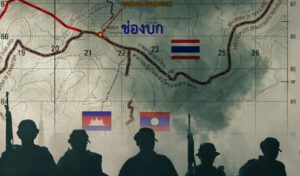
Anutin’s remarks appeared contradictory, as Cambodia has repeatedly sought negotiations with Thailand to resolve land border issues since the two countries signed their second ceasefire agreement on December 27, 2025.
Manet has made negotiations a priority, saying that even if there were only a 1 per cent chance of reaching peace, he would continue pursuing that path. To date, Cambodia has repeatedly asked Thailand to commit its Joint Boundary Commission (JBC) team to working together, but no progress has been made.
Geopolitical analyst Nhel Rattha described Anutin’s remarks at the UN as “a diplomatic tactic and the creation of a political narrative to control the situation and gain political benefits both domestically and internationally”.
He said Anutin’s remarks created a spectacle of “portraying himself as strong and having the advantage”, suggesting that Thailand could set the conditions. He described this as psychological warfare aimed at showing the public that Thailand held the cards and was in control of the negotiating table.
He said the remarks also amounted to putting the “ball in Cambodia’s court”, a tactic to divert attention and create an image that Cambodia was the party that had not prepared itself or was responsible for delays, while Thailand appeared constantly ready to negotiate.
Rattha also said Anutin’s remarks were intended to serve domestic political interests.
“Speaking to Thai people abroad is a message aimed at increasing domestic political popularity in Thailand, attracting nationalists and the military, and showing that the Thai government has a strong position and will not be weak on border or maritime resource issues with Cambodia,” Ratha suggested.
“This is diplomatic rhetoric aimed simply at appeasing Thai nationalists,” he added.
Similarly, Kin Phea, director of the Institute of International Relations at the Royal Academy of Cambodia, said Anutin’s remarks were merely rhetoric intended to make the international community believe that Thailand had showed goodwill in resolving the border dispute.
In reality, he noted, the Thai military continues to occupy Cambodian territory and is breaching international law through the destruction and seizure of Cambodian people’s homes, farmland and other property, violating the terms of the ceasefire.
“If Thailand truly had the will to resolve the border issue peacefully, it would send its JBC working team without delay so that technical teams could carry out their work, rather than illegally occupying Cambodian territory with military forces,” Phea said.
“Thailand has no goodwill. What they say is simply to make themselves look good so that the international community thinks Thailand is a civilised state and a state that respects international law. But in reality, Thailand is a barbaric, robber state,” he added.