Aggression with Human Consequences: Why Cambodia Is Right to Demand ASEAN Action
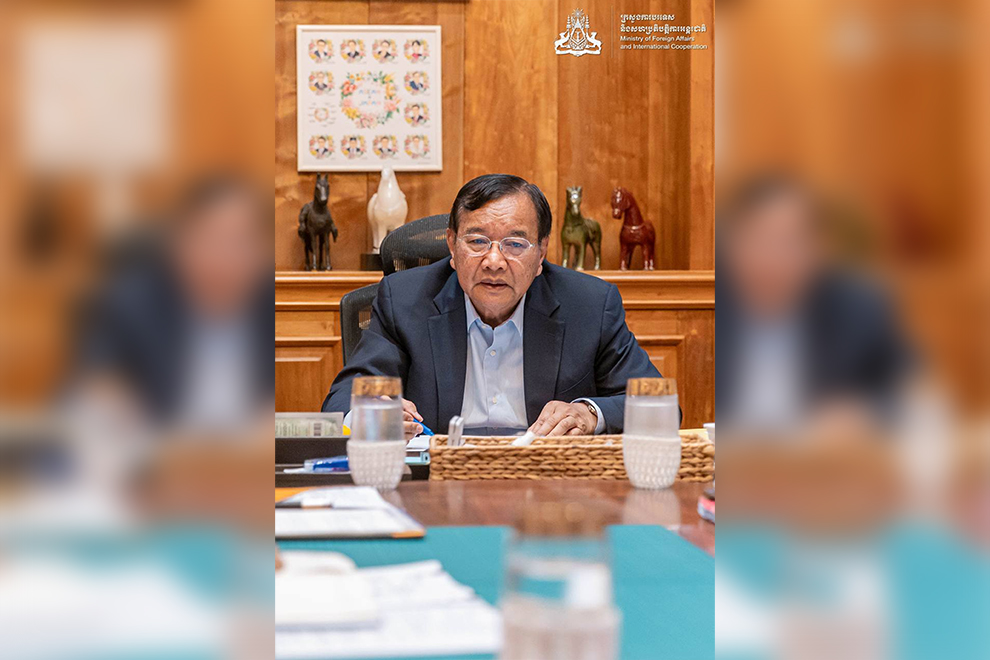 Foreign minister Prak Sokhonn will attend the ASEAN Foreign Ministers' meeting on December 22. Foreign ministry
#opinion
Cambodia’s participation in the Special ASEAN Foreign Ministers’ Meeting on the current situation between Cambodia and Thailand isn’t just a routine diplomatic exercise. It’s an urgent and legally sound response to a situation that’s gone beyond political disagreement and into the realm of humanitarian crisis.
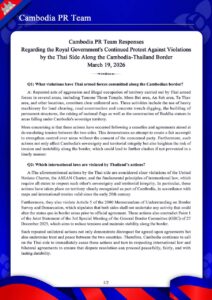
For over two weeks, military actions attributed to Thailand have directly harmed Cambodian civilians and their infrastructure. Residential areas, villages and essential facilities have been damaged or ruined, forcing families to flee in fear and uncertainty. As of 21st December, over 520,000 Cambodians have been displaced, including a significant proportion of women and children. This level of displacement isn’t incidental — it’s the foreseeable consequence of military conduct that shows scant regard for civilian protection.
International law is crystal clear. The UN Charter prohibits the use of force against another state’s territorial integrity. Beyond that, international humanitarian law, including the core principles of distinction and proportionality, requires parties to a conflict to protect civilians and civilian objects. When civilian homes and infrastructure are hit, and when mass displacement follows, these legal obligations simply aren’t being met. Such acts cannot be excused by political narratives or dismissed as isolated incidents.
Cambodia’s response has been measured and lawful. By sending Minister of Foreign Affairs Prak Sokhonn to the Special ASEAN Foreign Ministers’ Meeting, Cambodia has chosen the path explicitly set out by Article 33 of the UN Charter — the peaceful settlement of disputes through dialogue, mediation and regional mechanisms. This shows restraint, even as Cambodian civilians bear the human cost of instability.
The situation now puts ASEAN’s credibility to the test. The ASEAN Charter commits all member states to non-aggression, respect for sovereignty, and peaceful dispute resolution. If an ASEAN member can suffer widespread civilian displacement and damage to civilian infrastructure without a firm regional response, then ASEAN risks gutting its own principles. Silence or equivocation wouldn’t preserve neutrality; it would undermine the very foundations of regional order.
De-escalation must be substantive, not just talk. It requires the immediate halt of actions that endanger civilians and force mass displacement. Responsibility for de-escalation lies primarily with those whose conduct created the humanitarian consequences in the first place.
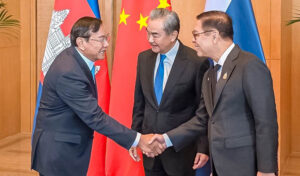
Cambodia’s bilateral engagements with ASEAN counterparts on the sidelines of the meeting further highlight its good faith. Confidence-building measures and diplomacy remain essential — but they cannot substitute for compliance with international law. Dialogue conducted whilst civilian harm is ongoing is neither credible nor sustainable.
The implications stretch beyond Southeast Asia. Normalising harm to civilians within ASEAN weakens the global rules-based order. Cambodia rejects that precedent. It seeks peace grounded in law, dialogue anchored in respect and ASEAN unity that protects civilians rather than looks away.
This isn’t escalation. It’s accountability — and Cambodia is right to demand it.
Roth Santepheap is a geopolitical analyst based in Phnom Penh. The views and opinions expressed are his own.
-The Phnom Penh Post-