I am writing as a Cambodian citizen to express my concern about the way Khaosod English recently presented a US Department of State travel advisory for Cambodia, particularly under the headline:
“Travelling to Cambodia? The US has a warning: If you’re robbed, don’t resist.”
The underlying security advice is legitimate. The US state department’s current advisory, issued September 15, places Cambodia at Level 2 — “Exercise Increased Caution” — and advises travellers in Phnom Penh not to physically resist a robbery because doing so can result in injury.
There is nothing unreasonable about that advice. In fact, it is common-sense personal-security guidance.
Regional security officers and other security professionals routinely emphasise a basic principle of risk reduction: when confronted by a robbery, protecting one’s life should take priority over protecting property.
A phone can be replaced. A bag can be replaced. Property can be replaced. A human life cannot.
This is standard security practice
It is also important to understand that this type of security guidance is not something directed uniquely at Cambodia.
The US has long maintained security policies and procedures for its personnel and citizens around the world. US government staff newly arriving at overseas posts routinely receive security briefings concerning the local security environment, potential threats, crime, emergency procedures and appropriate personal-security precautions.
These briefings are part of normal professional security practice. They are designed to help US personnel understand and manage risks in their new location — not to characterise the people or country where they are serving.
The same principle applies to Americans traveling abroad. The US government provides security and travel guidance for its citizens in countries throughout the world, including Thailand, Cambodia and other countries in the region.
Such guidance can identify particular crimes, dangerous locations, political tensions, natural disasters, health concerns or other risks while still recognising that the country as a whole cannot be defined by those risks.
That distinction is important. A security briefing is a tool for risk management. It is not a verdict on a country.
Security advice should not become a national stereotype
I therefore question whether the Khaosod English headline gives readers sufficient context.
The words “If you’re robbed, don’t resist” are striking and attention-grabbing. But when placed prominently in a headline, they can leave readers unfamiliar with Cambodia with an impression that robbery is somehow the defining story of the country.
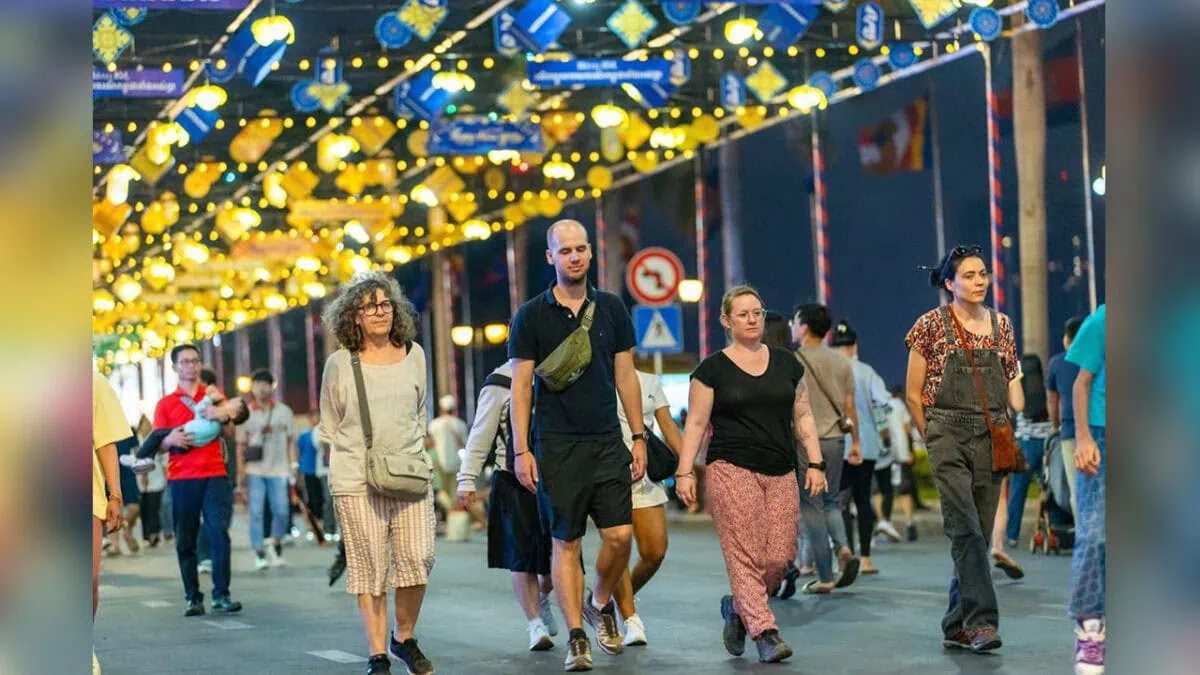
Cambodia certainly has crime. Phone snatching, bag theft and other opportunistic crimes occur, particularly in crowded urban areas. These problems deserve serious attention from Cambodian authorities, and visitors should take reasonable precautions.
But crime is not a Cambodian characteristic.
Thailand also faces different forms of crime. So do countries across Southeast Asia and around the world. The appropriate lesson is not to compare one nationality against another, but to recognise that personal-security precautions are relevant wherever travellers may encounter crime.
Crime has no nationality.
A Cambodian criminal does not represent Cambodia.
A Thai criminal does not represent Thailand.
A criminal network does not represent an entire nationality.
This is particularly important for neighbouring nations like Cambodia and Thailand. Our peoples have long-standing connections, and responsible journalism should avoid encouraging ordinary people to judge an entire country or population through the actions of criminals.
The issue is framing
The issue, therefore, is not whether Khaosod English should report crime in Cambodia. Of course it should.
The issue is how that information is framed.
A security advisory has one purpose: to help travellers recognise risks and protect themselves.
Journalism has another: to inform readers accurately, fairly and with context.
Those purposes should complement each other.
If Khaosod English wants to report Cambodian crime, it should report it. If it wants to investigate criminal networks, it should investigate them. If it wants to warn travellers, it should provide practical safety information.
But there should also be a clear distinction between a security precaution and a characterisation of an entire country.
There is a meaningful difference between telling travellers: “Protect your belongings and do not physically resist a robbery,” and leaving readers with the impression: “Cambodia is a country defined by robbery and danger”.
The first is responsible security advice.
The second risks creating an unfair and incomplete picture.
Context matters
The current US advisory itself provides important context. Cambodia is classified at Level 2 overall, while certain specific areas receive different warnings, including a Level 4 “Do Not Travel” designation for areas within 50 kilometres of the Cambodia–Thailand border because of ongoing military tensions.
That distinction matters.
A travel advisory is a risk-management document. It identifies particular risks, locations and precautions. It should not be reduced to one dramatic sentence and presented as though that sentence represents the whole country.
The same principle applies to security briefings provided to US personnel when they arrive at overseas posts. A briefing may contain detailed warnings about crime, terrorism, civil unrest, political demonstrations, kidnapping, traffic conditions or other local hazards.
Such warnings are intended to prepare personnel for potential risks — not to suggest that every person they encounter represents those risks.
Security professionals understand this distinction. Journalism should preserve it for the public.
Cambodia deserves context as well as scrutiny
As a Cambodian citizen, I respectfully ask Khaosod English to consider that distinction.
Report the crime. Report the facts. Give travellers practical safety advice.
But please also give them the context.
Cambodia is more than its crime statistics. Cambodia is more than its criminals.
And a standard personal-security precaution should not become a headline that defines an entire country.
We should be able to discuss crime honestly while also recognizing the dignity of ordinary Cambodian people and the many travellers, workers and visitors who experience Cambodia without becoming victims of crime.
The best security advice is simple: Protect your life first.
The best journalism should be equally simple: Report the facts, provide the context and let readers make informed judgments for themselves.
A stolen phone can be replaced. A stolen bag can be replaced. Property can be replaced.
A human life cannot.
That is the real lesson behind the security advice.
It should be communicated as a matter of personal safety — not turned into a sensational characterisation of Cambodia.
Tesh Chanthorn is a Cambodian citizen who longs for peace. The views and opinions expressed are his own.