Editorial 36 – Water Is Always Moving
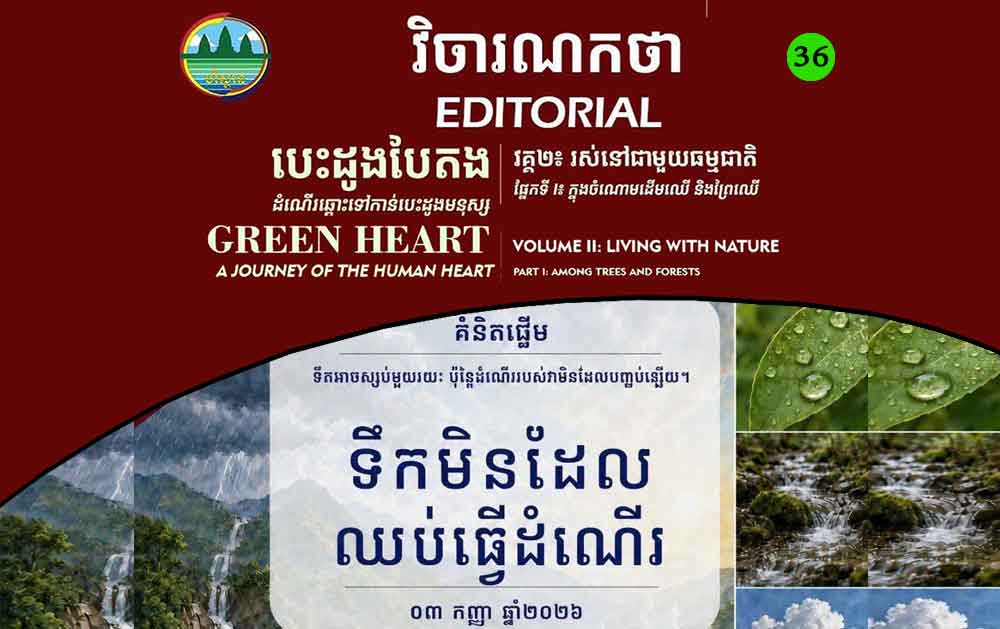 Editorial 36 – Water Is Always Moving
Opening Thought
“Water may rest for a while, but it never leaves the journey.”
Editorial
A glass of water appears still on a table, yet its stillness is temporary. It may soon enter a body, return to the air through breath or sweat, pass through a drainage system, or join soil and plants. Water moves among oceans, atmosphere, land, ice, rivers, groundwater, and living organisms.
Sunlight powers much of this movement by causing evaporation. Water vapor cools and condenses into clouds. Rain or snow returns water to the surface. Some runs over land, some enters streams, some soaks into soil, some is taken up by plants, and some moves deeper underground.
The water cycle is often drawn as a neat circle. In reality, the paths are many and travel times vary greatly. A droplet may remain in the atmosphere briefly, be stored in groundwater for a long period, or cycle repeatedly through living bodies and local landscapes.
Human activity changes these paths. Pavement can reduce infiltration and increase rapid runoff. Vegetation can slow water and support infiltration in suitable conditions. Dams, irrigation, wells, drainage, and land use alter where water goes and how long it stays.
Because water moves, pollution moves too. Oil on a road, waste near a drain, excess fertilizer, or exposed soil may be carried into waterways. Protecting water therefore begins before we reach the riverbank.
Movement also gives hope. Water can be cleaned through treatment, careful management, natural processes, and time, although prevention is usually safer and less costly than repairing severe pollution. Healthy landscapes can help regulate movement and support water quality.
Water’s journey teaches us that no place is entirely isolated. The rain on a roof, moisture in a forest, water in a rice field, and flow in a stream belong to connected processes. Using water wisely means considering both where it came from and where it will go.
Today, watch water move: rain sliding from a leaf, steam rising from food, a wet cloth drying, or a plant drawing moisture from soil. The cycle is not only in a textbook. It is happening around and within you.
Learning the cycle also teaches careful language. Water is renewed through movement, but usable clean freshwater can still be scarce. Calling water renewable does not give us permission to pollute or waste it faster than local systems can recover.
Renewal and availability are not the same thing; wise use respects both.
Buddhist Reflection
Water reveals impermanence without meaninglessness. It changes place and form while continuing to support life. Mindful awareness helps us respect each temporary appearance rather than assuming what leaves our sight has vanished.
Today’s Reflection
Which part of the water cycle can I observe directly where I live?
Today’s Action
Draw the journey of one cup of water from its source to its next destination after use.
Today’s Pledge
Today I will remember water’s continuing journey and keep that journey clean.
When we protect nature, we protect all beings—including ourselves.