Designing Cambodia’s future economy
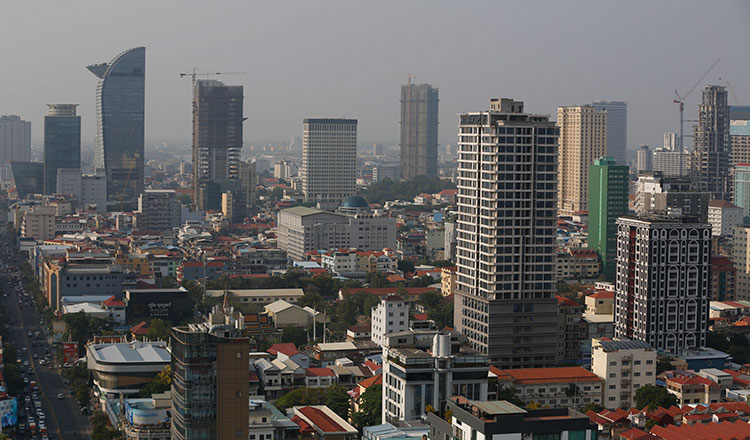 Photo: Recent regional shifts have led many Cambodian households and businesses to direct more of their leisure and capital spending locally. KT/Chor Sokunthea
#Editorial
For decades, Cambodia’s economic trajectory has been heavily defined by foreign capital inflows, export-driven light manufacturing, and international tourism. While this open-market model lifted millions out of poverty and sustained remarkable growth, external vulnerabilities highlight the benefits of strengthening domestic foundations. Regional geopolitical dynamics, global market shifts and economic disruptions present an invitation to reflect on national self-reliance. Cambodia stands at an opportune moment to consider how it might transition towards a more self-determined economic framework. Designing a resilient national economy for the decades ahead could well rely on a thoughtful alignment across three foundational pillars: demographic vitality, industrial self-sufficiency and a flourishing domestic consumer market.
Pillar I: People – Reclaiming demographic power as a shared civic journey
At 17 million people, Cambodia possesses a dynamic workforce, yet its population base remains relatively modest compared to its regional neighbours. In an evolving global landscape, a nation’s demographic scale naturally underpins both its labor supply and its internal market capacity. Across many developing and advanced economies, rising education and modern lifestyle shifts have coincided with declining birth rates. As societies modernise, the time-intensive responsibilities of family life are sometimes viewed through a lens of individual economic burden rather than societal continuity. However, if family creation is widely set aside in pursuit of personal freedom, the cumulative outcome can gradually translate into a broader national challenge – manifesting as a shrinking workforce and a smaller domestic market.
A strong population base remains vital for long-term economic stability and national security. To support demographic growth, stakeholders might explore ways to cultivate a social and economic environment where family life and child-rearing are seen as deeply fulfilling, well-supported and valuable contributions to the nation’s future. Raising the next generation could be understood as a meaningful civic contribution, carrying a sense of shared purpose similar to other foundational civic duties like contributing taxes or supporting national defence. Rebalancing these demographic trends invites thoughtful policy frameworks, including family-friendly economic measures, accessible social support and an encouraging cultural narrative that celebrates parenthood as a pillar of long-term national resilience.
Pillar II: Industry – Encouraging the evolution from investors to industrialists
For Cambodia to deepen its economic self-reliance, domestic capital could benefit from a gradual evolution in perspective. Local business leaders, conglomerates and small- and medium-sized enterprises (SMEs) might look beyond short-term financial investments to embrace the traditional role of true industrialists – building long-term productive capacity for the country. Expanding domestic capability across three primary sectors offers a promising pathway forward:
1. Mid- and high-tech manufacturing
Recent global trade shifts and border disruptions illustrate the value of expanding domestic production for essential goods. In response, local economic leaders have shown an encouraging interest in strengthening internal production capabilities. Over the coming decade, Cambodian SMEs and domestic enterprises could focus on acquiring advanced manufacturing techniques, upgrading technology, and building localised supply chains. Producing a wider range of goods domestically offers a meaningful way to enhance economic sovereignty and industrial confidence.
2. Agriculture and tourism
Cambodia’s rich agricultural lands and extraordinary historical endowments represent a deeply durable economic foundation. A fertile countryside paired with a vibrant cultural heritage provides an enduring safety net. A nation capable of feeding its population and sustaining its identity remains inherently secure, even during periods of global trade uncertainty. Modernising agricultural practices while nurturing authentic domestic tourism allows these traditional strengths to remain active drivers of economic well-being.
3. Financial system development
An expanding industrial base benefits from a strong, locally rooted financial ecosystem. To fund modern infrastructure and industrial growth sustainably, Cambodia could continue strengthening its domestic fiscal capacity and encouraging public participation in investment. Exploring public investment mechanisms – such as offering shares of high-performing state-owned enterprises on local stock exchanges – could allow citizens to directly participate in and benefit from major development projects. Concurrently, maintaining an inviting environment for quality foreign direct investment can supplement local capital while respecting national development priorities.
Pillar III: Market – Nurturing an independent domestic consumer Base
One of the most promising areas for future development is Cambodia’s internal consumer market. Historically, domestic market activity has often expanded or contracted alongside international visitor flows and foreign investment trends. Many local businesses in hospitality, real estate and retail have found themselves reliant on foreign demand cycles to maintain momentum. Developing a more self-sustaining internal market offers a natural way to buffer local businesses against international fluctuations.
Encouraging signs of a growing domestic market are already visible. Recent regional shifts led many Cambodian households and business leaders to direct more of their leisure and capital spending locally. Domestic funds are increasingly placed within national banking institutions, while local investments in domestic travel, recreation and commercial ventures continue to grow.
Increased domestic tourism during national holidays highlights a rising enthusiasm among citizens to explore and spend within their own country.
The key opportunity for the coming decades lies in converting this growing local engagement into sustained purchasing power. Policy planners and private sector leaders could collaborate on initiatives that raise local household incomes, foster high-value employment, and ensure home-grown products and services meet high standards of quality. Strengthening local purchasing power naturally creates a steady, reliable market for domestic farmers, manufacturers, and service providers.
When citizens consistently choose local goods, explore domestic travel destinations, and reinvest their wealth locally, the national economy gains a stable inner momentum. Over the next 10 to 20 years, steadily expanding internal consumer capacity could help shield Cambodia from global economic volatility, encouraging steady, self-reliant growth. It is likely that in the next 10 to 20 years, the government would be in a position to hand out vouchers and launch consumption stimulus packages to stimulate the growing domestic market against external shocks.
Cambodia’s journey towards long-term prosperity and high-income status invites a balanced approach that blends international openness with strong domestic foundations. By encouraging demographic vitality, supporting local enterprises in adopting an industrialist mindset, and actively nurturing internal consumer demand, Cambodia can shape a resilient economic future.
Embracing these three pillars offers a compelling framework for ensuring that the nation’s economic momentum remains grounded in its own people and domestic strengths.
-Khmer Times-