An Anchor of Peace in an Uncertain World: The Rising Relevance of the Global Security Initiative (GSI)
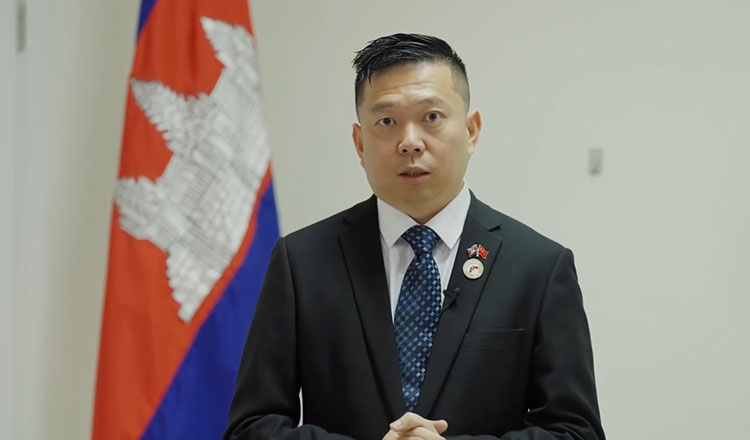 An Anchor of Peace in an Uncertain World: The Rising Relevance of the Global Security Initiative (GSI)
#OpEd
“As existing security architectures face mounting strain, China’s strategic vision offers an alternative pathway for cooperative global peace”
As the international community marks April 21, 2026—the fourth anniversary of the Global Security Initiative (GSI)—it is an opportune moment to reflect not only on its conceptual foundations, but also on its evolving role in shaping global security discourse and practice. In a world increasingly defined by uncertainty, geopolitical rivalry and persistent conflict, a fundamental question resurfaces with renewed urgency: how can security be achieved without generating insecurity for others?
“Security cannot be built on confrontation; it must be grounded in cooperation and shared trust.”
At its core, the GSI rejects the zero-sum logic of traditional security thinking and advances the concept of common, comprehensive, cooperative and sustainable security. While these principles are not entirely new, their consolidation into a coherent strategic framework reflects an effort to reshape how global security is understood and practised in the 21st century.
Importantly, the GSI is not merely theoretical. Over the past four years, its relevance has increasingly been reflected in real-world diplomatic engagement. China’s role in facilitating rapprochement between Saudi Arabia and Iran, its proposal of a 12-point peace framework for the Russia–Ukraine conflict, and its calls for dialogue in the Indo-Pacific all illustrate a preference for diplomatic solutions over military confrontation.
“Dialogue, not deterrence, remains the most sustainable instrument of peace.”
In an era where great-power competition risks placing pressure on regional stability, the promotion of multilateralism and adherence to international law are essential safeguards for sovereignty and long-term development. The GSI, therefore, can be seen as a platform that amplifies the voice and agency of smaller states in shaping global peace.
Nevertheless, the initiative is not without its challenges. Skepticism from certain major powers, as well as competition with established security alliances, continues to shape its reception. Yet, the true value of the GSI lies not in replacing existing systems, but in complementing them—offering alternative pathways and expanding the space for cooperation.
“In a multipolar world, security requires diversity of approaches—not a single dominant model.”
Four years on, the GSI stands at a critical juncture. Its future trajectory will depend on how effectively it can translate principles into sustained action, build broader international consensus, and adapt to an increasingly complex security environment. The anniversary is therefore not merely symbolic—it is a strategic milestone that invites deeper engagement, reflection and collective ownership.
Ultimately, the question is not whether the GSI is a perfect solution, but whether the international community is willing to engage with it as part of a broader effort to build a more stable and inclusive security order. At a time when global risks are intensifying and trust is eroding, initiatives that emphasise cooperation over confrontation may serve as vital anchors for peace.
In this sense, the Global Security Initiative represents more than a policy proposal—it reflects an evolving strategic vision for global governance. Whether it can fully realise its ambitions will depend on collective participation, mutual trust and the shared commitment to a peaceful and prosperous future for all.
CHEA Munyrith, PhD
President, Cambodian Chinese Evolution Researchers Association (CCERA)