A Prejudiced Mindset: An Attempt to Downplay Our Historical and Cultural Continuity
 A Prejudiced Mindset: An Attempt to Downplay Our Historical and Cultural Continuity
#opnion
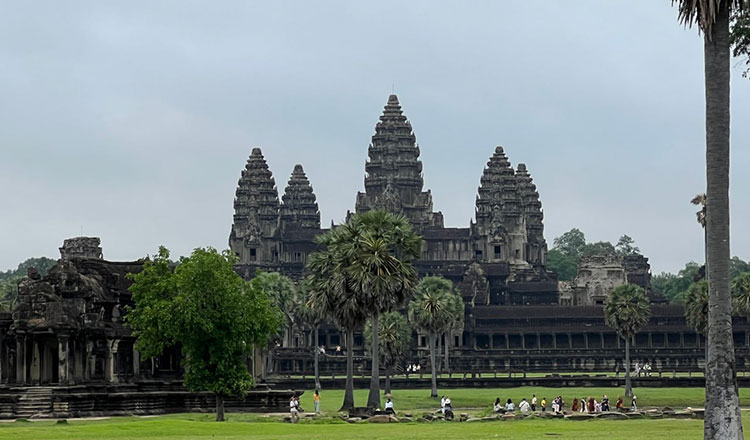
The Khmers do not claim cultural supremacy, nor do we distort history to assert an exclusive claim over the Khmer Empire of the Angkorian Era (9th to 14th centuries), which historically extended beyond modern Cambodia to include a significant portion of present-day Thailand. We neither fabricate history nor feel the need to aggressively claim to define our true identity or global standing. On the contrary, our intention is to present the historical truth, which gives us pride to move positively forward, while expressing our sincere gratitude towards our ancestors, from whom we inherited a marvelous heritage, both tangible and intangible. Furthermore, we also seek to foster national and international peace, mutual understanding, love, prosperity, and harmony through the embrace of an accurate, undistorted knowledge of history and culture. Let historical facts speak for themselves!
It is a historical fact that a remarkable number of ancient Khmer temples were built between the 7th and 13th centuries across the territory of the ancient Khmer Empire, which includes areas currently within Thailand. Hundreds of thousands, if not millions, of indigenous Khmer continue to live and speak Khmer in their ancestral land, which is now in Thailand. The greatness of Angkorian civilization spread widely, deeply influencing many peoples across mainland Southeast Asia, including various ethnic Tai groups. Notably, the Khmer and Sanskrit languages of the Khmer Empire were adopted and integrated into their languages and cultures. For instance, the Prey Svay inscription of Sukhoday was written in 1361 A.D. in perfect Khmer by a learned person fluent in both Khmer and Siamese. Another compelling example is King Naresuan’s name, which undeniably demonstrates the strong Sanskrit influence of the Angkorian civilization over the Thai Kingdom; Naresuan is derived from the Sanskrit word Naresvara (from nara, meaning man, and isvara, meaning lord). Ultimately, this is a normal occurrence in cultural exchanges and interactions, which have instead greatly contributed to enriching our shared cultures. It is a fact that our civilization is deeply rooted in centuries of international cultural interactions. Imagine this: without historical interactions with Indic culture, would Angkor Wat, the world-renowned 12th-century temple, have been built?
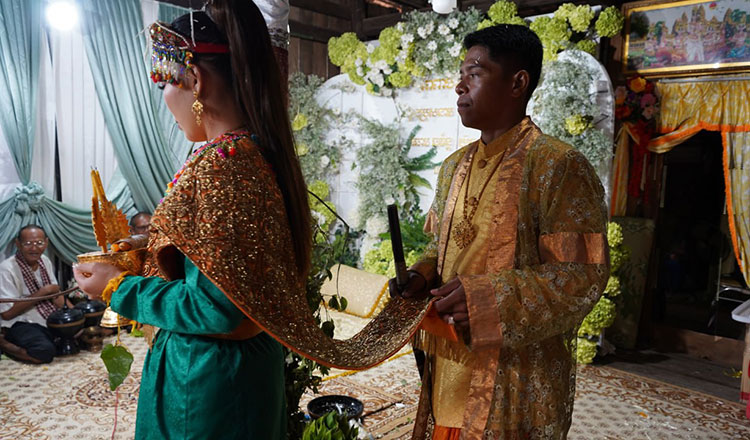
Today, Khmer cultural heritage stands as a living testament to the continuity of the Angkorian civilization, extending far beyond ancient temples. This continuity remains evident in our festive events, social practices, craftsmanship, and the traditional know-how passed down to us from our great ancestors, whom we solemnly honor every year during the religious ceremony of Pchum Ben. In fact, Pchum Ben itself is a powerful affirmation of this continuity—a tradition dating back to at least the reign of King Yasovarma (r. 881-910), who established a system of “Spiritual and Social Welfare” not only for the living but also for the dead. Another outstanding example is the sbai, or traditional sash, which is not only an elegant traditional garment, worn during special occasions in both religious and daily life, but also carries profound cultural significance in Khmer society. During a traditional wedding ceremony, especially in a specific wedding ritual known as preah thong tong sbai neang neak (or Preah Thong holding the sash of Neang Neak, the Naga princess), the bride wears the sbai, which must be ritually held by the groom as they walk into the room. This ritual is, in fact, a reenactment of the foundation myth of Preah Thong and Neang Neak as the first couple, forebears of the Khmer race and their kingdom. The groom, representing Preah Thong, holds on to the sash of the bride, who symbolizes Neang Neak, in order to journey through water into the realm of the Neak. According to legend, the Naga King magically created land on earth by parting the waters, allowing the new couple to build their kingdom and raise offspring, living happily ever after. Thus, the newlyweds will also be blessed and endowed with prosperity, happiness, and children, just like their ancestors, Preah Thong and Neang Neak. Although this story has been slightly adapted from its original form, it can be traced back to at least the 7th century, as mentioned in an inscription of Champa, and to an even earlier account recorded by a Chinese missionary in the mid-3rd century. One final example of this continuity is that of the popil, which, having been inherited from the Brahmanical tradition of the Angkorian civilization, symbolizes the Shiva linga and Yoni of Uma.
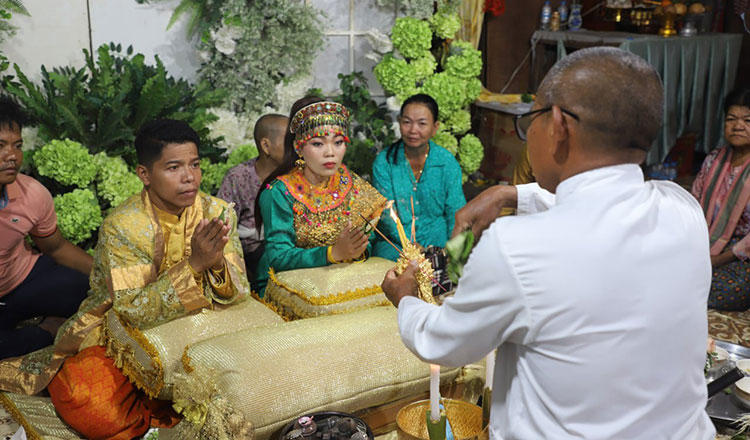
Claiming that the ancient Khmers were “Khom”—allegedly a distinct group separate from the Khmer—is historically inaccurate and dangerously misleading, distorting both historical and linguistic facts. This false narrative is widely propagated in Thai society by certain Thai nationalist figures and chauvinistic politicians, even though credible Thai academics rightly reject it. “Khom” was simply a term used by the Mon people to refer to the Khmer, meaning “those who live below” (referring to lowlanders, as opposed to highlanders); the term is also clearly attested in the Khmer word krom (meaning “below”).
Discriminatory and inflammatory comments driven by a prejudiced mindset, which attack Cambodians for venerating and taking pride in our heritage, are ridiculous and baseless, yet highly dangerous. Rather than reflecting historical truth, these narratives represent a calculated attempt to conceal the fact that Khmer cultural heritage has been appropriated and reshaped by those Thais who now claim exclusive cultural supremacy and ownership by downplaying our culture. Ultimately, it is this attempt at cultural erasure that “exposes the fragile identity and jealousy” of certain Thai nationalists and chauvinistic politicians even today. This is not a new phenomenon—the very name “Thailand” (combining “Thai,” referring to ethnic Tai, i.e., all ethnic Tai peoples, and the English word “Land”) was coined in the late 1930s under a wave of ultranationalist sentiment.
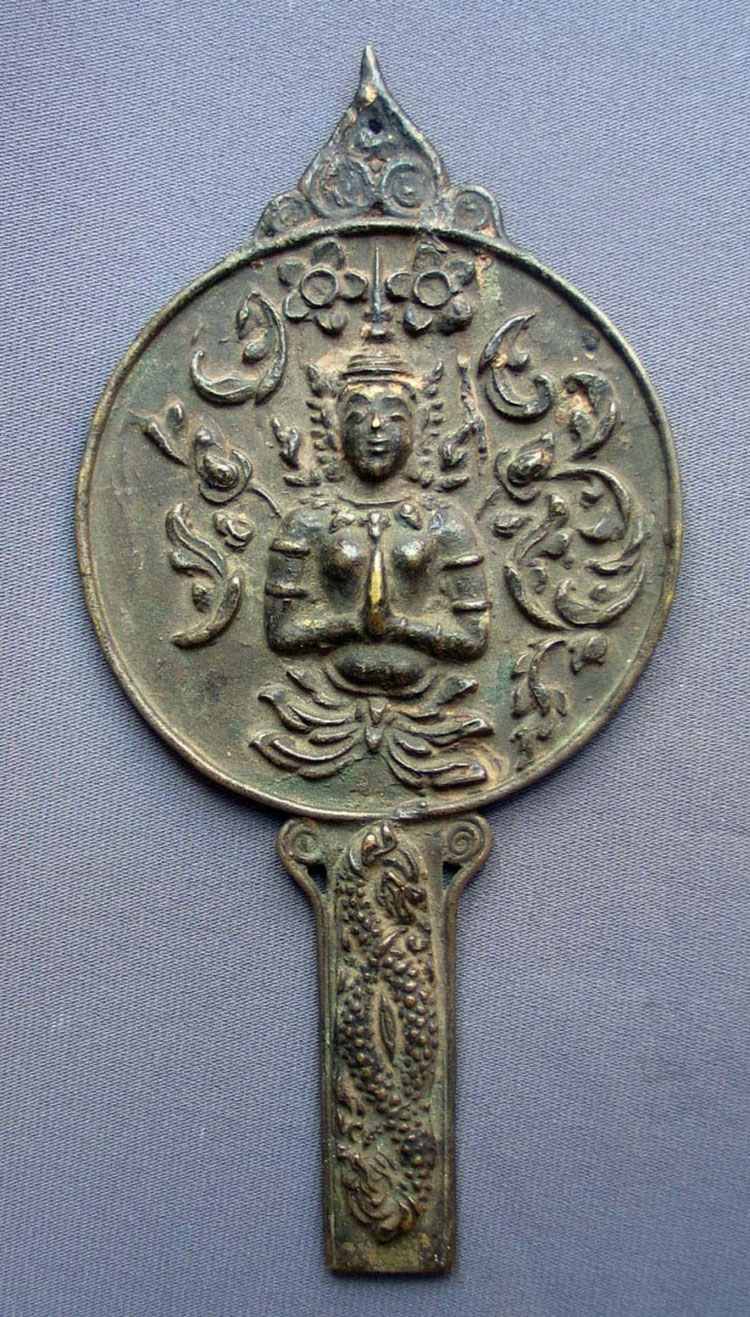
Learning about and taking pride in our history, culture, and heritage is not a hostile claim that “exposes our own fragile identity”; rather, it is a dignified attitude and a demonstration of respect towards our ancestral heritage passed down to us for generations. Indeed, it strongly reflects the spirit of the UNESCO 2003 Convention. Furthermore, preserving our shared human heritage is truly a shared responsibility that ensures we and our children can take pride in it for generations to come. Lastly, rest assured that Cambodia, in line with UNESCO’s 2003 Convention, cherishes and supports ongoing efforts by peoples and nations around the world to safeguard both the tangible and intangible heritage of humanity, rather than weaponizing it.
Embracing historical truth is the only antidote to collective chauvinism!
-Khmer Times-