ASEAN Must Find Its Voice: Call Out Right or Wrong in Thai Invasion of Cambodia
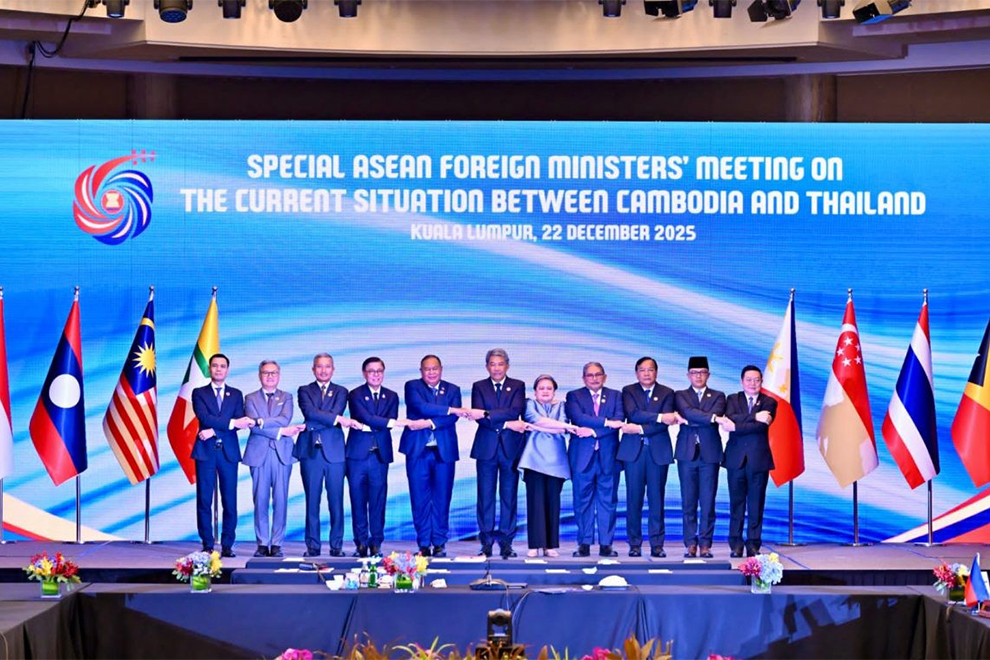 ASEAN foreign ministers participated in the Special ASEAN Foreign Ministers’ Meeting last December. Supplied
#opinion
Deputy Prime Minister Prak Sokhonn, Minister of Foreign Affairs and International Cooperation, will lead a delegation to ASEAN Foreign Ministers’ Retreat (AMM Retreat) and Related Meeting in Cebu, the Philippines, on January 28-29, at the invitation of Theresa P. Lazaro, Secretary of Foreign Affairs of the Republic of the Philippines.
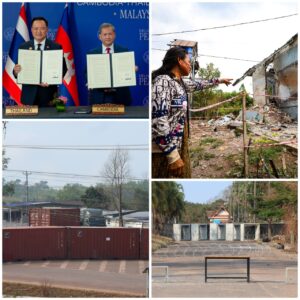
In the heart of Southeast Asia, where nations have long pledged unity under the banner of ASEAN, a troubling silence persists amid one of the region’s most blatant violations of sovereignty. The recent Thai attack on the legal sovereignty of Cambodia, which erupted in July 2025 and has claimed over 100 lives while displacing hundreds of thousands, is no mere bilateral spat.
It is a stark invasion of one member state by another, demanding that ASEAN abandon its habitual neutrality and boldly declare what is right and what is wrong. To do otherwise is to undermine the very foundation of the association: a community bound by shared fate, justice and mutual respect.
The facts are undeniable. Thai forces have conducted airstrikes deep into Cambodian territory, bombarding areas like the Poipet casino hub and escalating what began as a century-old border dispute into full-scale armed aggression.
Cambodia has reported civilian casualties and widespread destruction, while Thailand justifies these actions as defensive measures.
This is not an “internal affair” confined to dusty diplomatic archives — it is a regional crisis that tests ASEAN’s resolve. When one member invades another’s sovereign land, it fractures the collective security that ASEAN was meant to uphold. Why, then, have the other eight members largely confined themselves to tepid calls for ceasefires and negotiations, rather than condemning the aggressor outright?
ASEAN’s charter emphasises non-interference, but this principle was never intended as a shield for injustice. Non-interference does not mean indifference to outright aggression between members. The bloc has mediated before — Malaysia, as the 2025 ASEAN chair, convened trilateral talks and pushed for de-escalation.
Yet these efforts stop short of assigning blame or demanding accountability. Thailand’s actions show a blatant disregard for ASEAN’s unity; by launching airstrikes and rejecting ceasefires at times, Bangkok has prioritised nationalistic claims over regional harmony.
If ASEAN remains silent on such flagrant violations, what message does it send? That might makes right, and economic ties trump ethical imperatives? This is not just about borders — it’s about values. ASEAN cannot afford to be a mere economic club, fixated on trade deals and investment flows while ignoring cries for justice from the victims of invasion. Cambodia, the clear victim here, deserves more than platitudes. The displacement of over half a million people and the loss of innocent lives demand that ASEAN honour fairness and stand with the aggrieved.
By failing to call out Thailand’s aggression, the association risks eroding its credibility. After all, if members won’t defend each other against internal threats, how can they face external ones?
Consider the hypocrisy in ASEAN’s selective engagement. The Philippines has been vocal on the South China Sea disputes, pushing the bloc to confront China’s expansive claims because it directly impacts Manila’s interests. And rightly so — ASEAN has issued joint statements and pursued legal avenues, like the 2016 arbitral ruling favouring the Philippines.
But if ASEAN acts only when a powerful outsider like China is involved, what does that say about its “one community, one fate” mantra? The Thailand-Cambodia conflict exposes this double standard: when two members clash, the response is muted, as if internal divisions are too politically sensitive to address head-on. Yet true community requires courage in all arenas, not just those that align with national self-interest.
To reclaim its relevance, ASEAN must strengthen its core values. It should evolve beyond consensus-driven timidity and empower mechanisms — like an enhanced dispute settlement body — to adjudicate right from wrong. Drawing from past successes, such as Indonesia’s mediation in earlier Thai-Cambodian skirmishes, the bloc could establish a rapid-response task force for intra-member conflicts.
More importantly, leaders must foster a culture of moral clarity: publicly condemning aggression, imposing diplomatic sanctions if needed and prioritising justice over economic expediency. Organisations like the ASEAN Parliamentarians for Human Rights have already called for immediate intervention to protect border communities.
It’s time for the full association to follow suit. In a world of rising geopolitical tensions, ASEAN’s strength lies not in silence but in solidarity. By speaking truth to power — even when that power is a fellow member — the bloc can transform from a passive observer into a beacon of regional justice.
The Thailand-Cambodia crisis is a wake-up call: ASEAN must be brave enough to say who is right and who is wrong, or risk fading into irrelevance. The victims of this invasion, and the future of Southeast Asia, deserve no less.
Dr. Seun Sam is a policy analyst at the Royal Academy of Cambodia. The views and opinions expressed are his own.
-Phnom Penh Post-