Speaking Peace, Practicing Pressure: Thailand’s Words Do Not Match Its Actions
 Speaking Peace, Practicing Pressure: Thailand’s Words Do Not Match Its Actions
#opinion
Thailand’s latest statement from its Joint Information Center is rich in the language of peace, restraint, and bilateralism. On paper, it speaks of dialogue, mutual mechanisms, and respect for agreements. On the ground, however, Thailand’s actions tell a very different story—one of unilateral moves, militarization, and faits accomplis that directly contradict its declared principles.
This contradiction lies at the heart of the current tension along the Thai–Cambodian border.
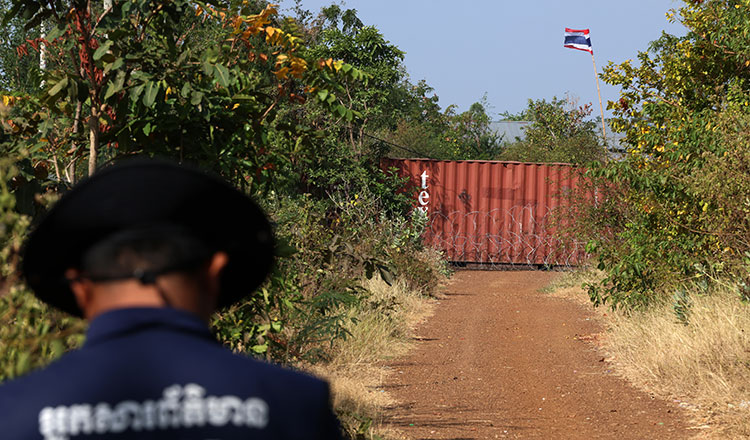
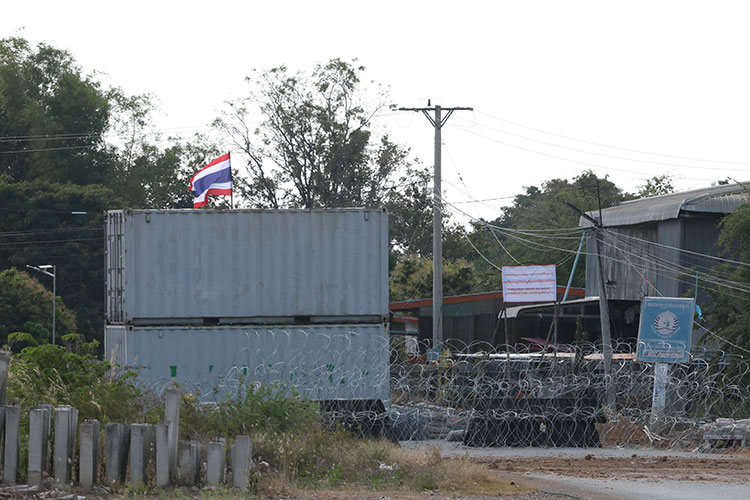
Thailand claims it is “strictly adhering” to joint mechanisms such as the Joint Boundary Commission (JBC). Yet at the same time, Thai authorities continue to take unilateral actions in disputed areas—maintaining troops, reinforcing infrastructure, fencing territory, and opening contested zones for farming, tourism, and permanent use. These are not neutral or technical acts. They are political and strategic decisions that alter facts on the ground before bilateral mechanisms can function.
No amount of diplomatic wording can obscure this reality.
Thailand’s statement rejects unilateral action in theory, yet in practice, it has normalized precisely that behavior. If unilateral measures are truly unacceptable, why do they continue without consultation, agreement, or verification through joint mechanisms? If escalation is to be avoided, why entrench physical control in disputed zones rather than freeze the status quo?

Cambodia, by contrast, has consistently called for disputes to be addressed through agreed frameworks, including the JBC and existing treaties and agreements. Cambodia has sent formal diplomatic notes, proposed technical discussions, and urged restraint—not only in statements, but in action. It has refrained from altering the terrain, weaponizing civilians, or converting disputed land into permanent economic or military assets.
Thailand’s call for “utmost restraint” also rings hollow when accompanied by continued military presence and securitization for at least a year, as previously announced by Thai authorities. Restraint cannot coexist with pressure. Peace cannot be built while one side consolidates control and the other is asked to remain patient.

Equally troubling is the attempt to frame Cambodian concerns as potential “provocation,” while ignoring how unilateral fencing, surveillance systems, and development projects themselves provoke mistrust and insecurity. True tolerance and transparency require symmetry—rules that apply equally to both sides, not selectively.
If Thailand genuinely believes that bilateral mechanisms are the only path to lasting peace, then those mechanisms must be respected not only in speeches, but in policy. That means halting unilateral measures, preserving the status quo, and allowing joint technical processes to operate without coercion or preconditions.
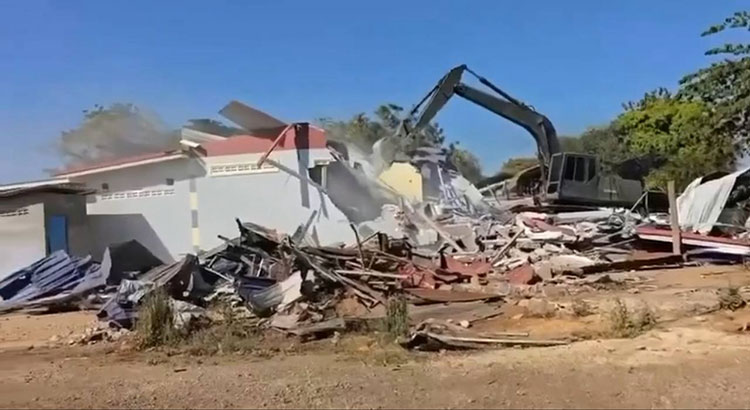
Peace is not achieved by declaring good intentions while acting otherwise. In international relations, credibility is built through consistency. At present, Thailand’s words speak of cooperation, but its actions speak of control.
Cambodia—and the international community—will judge not by statements, but by conduct. True peace along the border will begin not when peace is spoken, but when it is practiced.
Roth Santepheap is a geopolitical analyst based in Phnom Penh. The views expressed are his own.
-Khmer Times-