Honouring Hun Sen’s Legacy on Cambodia-South Korea Relations
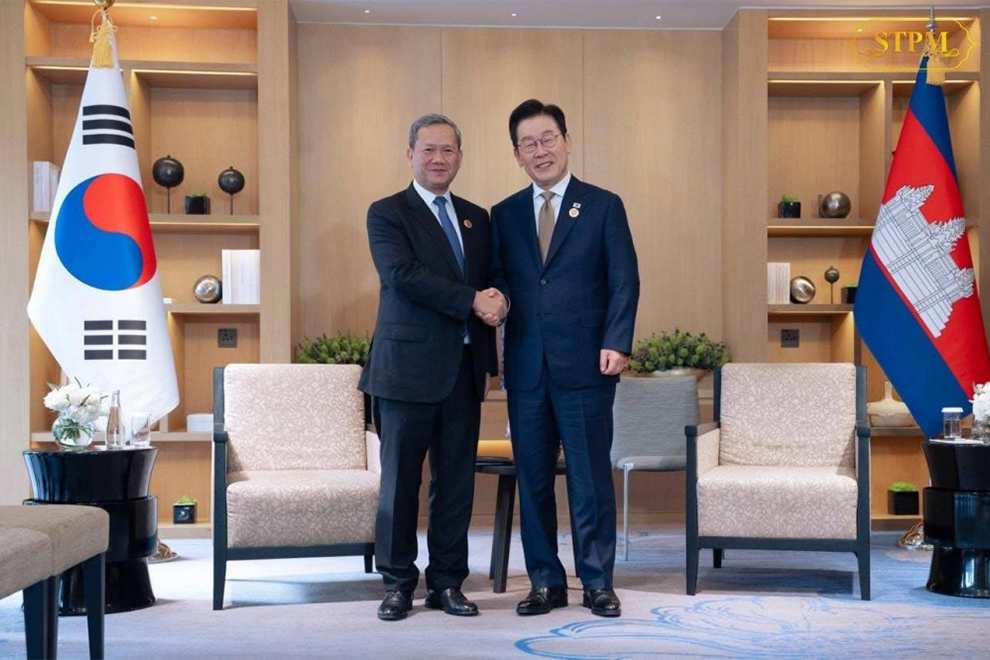 Prime Minister Hun Manet held a bilateral meeting with South Korean President Lee Jae Myung on the sidelines of the 47th ASEAN Summit and Related Summits in Kuala Lumpur. Supplied
#opinion
In an era of global interconnectedness, few bilateral relationships exemplify mutual benefit and resilience quite like that between Cambodia and South Korea. This partnership, painstakingly reestablished in 1997 under the visionary leadership of then-Second Prime Minister Hun Sen, stands as a cornerstone of Cambodia’s diplomatic and economic progress.
It is imperative that we safeguard and nurture these ties, not merely as a tribute to Hun Sen’s enduring legacy, but as a strategic necessity for Cambodia’s continued development and prosperity. Recent media missteps, such as the unfortunate misinterpretation by South Korea’s SBS News regarding statements on Cambodian workers, underscore the fragility of international perceptions — but they should not overshadow the profound importance of this alliance.
The reestablishment of diplomatic relations in 1997 marked a pivotal moment for both nations. Originally forged in 1970, ties were severed in 1975 amid Cambodia’s tumultuous internal conflicts.
Hun Sen, recognizing South Korea’s potential as a partner in rebuilding a war-torn Cambodia, spearheaded the renewal of these bonds. His foresight laid the groundwork for what has evolved into a strategic partnership, formalised in recent years and encompassing economic cooperation, cultural exchanges and shared security interests.
Today, under the leadership of Prime Minister Hun Manet, this relationship continues to thrive, building directly on Hun Sen’s foundational efforts. To jeopardise it now would be to undermine decades of hard-won progress initiated by one of Cambodia’s most influential statesmen.
South Korea’s role in Cambodia’s economy cannot be overstated. As a key development partner, South Korea has provided substantial aid and investment, fuelling growth and creating opportunities for Cambodians. In 2025 alone, South Korea pledged approximately $315 million in concessional loans and grants, targeting critical sectors such as infrastructure, agriculture and public services.
Cumulatively, from 1996 to 2022, Korean aid totalled $431 million, focusing on sustainable development, without the strings often attached by other donors.
Korean investments have generated thousands of jobs, reducing poverty and stimulating economic diversification.
Moreover, the bilateral agreements signed in recent years — covering finance, investment and vocational training — have enhanced Cambodia’s workforce capabilities and public administration.
Equally vital is the human dimension of this partnership. Thousands of Cambodian migrant workers contribute to South Korea’s economy under programmes like the E-9 visa, sending home remittances that bolster families and communities back in Cambodia.
These workers are not just economic assets; they are ambassadors of goodwill, fostering cultural understanding between our peoples. South Korea’s commitment to protecting and supporting these workers reflects the mutual respect at the heart of our relations.
In a world where geopolitical tensions abound, this alliance also serves as a hedging strategy for Cambodia, strengthening our defence and economic interests amid regional dynamics.
Yet, recent events have tested this bond. In October 2025, revelations about scam operations in Cambodia that victimised South Koreans, including the tragic death of a student, sparked understandable outrage in South Korea.
The Cambodian government, under Prime Minister Hun Manet, swiftly expressed deep regret and committed to cooperating fully with South Korean authorities to dismantle these criminal networks.
Despite these proactive steps, some media outlets, including SBS News, have contributed to misunderstandings. SBS’s coverage, which included sensational elements like a crime suspect mocking victims on their programme, has been misinterpreted in ways that unfairly generalise and stigmatise innocent Cambodian workers.
This has fuelled discrimination, with reports of Cambodian migrants facing backlash and employers hesitating to hire them.
Such portrayals overlook the fact that these scams are the work of criminal elements, not reflective of the Cambodian people or government. South Korea’s Labor Minister wisely rejected calls to cut worker quotas, recognising that punishing law-abiding Cambodians would harm both nations.
It is precisely in moments like these that the importance of maintaining strong relations becomes clear. Allowing media misinterpretations or isolated incidents to erode trust would deprive Cambodia of a vital partner in its quest for modernisation and self-reliance. Honouring Hun Sen’s legacy means prioritising dialogue over division, collaboration over confrontation. By addressing these challenges jointly — as we have in the past — we can emerge stronger, with enhanced mechanisms for worker protection, anti-trafficking efforts and economic integration.
The Cambodian government remains steadfast in its commitment to this partnership. We urge our South Korean counterparts to join us in dispelling misconceptions and focusing on the shared successes that define our relationship. Together, Cambodia and South Korea can continue to build a future of prosperity, mutual respect and enduring friendship — one that pays fitting tribute to the leader who reignited these ties nearly three decades ago.
Dr. Seun Sam is policy analyst at the Royal Academy of Cambodia. The views and opinions expressed are his own.
-The Phnom Penh Post-