Information minister rebukes Thai Army spokesman, ‘verify before speaking’
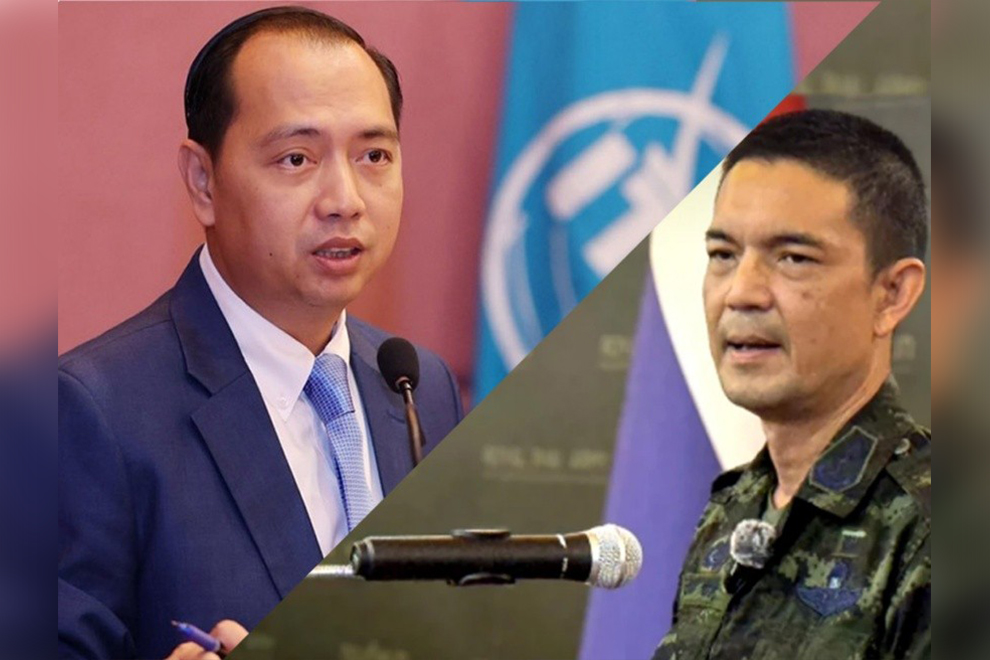 Cambodian information minster Neth Pheaktra (left) has rebuked Thai Army spokesman Winthai Suwaree. Supplied
Minister of Information Neak Pheaktra has offered sharp criticism of Royal Thai Army spokesman Winthai Suwaree for what he described as a series of “unprofessional, unverified and misleading claims” regarding the fatal shooting of a Cambodian civilian along the Banteay Meanchey border.
He urged the Thai side to “verify before speaking”, noting that a spokesman’s duty is to defend truth — not distort it.
The remarks follow Winthai’s public dismissal of reports that Thai soldiers opened fire on civilians in Prey Chan village on 12 November, killing one man and injuring three others.
Despite forensic evidence and documentation presented to the ASEAN Observation Team (AOT), the Thai Army rejected responsibility and advanced speculation that Cambodian officials say contradicts the factual record.
Drawing on his extensive background as a former spokesperson for both the Ministry of Environment and the Khmer Rouge Tribunal (ECCC), Pheaktra offered Winthai some tips on how to be a professional spokesperson.
Learn the facts before speaking
Pheaktra said Winthai rushed to defend the Thai military with narratives “unsupported by evidence”, noting that responsible institutions investigate before making claims — not after.
“A spokesman who responds before verifying facts does not defend his nation; he embarrasses it,” he adding, saying that the Thai spokesman’s remarks relied heavily on assumptions, mistranslations and AI-generated photographs, rather than on-site facts or forensic reports.
The Thai Army argued that photos of injured Cambodians appeared “inconsistent” with wounds caused by gunfire at 500–800 meters, even suggesting that some images — including one AI-generated photo — undermined the authenticity of the incident.
Pheaktra responded that real photos, medical records and on-site inspections were available, while the Thai spokesman selectively focused on AI-generated content circulating online, instead of the documented evidence presented by Cambodian authorities and hospitals.

Don’t act as an interpreter of a situation
Winthai suggested the death of the victim, 36-year-old Dy Nai, might not have occurred at all — or was unrelated to the shooting — pointing to his cremation the day after the incident and claiming “no evidence was shown” to the AOT.
That claim was directly contradicted by Cambodia’s Ministry of Interior on 14 November, which released the full forensic findings in the presence of ASEAN observers.
According to the report, Dy Nai died from gunshot wounds caused by M16 rifles fired by Thai soldiers.
The autopsy documented a 5mm abrasion on the head, a 2×3 cm laceration on the left chest penetrating toward the right, and a single bullet lodged beneath the skin on the right upper back.
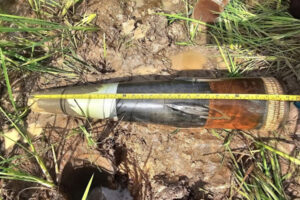
The bullet, removed surgically in front of the AOT, measured 5.56mm by 23mm with six right-twist rifling grooves — consistent with ammunition used by Thai armed forces.
“The bullet penetrated the lungs, severed major blood vessels and lodged in the victim’s back,” the ministry stated, confirming the man was killed instantly.
Pheaktra stressed that Thailand’s allegation that cremation was used to “conceal evidence” collapses once confronted with the forensic record — evidence collected, verified and shown publicly.
“The evidence is there, visible to the public, local authorities and anyone who chooses to see honestly,” he said.
“When a military spokesman chooses speculation over facts, it reveals not Cambodia’s wrongdoing but Thailand’s desperation to defend a false narrative,” he added.
Do not rely on faulty translations
The information minister criticised the Thai spokesman for quoting incomplete translations without checking original sources.
Winthai also told Thai media that a hospital director said, “Three people were injured and no one died”, calling this a contradiction of Cambodian reports.
Cambodia said the statement was inaccurately translated and badly misrepresented.
The hospital director’s actual statement — recorded and available — was: “Three people were injured and one person died.”
“When you rely on wrong information, you produce wrong responses. Words matter. Never substitute assumptions or partial translations for verified facts,” said Pheaktra.
He added that misstating casualties “misleads the public and damages credibility”, urging Thailand to adopt stricter verification before making public accusations.

Cambodia: “The truth is verified — Thailand must stop distorting it”
Pheaktra accused Thai military officials of trying to shift public attention from confirmed facts by alleging Cambodia was staging incidents.
“In reality, the only thing staged was the Thai spokesman’s narrative,” he said.
“Cambodia has released evidence. Cambodia allowed ASEAN observers to witness the forensic process. Cambodia has documented the scenes, the injuries, the bullet and the cause of death. Facts speak for themselves,” he added.
Call for professionalism and accountability
The minister reiterated that Cambodia seeks stability along the border, but stability cannot be built on denial or distortion.
“The world now sees your level of professionalism,” he said, addressing the Thai spokesman.
“Pay much attention to your work,” he added.
He concluded that further clarification will continue to be provided to ASEAN partners and the international community to ensure accuracy, transparency and accountability regarding the 12 November incident.
-The Phnom Penh Post-