Cambodia denies laying new landmines, reaffirms commitment to peace accord with Thailand
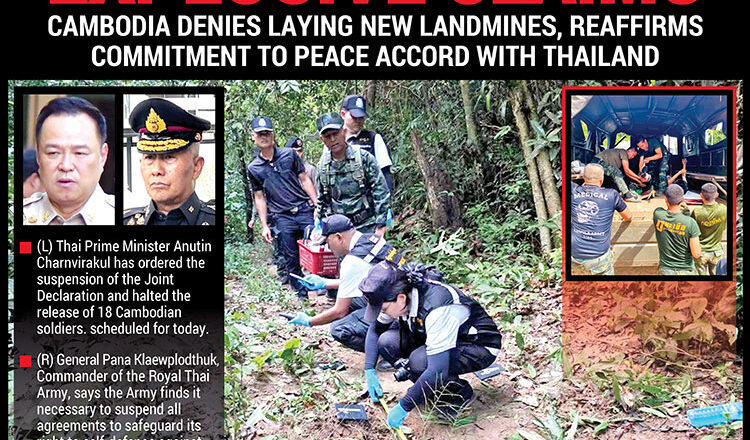 Thai officials marking the site of a landmine blast in the Phnom Trop area near the Preah Vihear Temple. (Inset) Two Thai soldiers injured in a mine blast are helped on board a truck in Sisaket province. Khaosod English
Synopsis: Phnom Penh rejects Thailand’s allegations that new landmines were laid along the shared border following a blast that injured Thai soldiers and led to the suspension of the Kuala Lumpur Joint Declaration. Thailand has also halted the release of 18 Cambodian soldiers in its custody.
Cambodia has rejected Thailand’s allegations that new mines were laid along the shared border, following a landmine blast that wounded Thai soldiers.
The Cambodian government reiterated its commitment to the Kuala Lumpur Joint Declaration it signed with Thailand on October 26, saying it remains an advocate for global peace and disarmament.
The explosion, which occurred on Monday in the Phnom Trop area near the Preah Vihear Temple, reportedly injured three Thai soldiers. In response, Thai Prime Minister Anutin Charnvirakul ordered the suspension of the Joint Declaration and halted the release of 18 Cambodian soldiers scheduled for today.
The incident has renewed tensions along the Cambodia-Thailand border. Yesterday, Anutin chaired a meeting of the National Security Council, authorising military operations and urging Cambodia to take full responsibility for the recent landmine incidents.
After the meeting, when asked by reporters whether Thailand would take retaliatory measures, Anutin replied that the government would consult the Cabinet before making any official announcement.
In a statement released late Monday night, Cambodia’s Ministry of Foreign Affairs and International Cooperation said that the KL Joint Declaration, which was signed by the Prime Ministers of the two nations with US President Donald Trump and Malaysian Prime Minister Anwar Ibrahim as witnesses, represented a major step toward lasting peace and stability along the border.
“The Royal Government of Cambodia categorically denies the allegations by Thailand that new landmines have been laid by Cambodia at the border with Thailand,” the statement said, stressing that most minefields in the area are remnants of Cambodia’s civil wars of the 1970s and 1980s.
It added that large sections of the border remain uncleared due to the difficult terrain and un-demarcated status of some areas.
“Cambodia, as a devoted advocate for and state party to the Anti-Personnel Mine Ban Convention, has never used any new landmines and will never do so,” the statement added.
The suspension of the accord has undermined efforts to restore peace along the border. Cambodia and Thailand were in the midst of withdrawing their heavy weapons from the frontier, under the observation of the ASEAN Observer Team (AOT), a process that commenced with the inking of the peace declaration.
“Do not underestimate the United States. Do not underestimate the ASEAN Chair. Do not underestimate the lives of Thai soldiers,” Royal Academy of Cambodia Secretary-General Yang Peou said on Facebook yesterday after Anutin anounced the suspension of the peace deal.
The nine-point “Joint Declaration” builds on the July 28 ceasefire. It underscores the importance of refraining from the “threat or use of force”, resolving disputes peacefully, and respecting international law and each nation’s sovereignty, territorial integrity, and national identity.
It commits both sides to fully uphold agreements reached through General Border Committee meetings and to implement confidence-building measures along the border to restore trust, foster peaceful dialogue, and rebuild diplomatic relations. The declaration calls for the creation of an AOT to monitor the ceasefire and oversee the removal of heavy weapons from border areas, ensuring transparency and adherence to the terms of reference signed by both governments.
The joint declaration further addresses the need for humanitarian demining efforts to protect civilians and support socio-economic development. Both sides agreed to cease activities that escalate tensions, with Thailand pledging to release prisoners of war as a demonstration of goodwill and mutual trust.
Other terms in the agreement include enhanced cooperation in information sharing, strategic communications, and border controls to prevent transnational crimes affecting both countries and the wider region. The declaration emphasises the importance of leaving past conflicts behind and embarking on a new chapter of neighbourly relations guided by the principles of the United Nations Charter and the ASEAN Charter on peaceful conflict resolution.
According to information obtained from a frontline military officer, the Thai soldiers injured by a landmine on Monday after entering the “Veal Entry” area along the Cambodia–Thailand border were struck by an “old landmine.” Thailand reported that its soldiers from the Second Army Area were injured while patrolling the border.
The Cambodian officer said the Thai soldiers had entered an old battlefield zone in Preah Vihear province, an area still heavily contaminated with unexploded mines.
The National Defence Ministry yesterday urged Thailand to avoid patrolling in old minefield areas—particularly those internationally recognised as mine-contaminated zones from past conflicts—to avoid triggering old landmines and causing unnecessary tensions along the border.
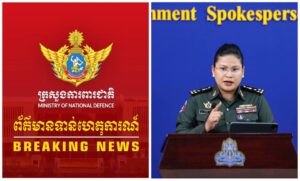
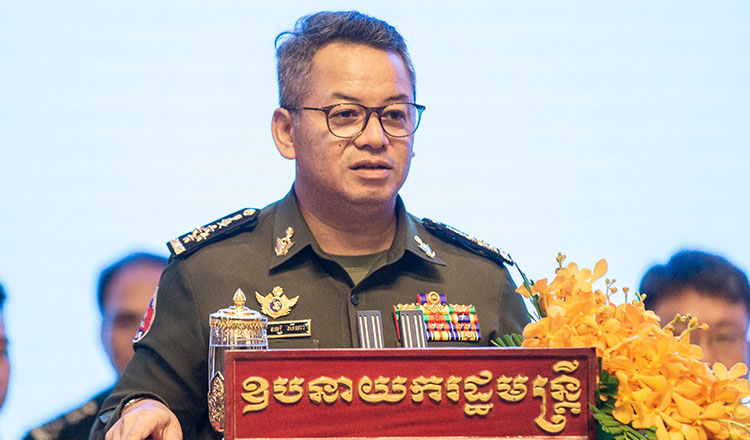
Lieutenant General Maly Socheata, spokeswoman for the Ministry of National Defence, expressed regret over the mine explosion.
The ministry noted that several Thai media outlets have since reported Thai leaders and military officials accusing Cambodia of laying new landmines.
“The Ministry of National Defence strongly affirms that since Cambodia became a State Party to the Ottawa Convention, it has remained fully and consistently in compliance with the principles and obligations of international law,” the statement said. “Cambodia reaffirms that it has not used or placed any new landmines that threaten the security and safety of civilians.”
The ministry stressed that despite ongoing demining efforts over the past several decades, unexploded ordnance left from previous conflicts still pose a threat to public safety in various areas, particularly along border regions.
According to Cambodia’s 4th Military Region, Cambodian and Thai military forces along the border have communicated following the incident, and that the situation remains calm.
The ministry said, “Cambodia remains committed to working closely with Thailand to promote peace and stability between the two countries, especially ensuring the security and safety of civilians, in accordance with the Joint Declaration between Cambodia and Thailand signed on October 26, 2025.”
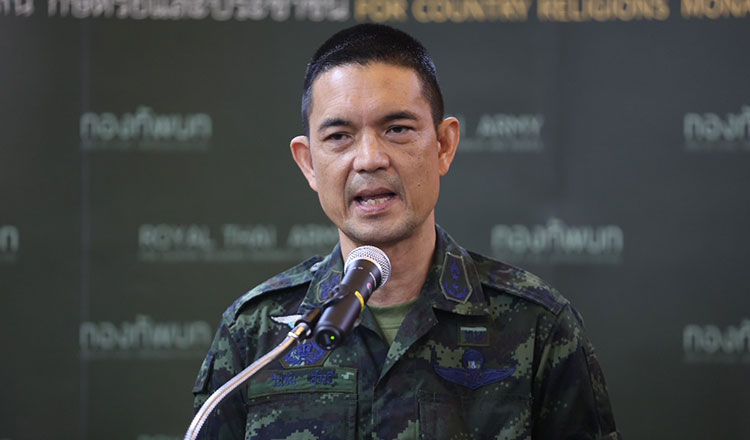
Yesterday, General Pana Klaewplodthuk, Commander of the Royal Thai Army, addressed the army’s position following a landmine incident in which two soldiers were injured, one of whom lost a lower leg.
“The situation clearly shows that hostile attitudes persist. The Royal Thai Army finds it necessary to suspend all agreements to safeguard its right to self-defence against unjust actions,” he said.
Major General Winthai Suvaree, Thai army spokesperson, said the Royal Thai Army remains fully prepared to protect Thailand’s sovereignty.
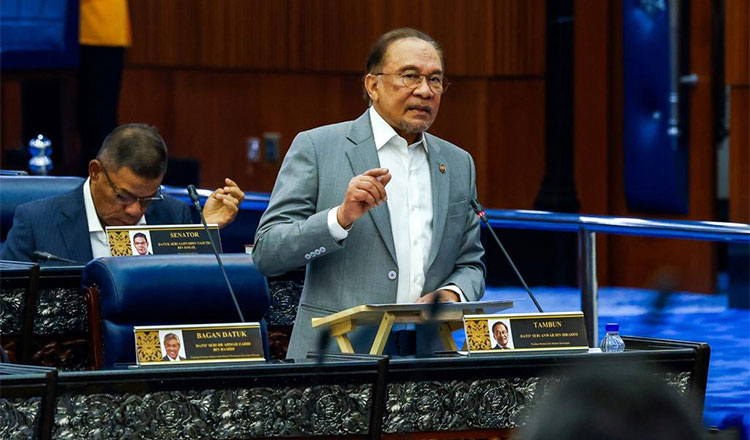
In response to the situation, ASEAN Chair Anwar said Malaysia remains ready to continue mediating peace between Thailand and Cambodia.
He said he was in touch with his counterparts in Thailand and Cambodia, Malaysian newspaper The Star reported.
“I have ordered the Armed Forces Chief to get the latest report so we can assist them further,” he said in parliament yesterday.
On Monday, Lieutenant General Rath Dararoth, Secretary of State at the Ministry of National Defence, delivered a presentation to the Foreign Military Attachés to Cambodia, representing 12 countries, at the ministry.
He briefed the attendees on the progress of the Kuala Lumpur Joint Declaration, outlining the agreed priority areas, and emphasised Cambodia’s readiness to work closely with Thailand to achieve a speedy return to normalcy.
Cambodian Mine Action Centre Director-General Heng Ratana, who attended the meeting highlighted and clarifies a number of priority tasks agreed upon under the Joint Declaration, while also emphasising Cambodia’s sincere implementation of its commitments and readiness to coordinate closely with Thailand for the mutual benefit of both countries and their peoples—particularly regarding the clearance of anti-personnel mines, an undertaking that must be carried out meticulously in strict adherence to the agreed procedures, with the highest sense of responsibility.
The Cambodian Mine Action and Victim Assistance Authority (CMAA) expressed its deep regret over recent reports by certain Thai media outlets that have made unfounded and defamatory allegations claiming that Cambodia has laid new landmines along the border.
“These baseless accusations come at a time when Cambodia is exerting its utmost efforts to clear landmines and relieve the suffering of communities affected by mines and explosive remnants of war. Such unfounded claims also risk undermining the ongoing cooperative efforts of the Joint Coordinating Task Force established by both countries to advance humanitarian demining and strengthen mutual confidence along the border,” CMAA said.
As a state party to the Anti-Personnel Mine Ban Convention (Ottawa Convention), Cambodia remains steadfast in upholding and fully complying with the principles and obligations of the Convention. Cambodia views mine action not only as a humanitarian imperative but also as a vital contribution to peacebuilding and a cornerstone of national development, it added.
“As a peace-loving nation, Cambodia calls upon Thailand to refrain from using the landmine incident that occurred on 10 November 2025, injuring two Thai soldiers in the Cambodia-Thailand border area, as a pretext to unilaterally suspend the implementation of the Joint Declaration signed on 26 October 2025,” CMAA said.
Tensions along the Cambodia-Thailand border erupted into five days of deadly fighting in July, marking one of the most serious escalations in recent years. The clashes stemmed from long-standing territorial disputes between the two nations.
Fighting involved artillery exchanges, ground troops, and the use of rockets and airstrikes by Thai forces targeting both military positions and civilian areas in Cambodia, resulting in multiple fatalities among soldiers and civilians. The conflict also displaced more than 200,000 people on both sides of the border, underscoring the heavy human toll of the escalation.
-Khmer Times-