Ultimatums and Lives at Stake: Cambodia’s Call for Law, Not Conflict
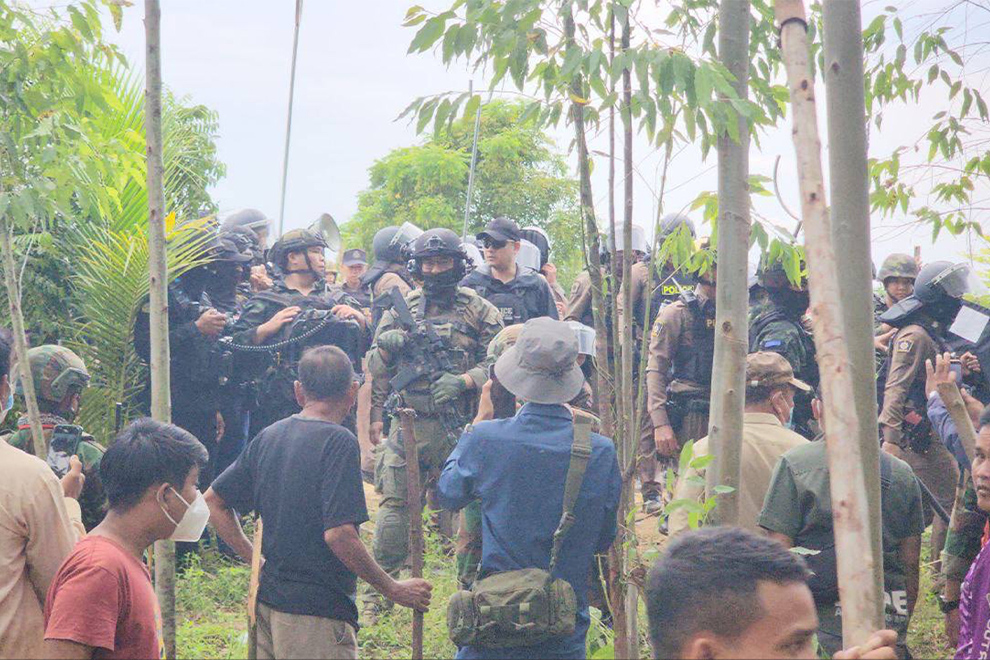 Photo [ Unarmed Cambodian civilians protest as Thai soldiers attempt to lay more razor wire in Prey Chan village on September 17. Supplied ]
In the border villages of Chouk Chey and Prey Chan, Cambodian families wake to the same land they have farmed for generations. Yet this peaceful life has been disrupted by razor wire, demands and rhetoric from across the border — demands that label ordinary villagers as “invaders”.
When Thai Prime Minister Anutin Charnvirakul declared that Thailand would not engage in dialogue with Cambodia until Phnom Penh “withdraws its troops” and “cleans up Thai soil”, he was issuing not diplomacy, but an ultimatum. Such words may rally nationalist sentiment at home, but they risk inflaming a manageable border issue into a broader regional conflict. They also spread a falsehood: Cambodia is not an invader, nor a threat to Thailand. Its forces remain within its own territory, protecting its people, while its government acts with restraint and respect for international law.
The border between Cambodia and Thailand has been legally settled for more than a century. The Franco-Siamese Convention of 1904 and the 1907 Treaty clearly defined the frontier, with maps recognised by the international community. Yet these facts are often overshadowed by nationalist rhetoric, giving the impression that Cambodia is encroaching on Thai land — a perception far from reality.
Diplomacy with pre-conditions rarely works. Cambodia has consistently sought dialogue, technical demarcation and legal clarification. Thailand, however, has repeatedly delayed or suspended meetings when domestic politics demanded a distraction. Even as tensions mount, global leaders are urging caution. US President Donald Trump has proposed a ceasefire and expressed willingness to serve as chair of an ASEAN-led peace process — a signal that the world is watching, and that every life disrupted by political theatre matters.
Meanwhile, villagers in Chouk Chey and Prey Chan bear the real cost of political posturing. Their rice fields are divided by razor wire, their daily routines constrained, their sense of security shattered. These are not soldiers or invaders — they are ordinary citizens, caught in the crossfire of misapplied nationalism.
Cambodia’s message is simple: disputes must be resolved through law, dialogue and mutual respect. Ultimatums, preconditions and unilateral threats only escalate tensions and threaten lives. Leadership, in this context, is not about issuing demands, but about courage — the courage to negotiate, to listen and to prioritise peace over pride.
The story unfolding at the Cambodia–Thailand border is not just about lines on a map. It is about people, laws and the choices leaders make. Ultimatums may divide, but dialogue can save lives — if the world and the leaders of ASEAN choose reason over rhetoric.
Roth Santepheap is a geopolitical analyst based in Phnom Penh. The views and opinions expressed are his own.
-The Phnom Penh Post-