The Philippines: Leaders and heroes in humanitarianism
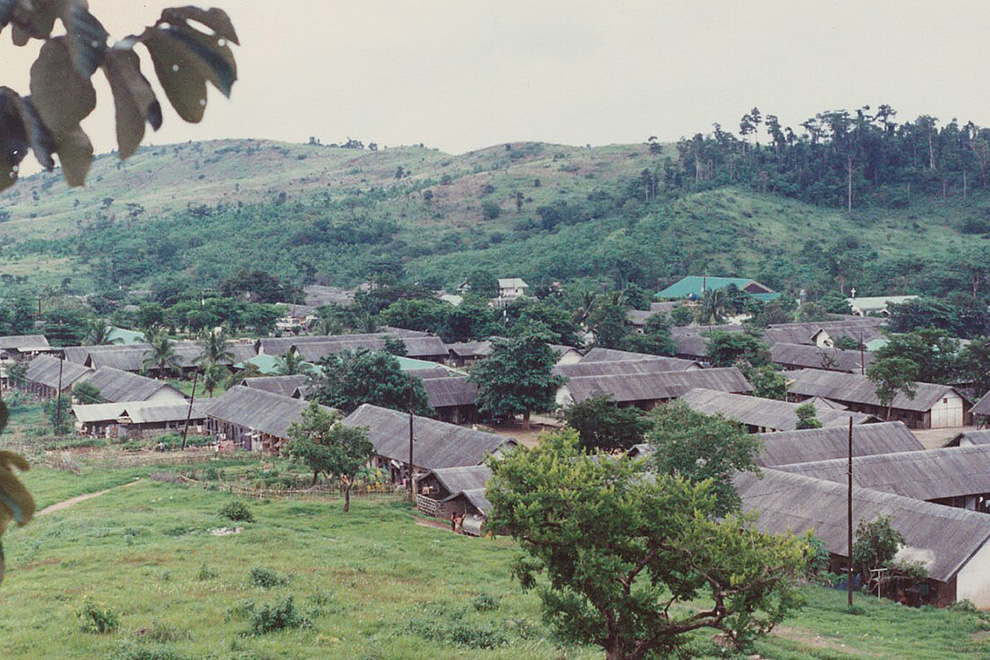 A refugee processing centre in the Philippines, in 1985. DC-Cam
-Opinion-
Ensuring human dignity, respect for human rights and protection of human life is perhaps the overarching principle of all human rights and humanitarian law. Human rights laws that affirm the right to life, freedom of expression, religion and protection from discrimination, exploitation and slavery among others depend upon this principle.
Likewise the Geneva Conventions, The Hague Accords, and many, if not all other treaties and laws within the context of humanitarian law are centred on the principle that there must be a sense of commitment and accountability for treating people with dignity, humanity and respect.
Refugees are a category recognised as deserving particular attention for humane treatment and protection, if only because, by definition, they are vulnerable. Refugees deserve protection as much as the sick and wounded or prisoners of war; however, unlike many other humanitarian conventions that are recognised within the Southeast Asian region, they are not treated with commensurate dignity, respect and care.
Nowhere is this issue more evident than in the various border crises that have occurred during the 20th century, most recently along the Cambodian borders. With the collapse of the Khmer Rouge regime in 1979, Cambodian refugees suffered horribly in camps in Thailand, and recently, with a border conflict arising once again between Cambodia and Thailand, Cambodians along the border in particular have found themselves to be a displaced people.
Current events highlight the importance of recognising models, leaders, and heroes in this space not only to give thanks but also to set the standard for others.
I want to call out the Republic of the Philippines as the only Association of Southeast Asian Nations (ASEAN) country (apart from Cambodia) to have signed the 1951 Refugee Convention and the 1967 Protocols. Moreover, per the UNHCR, the Philippines enacted a national asylum procedure that deserves recognition.
I also want to call attention to the Philippines Refuge Processing Center (PRPC), which received Cambodian refugees following the collapse of the Khmer Rouge regime from 1980 through 1995. This centre was inaugurated under the late Philippines President Ferdinand Marcos, Sr., and though it is now closed, it remains a symbol of how the Filipino people assisted the Cambodian people and many other people in Southeast Asia in their hour of need.
During their stay, refugees received housing, training in skills, English language classes and preparation for their new lives abroad. They did all this despite having a GDP of a country in the lower middle-income class of nations. Despite its economic position, the Philippines stood out among the region and world for its kindness and compassion to refugees.
There is no greater honour than being recognised as having helped someone in their greatest hour of need and the Philippines holds this distinction, not only for what they did for the Cambodian and other ASEAN people then, but their commitment to all refugees today. The Republic of the Philippines truly stands out as a model, leader and hero in this field of humanitarianism.
Youk Chhang is the director of the Documentation Center of Cambodia. The views and opinions expressed are his own.
-The Phnom Penh Post-