Thailand’s Battlefield Media: How the Army Manufactures Lies to Justify Aggression Against Cambodia
 Thailand’s Battlefield Media: How the Army Manufactures Lies to Justify Aggression Against Cambodia
In covering the Cambodia–Thailand border dispute, much of the Thai media—including reporters for internationally respected outlets like Reuters—have abandoned independent journalism. They serve as mouthpieces for the Thai Army, transcribing whatever generals dictate. Their so-called “reporting” is propaganda masquerading as news.
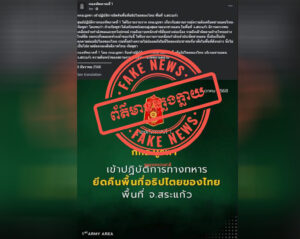
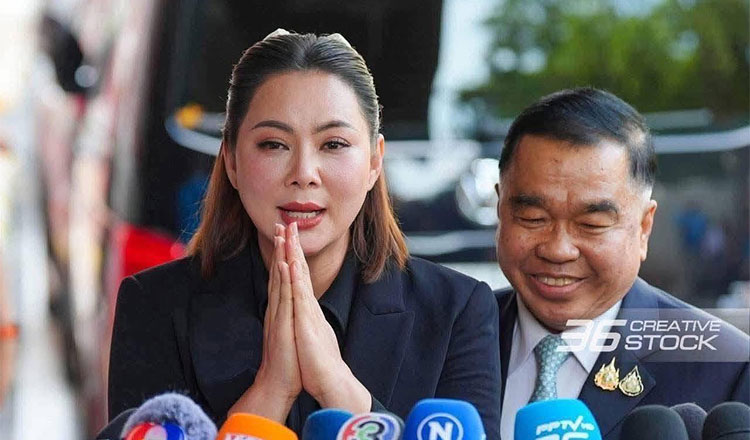
Every headline and soundbite is scripted to echo the military’s narrative. On the ground, Thai officers control what can be seen and heard—and what must be hidden. This is no ordinary spin; it is a deliberate information operation. The result: a relentless flow of malinformation (twisted truths), disinformation (outright lies), and fake news designed to hide Thailand’s violations and demonize Cambodia. Thailand has effectively appointed Miss Beauty to Miss Information—mastering the art of misinformation on the battlefield.
A glaring example is the Thai army’s false claim that it controls 11 disputed border areas. The reality tells a starkly different story: Cambodian forces have regained nearly all key flashpoints—including Tra Krabey and Ta Mone temples—after fierce battles, as even the General of the Second Army Region 2 has admitted. Far from holding ground, the Thai military has suffered defeats, with many Thai soldiers killed during the fighting—yet these losses are hidden. Still, Thai media uncritically echo inflated claims, perpetuating a dangerous illusion of Thai dominance while masking battlefield failures.
This is part of a dirty strategy: Thailand acts as aggressor, violating ceasefires and crossing into Cambodian territory, but loudly cries victimhood to justify further military action. By portraying itself as under siege, Thailand attempts to manufacture moral high ground while concealing its provocations and violations. This cynical victimhood narrative is echoed relentlessly by the Thai military and media alike.
Both Cambodia and Thailand, through the General Border Committee (GBC), have agreed in official minutes to stop spreading false information and fake news that escalate tensions and distort the truth. Yet, despite this commitment, Thai military-backed media continue to propagate disinformation, undermining peace efforts.
From the lowest soldier to the highest general, the Thai military promotes this lie in unison. Reporters embedded in this system—willingly or under pressure—repeat these claims without verification. The “facts” Thai audiences receive are filtered through military command, not journalistic inquiry. What they hear is fiction sold as fact.
By contrast, Cambodian media report verified facts, eyewitness accounts, and clear evidence. Cambodian audiences receive truth—not propaganda. This transparency is why Cambodians see through Bangkok’s military-media machine.
If peace is to hold, truth must cut through this fog of war. Thai and international journalists have a duty to report the full story, expose falsehoods, and include Cambodian voices. Until then, mistrust will fester, leaving the region one lie away from renewed conflict.
If fighting restarts, Thailand will be the provocateur—breaking the ceasefire to fulfill its ambition of further incursions into Cambodian territory.
Roth Santepheap is a geopolitical analyst based in Phnom Penh. The views expressed are his own.