Editorial 39 – Wetlands: Where Land and Water Meet
 Editorial 39 – Wetlands: Where Land and Water Meet
Opening Thought
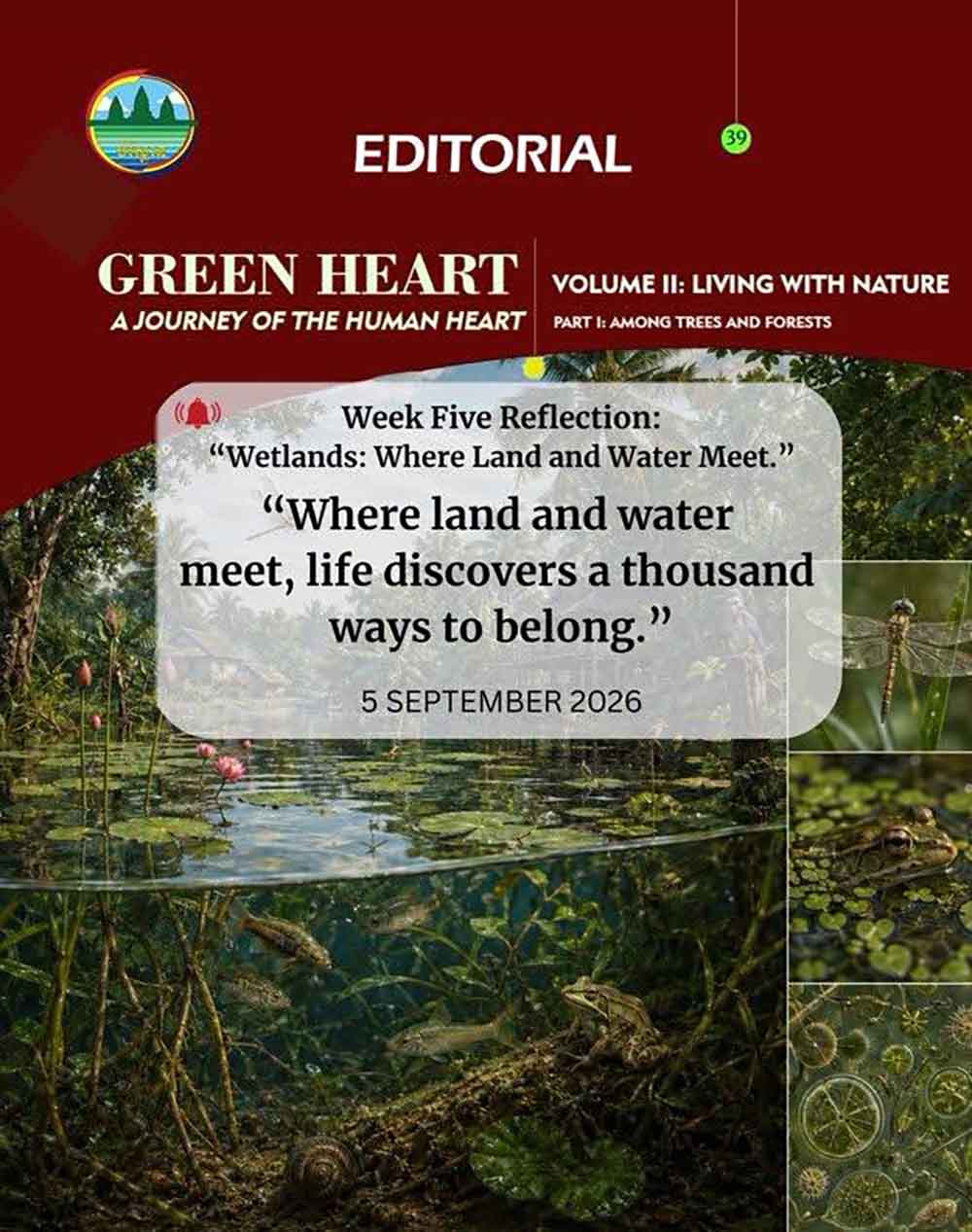
“Where land and water meet, life discovers a thousand ways to belong.”
Editorial
A wetland may be flooded all year, wet only in certain seasons, covered with grasses, filled with trees, or spread across shallow water. Marshes, swamps, peatlands, floodplains, and other wet places differ greatly, but all are shaped by the presence of water.
Wetlands are sometimes dismissed as empty or useless land. In fact, many support remarkable biodiversity. Fish may use flooded areas for feeding or breeding. Birds rest and nest. Amphibians, insects, plants, and microorganisms find specialized habitats.
Wetlands can also slow and store water, reducing the speed of some floods. Vegetation and soils may trap sediment and transform or retain certain nutrients and pollutants. These functions have limits; a wetland is not a place to dump waste or untreated pollution.
Some wetlands store large amounts of carbon in their soils. When drained or burned, particularly carbon-rich wetlands can release greenhouse gases and lose their ecological functions. Protecting them may support climate, water, and biodiversity goals together.
People rely on wetlands for fisheries, farming, plants, transport, tourism, culture, and livelihoods. Protection should recognize these relationships and work with communities. Keeping every wetland untouched is not always possible, but treating wet places as worthless invites costly mistakes.
Wetlands change naturally with seasons and water levels. A place that looks dry at one time may still be part of a wetland system. Good decisions require observation across time and knowledge of local hydrology.
Safety is important. Wetlands may contain deep mud, dangerous animals, disease risks, or unstable ground. Students should observe only from approved places with adult guidance.
The meeting of land and water teaches flexibility. Wetlands are neither fully one nor the other, yet their in-between character creates value. Human thinking often prefers clear categories; nature reminds us that boundaries can be living spaces.
When you see reeds, shallow water, flooded forest, or a seasonal pool, pause before calling it empty. Ask who lives there, where the water comes from, and what happens when the water leaves. The answers may reveal one of Earth’s richest neighborhoods.
Wetlands can also be classrooms of change. Visit the same approved viewpoint in wet and dry periods, and the landscape may look entirely different. Long-term attention prevents us from judging a seasonal system by one brief visit.
Patience helps the wetland tell its complete story.
Buddhist Reflection
Wisdom resists quick judgment. What appears muddy or unproductive may sustain many lives. Humility allows us to learn the true nature of a place before deciding what it is worth.
Today’s Reflection
What benefit of wetlands had I previously overlooked?
Today’s Action
Find a reliable image or description of a local wetland. List three species or community benefits connected to it.
Today’s Pledge
Today I will respect the living places where water and land meet.
When we protect nature, we protect all beings—including ourselves.