Cambodia vows to keep border dispute on global agenda, as alleged violations persist
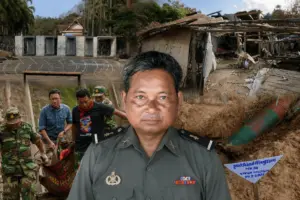
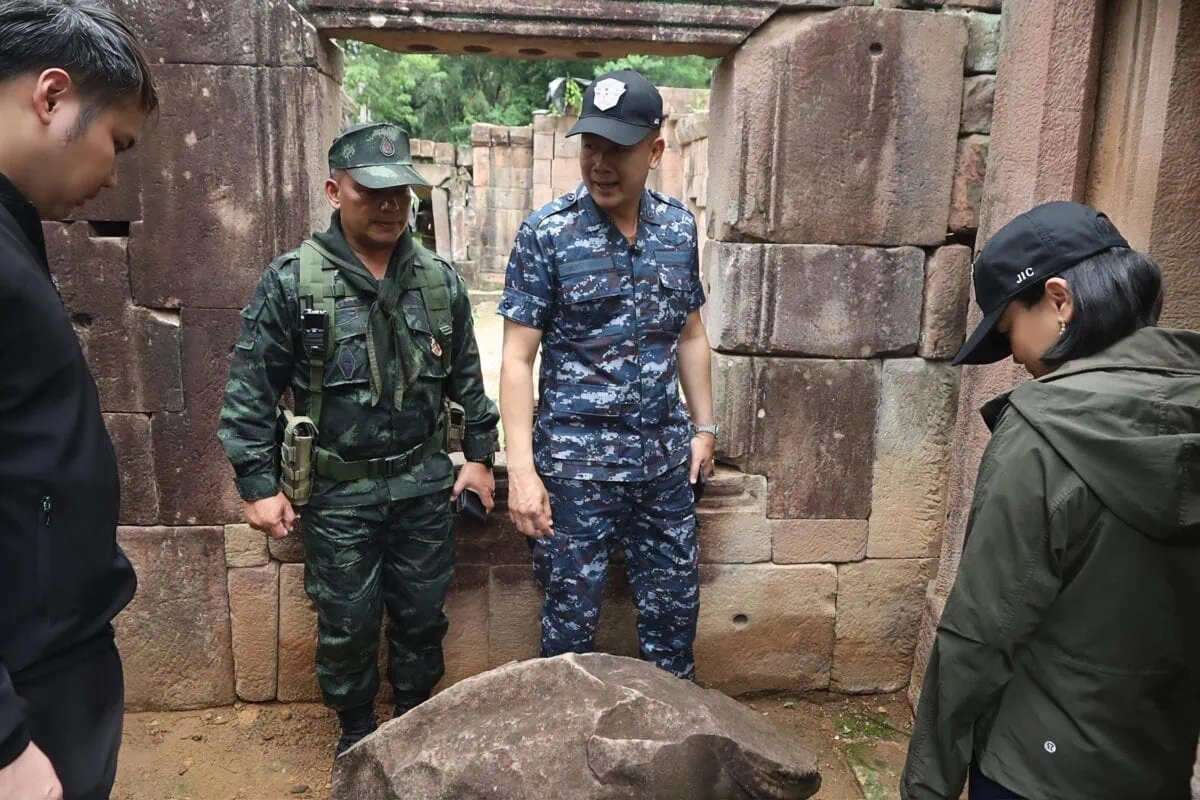 Thai military personnel stationed at Ta Mone Thom temple, which Thailand seized and occupied following the ceasefire. Supplied
Thailand has conceded that Cambodia has the right to raise the current bilateral border dispute at the upcoming Francophonie summit in Phnom Penh, but insists that international forums cannot determine boundaries. Cambodia has reaffirmed that it will continue voicing the issue globally as long as alleged violations of its sovereignty remain unresolved.
Air Chief Marshal Prapas Sornchaidee, director of Thailand’s Joint Information Centre on the Thailand-Cambodia Situation (JIC), asserted that Thailand was not concerned about Cambodia’s plan to discuss the dispute through the Organisation Internationale de la Francophonie.
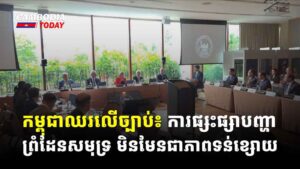
His September 2 remarks came in response to Cambodian ambassador to France Luy David, who alleged that the Thai ambassador in Paris had attempted to use a diplomat from a third country to convince him not to raise what Cambodia describes as Thai aggression at the upcoming 20th Francophonie Summit.
Cambodia is preparing to host the high-profile gathering in mid-November 2026.
“The important issue is not who speaks at which forum, but what is said and whether it can be verified,” Prapas said.
He acknowledged that Cambodia had the right to present its position internationally and that Thailand had an equal right to respond. However, he argued that speaking at an international forum should be distinguished from having the legal authority to determine a border.
“No matter how many times one side declares at an international forum that an area belongs to it, or describes the other side as an aggressor, a unilateral claim does not become a legal settlement,” he said.
Prapas maintained that boundary questions must be settled using applicable law, verifiable evidence, bilateral agreements and mechanisms accepted by both governments.
Responding to Cambodia’s accusations that Thailand was attempting to establish a fait accompli by changing conditions on the ground, he said the allegation required evidence and should be examined through agreed bilateral processes.
Cambodia has repeatedly accused Thai forces of maintaining a presence on its territory and installing razor wire and shipping container barricades, as well as unilaterally constructing fortifications and other infrastructure. Phnom Penh says some Cambodian residents remain unable to return safely to their homes and land because of conditions along the border.
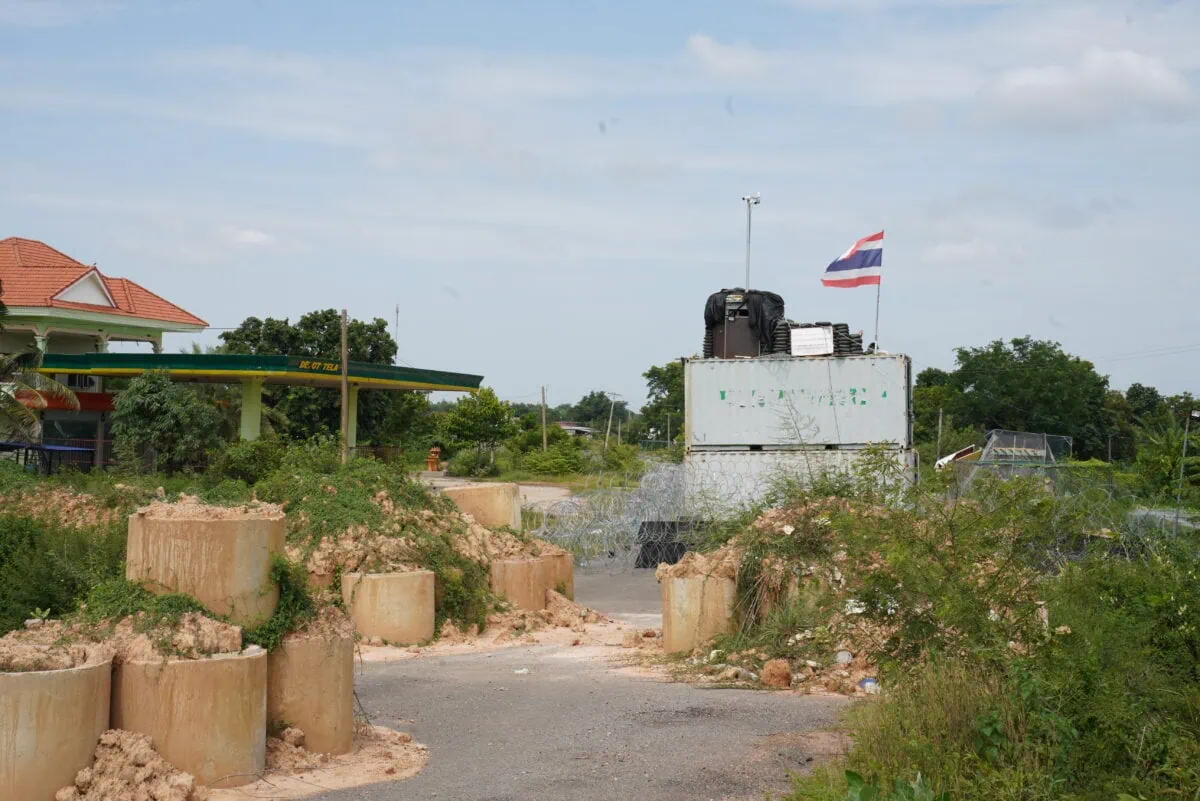
Prapas argued that the legal status of a boundary could not be changed merely by the installation of physical structures or the issuing of public statements. Where the two countries disagreed over an area, he said, relevant information should be presented through mechanisms accepted by both sides and jointly examined.
He added that Thailand did not reject international support for peace, de-escalation or fact-finding, but opposed turning a bilateral dispute into an international political contest based on information presented by only one party.
“Cambodia has the right to speak at every forum, and Thailand is ready to provide clarification at every forum,” he said.
“But no forum can turn a unilateral claim into an international boundary. Boundaries must be determined through law, facts and mechanisms accepted by both countries, not by the number of times a claim is repeated in the media,” he added.
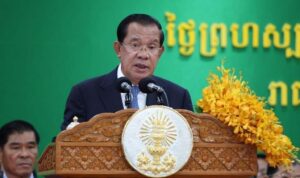
Following the Thai response, Minister of Information Neth Pheaktra reaffirmed that Cambodia would continue raising the border dispute at ASEAN, the Francophonie, the UN and every other relevant international forum while alleged violations remained unresolved.
“As long as the violations continue, Cambodia will not remain silent,” he said.
Pheaktra argued that diplomatic pressure for Cambodia to remain silent would neither change the situation along the border nor resolve the underlying dispute.
“If Thailand wants Cambodia to stop speaking about the violations and encroachments upon Cambodian territory, the most effective course is not to ask Cambodia to remain silent,” he said.
“Rather, Thailand must cease actions that violate Cambodia’s sovereignty and territorial integrity and resolve the dispute peacefully, in accordance with international law and existing agreements,” he added.
The minister said Cambodia had legitimate reasons to continue informing the international community as long as Thai forces and structures which Phnom Penh considers unlawfully placed remained on Cambodian territory, and affected residents were unable to return home safely.
“This is not about seeking confrontation. It is about defending the national interest and pursuing peaceful diplomacy,” he insisted.
Pheaktra rejected the suggestion that Cambodia’s use of international forums constituted an escalation or an attempt to persuade other countries to take its side. He described diplomacy as a peaceful alternative to armed confrontation.
“Diplomacy is the alternative to weapons, and speaking is better than shooting,” he said.
The exchange followed a September 1 social media post by David, in which the Cambodian ambassador said he had firmly rejected an alleged request conveyed through a third-country diplomat.
“The ambassador of ‘House No. 2’ [Thailand] tried to get the ambassador of a third country to convince me not to raise the Cambodia-Thailand border dispute at the Francophonie forum,” David wrote.
He said it was his duty as a Cambodian diplomat to protect the national interest, defend Cambodia’s account of events and explain to the international community “who is the aggressor and who is the victim”.
“There is no reason for me to remain silent,” he added.
Senior Thai officials have previously accused Cambodia of internationalising the bilateral dispute. Bangkok also cautioned Phnom Penh in May against raising the matter before the UN Security Council.
Cambodia has maintained that reporting the situation to international partners is not an attempt to seek support against Thailand. It has described the approach as a peaceful effort to present facts, protect its legal position and promote respect for international law.
Phnom Penh has also called for the end of unilateral activities on the ground and the resumption of formal survey and demarcation work through the Joint Boundary Commission, in accordance with existing agreements.
Pheaktra said Cambodia continued to support negotiations, bilateral mechanisms and other peaceful means consistent with international law. However, he argued that dialogue could not require the Kingdom to give up its right to speak publicly or defend its position.
“Cambodia does not claim what belongs to others. But Cambodia cannot accept the use of force or unilateral actions to create new facts on the ground and then be expected to remain silent about them,” he said.
He stressed that Cambodia’s position was directed against alleged violations, not the Thai people.
“It is not to provoke confrontation, but to defend peace based on law. Not to create enemies, but to defend sovereignty. Not to oppose the Thai people, but to oppose any action that violates Cambodia’s rights and territorial integrity,” he said.
“Until then, Cambodia will continue to speak — with facts, with law and with dignity,” he concluded.
-Phnom Penh Post-