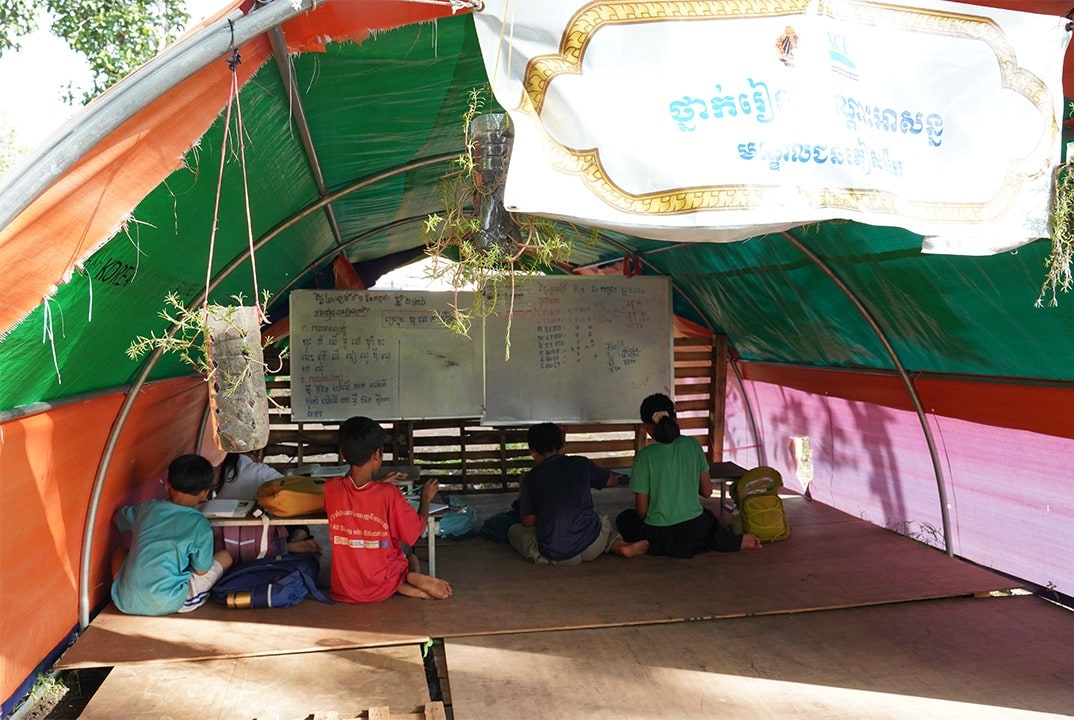
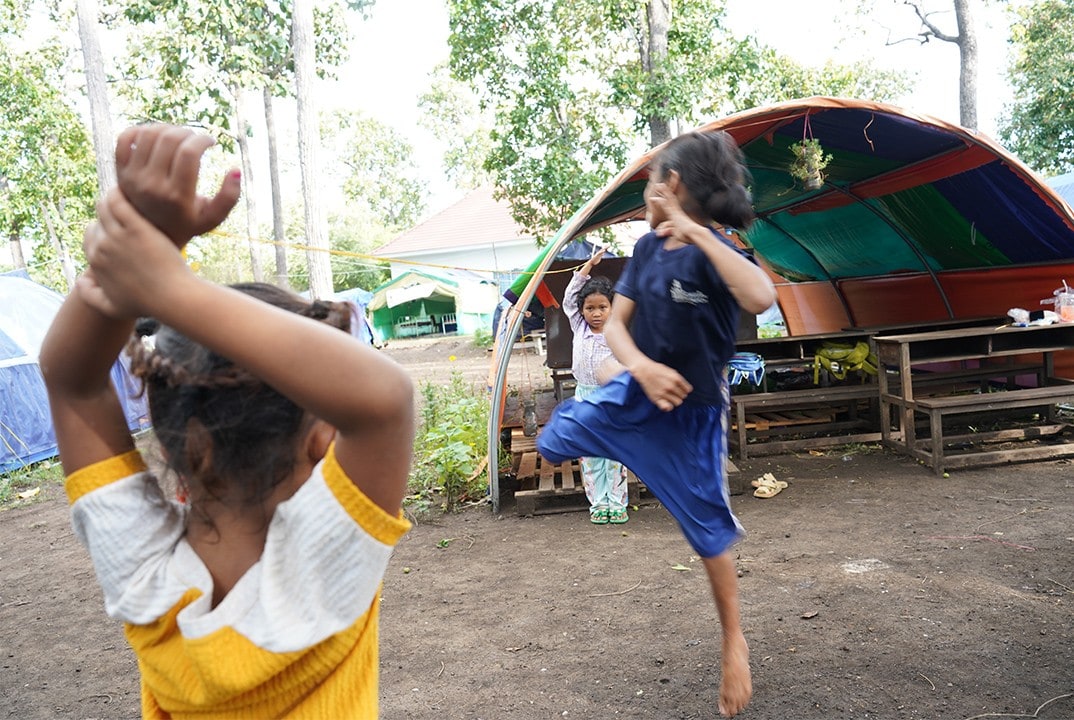
Every morning, children weave through rows of blue tarpaulin shelters, their laughter echoing across a displacement camp that has become an unlikely neighbourhood.
Some rush to temporary classrooms, others chase each other through narrow dirt lanes, while parents quietly prepare meals or fetch water.
For the children, life has adapted to the camp.
For their parents, however, every day begins with the same hope: returning home.
Nearly a year after fighting along the Cambodia-Thailand border forced thousands to flee western Cambodia, dozens of families in Pursat province remain displaced.
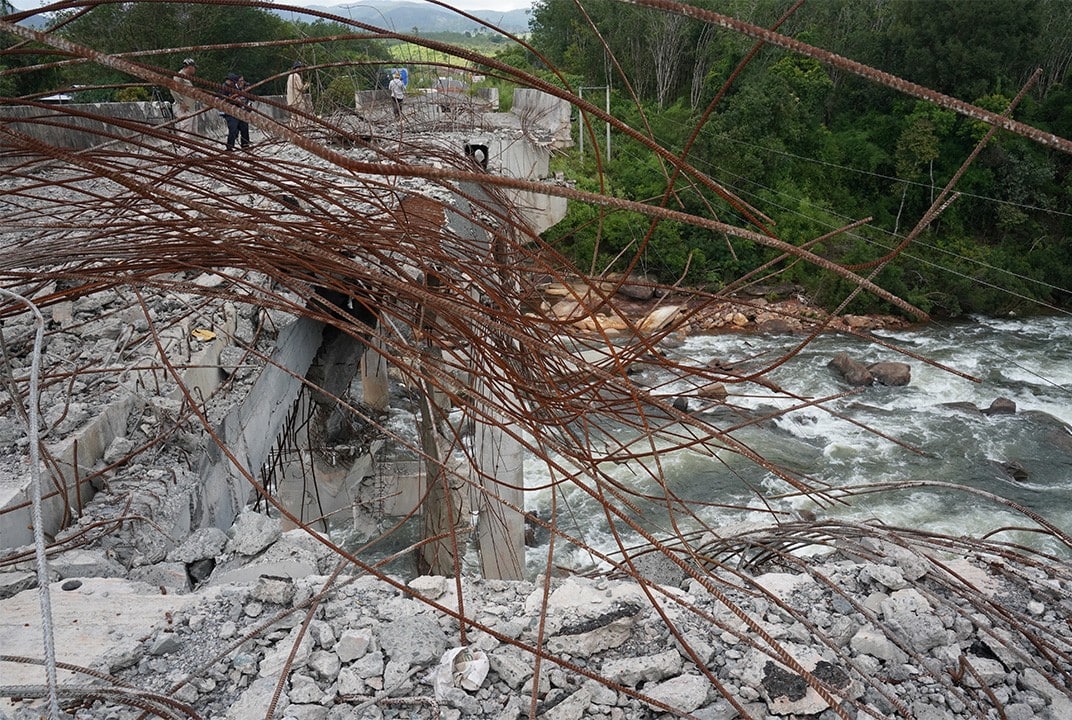
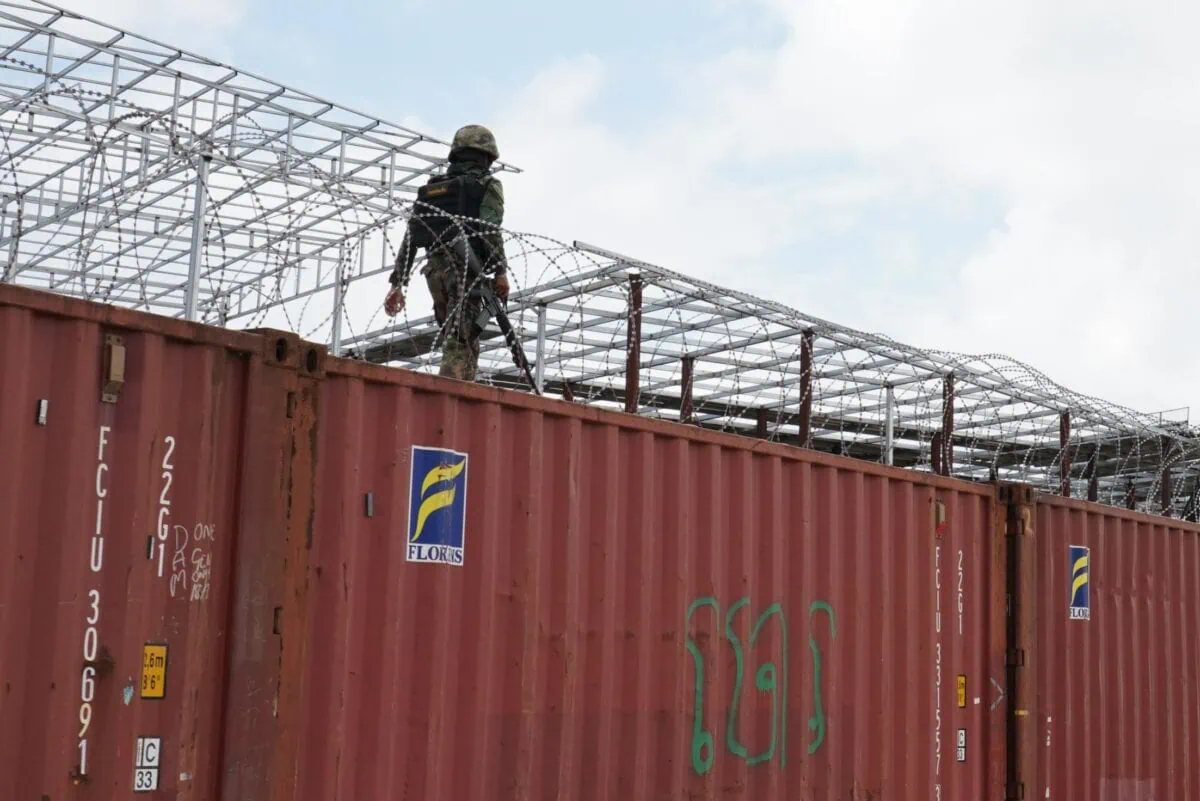
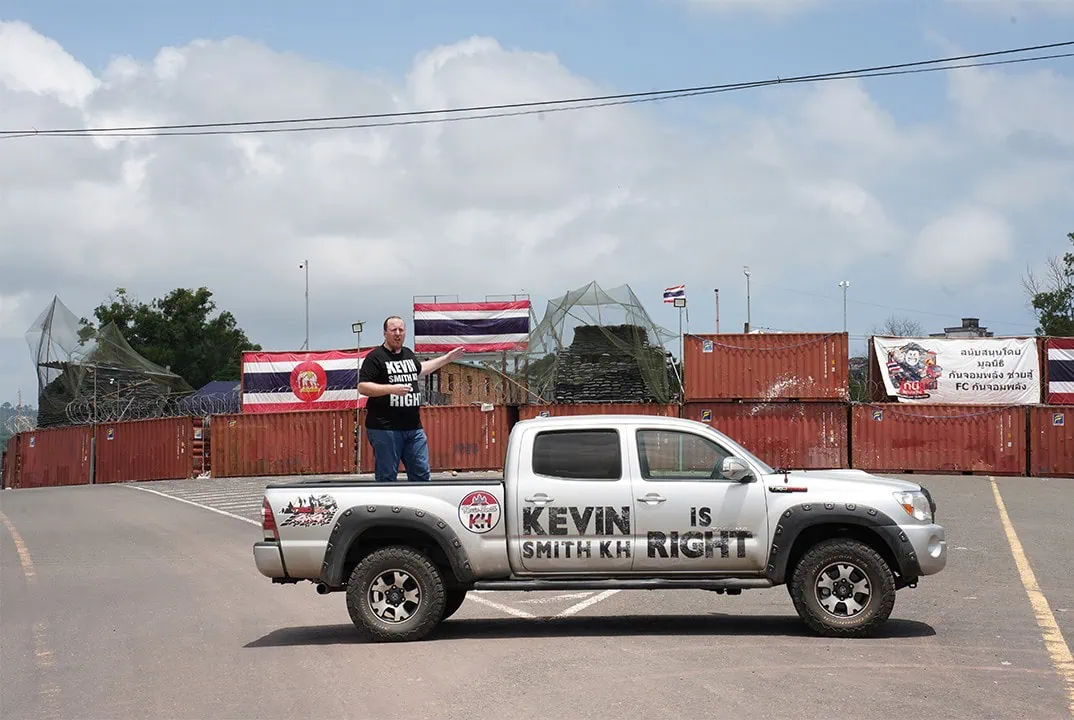
Despite the ceasefire of last December, they say Thai military containers and razor-wire fortifications near their villages continue to prevent them from returning to their homes, farms and livelihoods.
As of June 16, Pursat provincial authorities recorded 69 displaced families with 203 members at two evacuation centres in Pramuoy commune, Veal Veng district. Among them are 104 women and 53 children under the age of 15.
Hun Sen Pramuoy High School accommodates 61 families, totalling 170 people, while another eight families, comprising 33 people, remain at Pramuoy Pagoda.
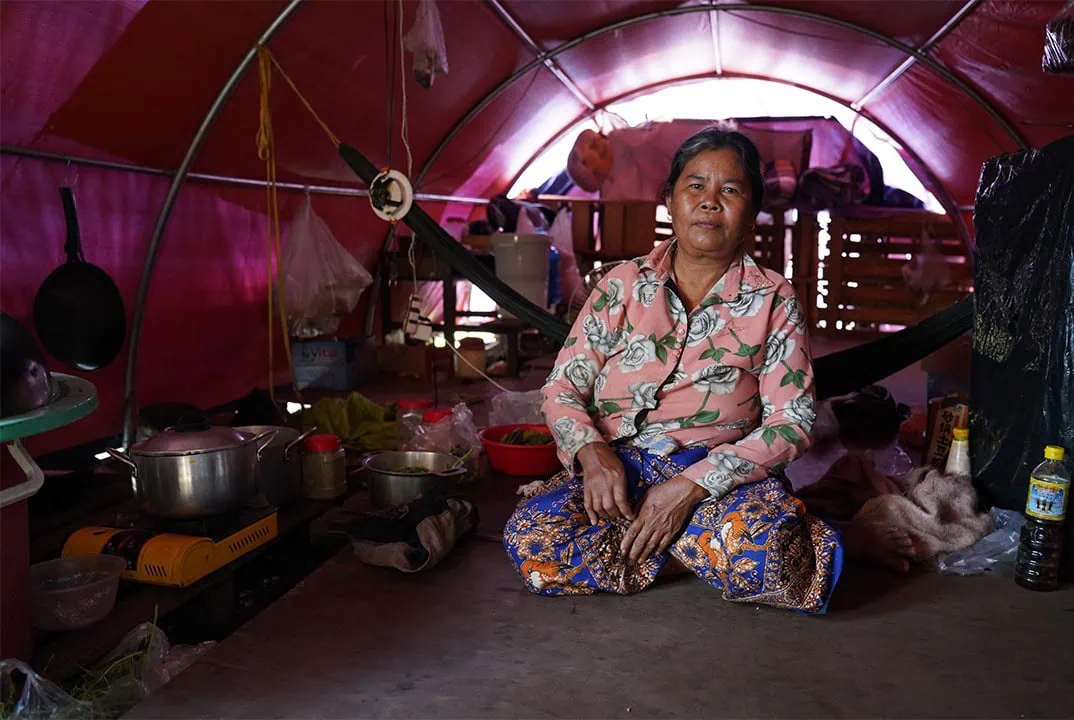
The shelters, originally intended as temporary accommodation, have gradually become semi-permanent homes.
Inside one tent, which serves as a classroom, children continue their education, while outside, parents worry less about school than whether they will ever recover the homes they left behind.
Homes beyond the razor wire
Among those still waiting is Sam Sary, whose family lived in one of the homes closest to the Thai military’s newly installed razor wire barricades, in Thmar Da commune.
She said her family fled during the fighting and later returned briefly, only to discover their house damaged and many belongings missing.
“Because the razor wire is now so close to our house, we no longer feel safe. We never know what could happen,” she said.
Sary explained that all she wants is for both governments to reach a solution that allows civilians to resume normal lives.
“I appeal to both the Cambodian and Thai governments to resolve this as quickly as possible so ordinary people can return home and earn a living again,” she said.
She also urged ASEAN and the international community to help restore peace.
“We ask ASEAN and the international community to help Cambodia and Thailand resolve this quickly. This is Cambodian land and we simply want to live peacefully again,” she added.
Recalling her first visit home after the evacuation, Sary became emotional.
“When I came back after 72 hours, I cried. Seeing my house damaged and my belongings gone, I felt like I had lost everything,” she said.
No homecoming, despite ceasefire
The situation has already drawn international attention.
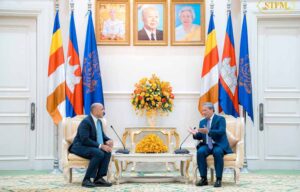
On March 27, Minister of Foreign Affairs and International Cooperation Prak Sokhonn led diplomatic staff and representatives of international organisations on a field visit to Thmar Da commune, where they met displaced civilians and witnessed Thai fortifications.
During the visit, Sokhonn reiterated that Cambodia remains committed to resolving the border dispute peacefully through international law, existing bilateral agreements and established mechanisms, while rejecting any attempt to alter recognised boundaries through force.
Yet for villagers, diplomacy has so far brought little change.
Yong Raem, who has lived in Thmar Da since 1999, said the landscape has changed dramatically since Thai troops established containers and razor wire barricades after the ceasefire.
“Before, people lived there with rubber plantations, durian orchards and farms. Many families had large houses. Around half the residents still cannot return,” she said.
Some displaced families remain in camps, while others rent accommodation or stay with relatives.
She acknowledged that fear has become part of daily life.
“We live in fear day and night. Before, we still had work and some income. Now there is nothing. Our income has dropped to zero,” she said.
According to Raem, Thai troops moved deeper into the area only after the ceasefire came into effect.
“They entered after the ceasefire. Even though the shooting stopped, the encroachment continued,” she said.
Children growing up in camps
The conflict has also reshaped childhood.
Nine-year-old Mach Rasmey, now studying Grade Three in the camp, said he misses his home.
“I miss my house, my school and my relatives. I haven’t seen them for a long time,” he told The Post.
When asked what he would do if allowed to return tomorrow, his answer was immediate.
“I want to raise chickens and ducks again, plant crops and go back to school,” he said.
Although he now attends three classes each day at the camp, he said life there is incomplete.
“Here I can study, but I can’t farm or do anything else. At home we had land, crops and animals,” he explained.
When asked what prevents his family from returning, he replied: “Thailand has surrounded our home.”