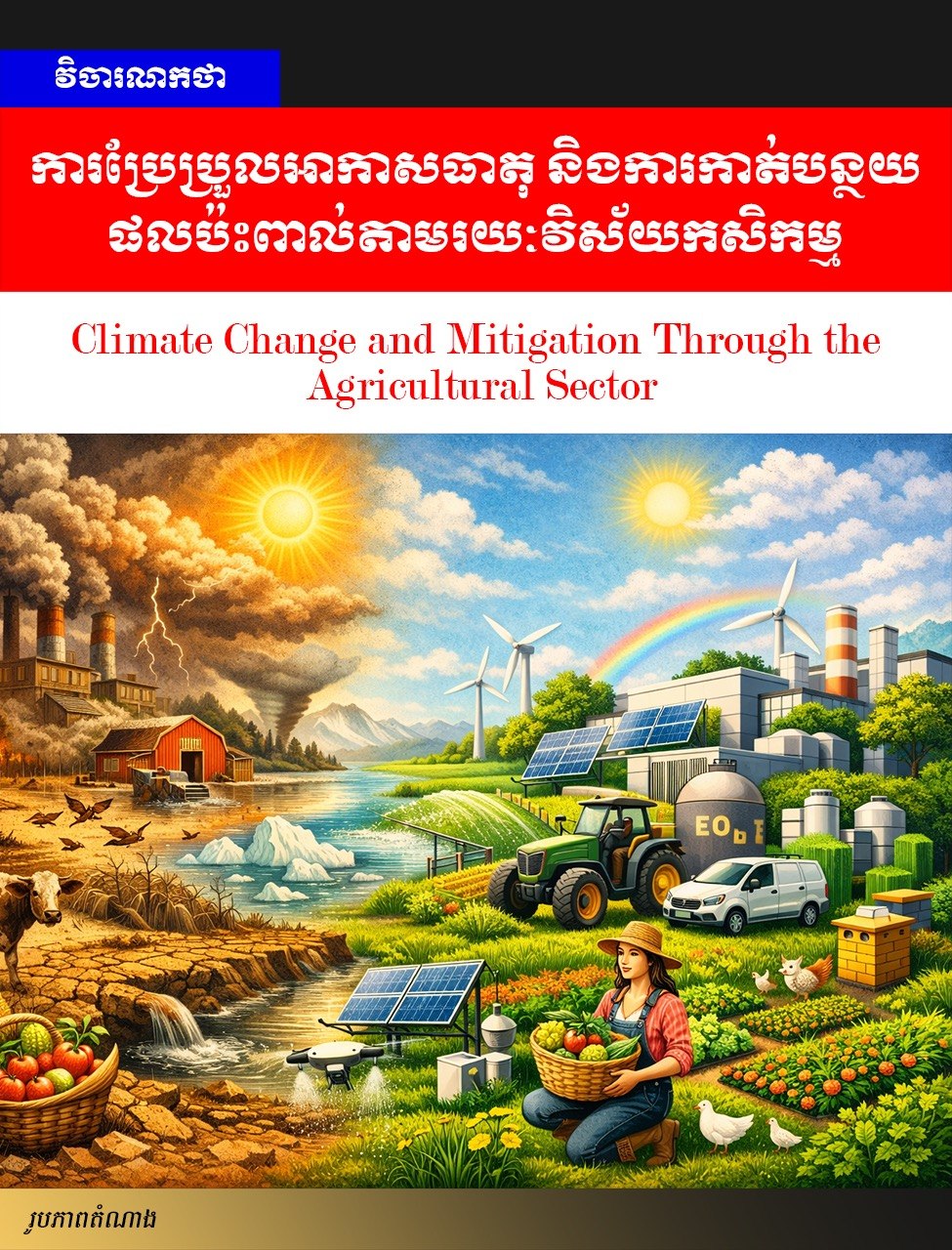
Climate Change and Mitigation Through the Agricultural Sector
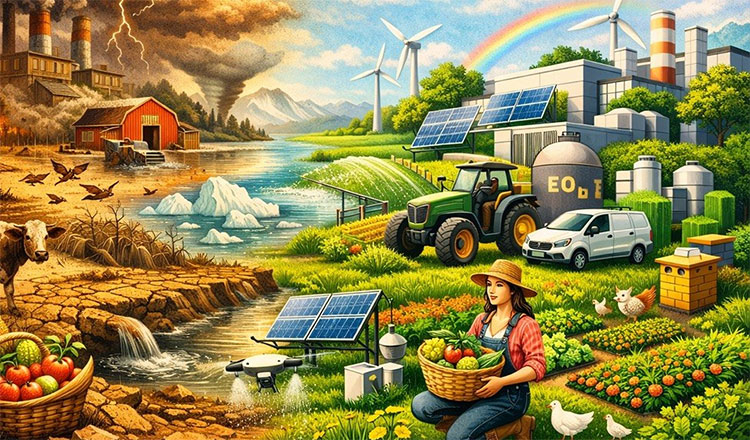 Climate Change and Mitigation Through the Agricultural Sector
#opinion
Climate change has become one of the greatest challenges facing humanity in the 21st century. Rising global temperatures, changing rainfall patterns, prolonged droughts, floods, storms, land degradation, and water scarcity are increasingly affecting economies, ecosystems, and human well-being across the world. Among the sectors most vulnerable to climate change—and at the same time one of the sectors most capable of contributing to climate solutions—is agriculture.
Agriculture lies at the heart of human survival. It feeds populations, supports livelihoods, sustains rural communities, and contributes significantly to national economies. Yet agriculture is deeply dependent on stable climate conditions. When weather patterns become unpredictable, agricultural systems become increasingly fragile.
Today, farmers around the world are already experiencing the effects of climate change. In Africa, severe droughts are reducing crop yields and threatening food security. In Asia, floods and stronger storms regularly damage rice fields and farming infrastructure. In Europe and North America, heatwaves and water shortages are affecting productivity. In Latin America, changing weather patterns are impacting major agricultural exports such as coffee, maize, and soybeans.
Climate change is therefore not only an environmental issue. It is also a growing threat to global food systems, rural economies, and social stability.
At the same time, agriculture itself contributes significantly to greenhouse gas emissions. Deforestation for farmland expansion, methane emissions from livestock, excessive fertilizer use, rice cultivation, open burning, and unsustainable land management all contribute to climate change. This creates a complex relationship in which agriculture is both a victim of climate change and a contributor to it.
For this reason, climate change mitigation through the agricultural sector has become increasingly important in global climate strategies.
Mitigation in agriculture does not mean reducing food production. Rather, it means transforming agricultural systems to become more sustainable, resilient, and environmentally responsible while continuing to feed a growing global population.
One of the most important mitigation approaches is sustainable land management. Healthy soils play a critical role in absorbing and storing carbon from the atmosphere. Conservation agriculture, reduced tillage, crop rotation, organic farming practices, and improved soil management can enhance soil fertility while reducing greenhouse gas emissions.
Protecting forests and preventing deforestation are equally essential. In many parts of the world, forests are cleared for agricultural expansion, releasing large amounts of carbon dioxide and weakening biodiversity. Sustainable agricultural planning and agroforestry systems—where trees and crops are integrated together—can support food production while preserving ecosystems and carbon sinks.
Livestock management is another major area for climate mitigation. Improved feeding systems, better manure management, and modern agricultural technologies can help reduce methane emissions while increasing productivity. Similarly, more efficient water management and sustainable rice cultivation methods can significantly lower emissions in many agricultural regions.
The reduction of open burning is particularly important. In many countries, agricultural residues are burned after harvest, contributing to air pollution, greenhouse gas emissions, and public health problems. Promoting alternative uses of agricultural waste, including composting, bioenergy production, and soil enrichment, can provide environmental and economic benefits.
Technology and innovation are also transforming climate-smart agriculture.
Precision farming, drought-resistant crops, renewable energy use in agriculture, improved irrigation systems, satellite monitoring, and digital farming tools are helping farmers adapt to climate challenges while reducing environmental impact.
Importantly, climate mitigation through agriculture also strengthens food security. Sustainable farming practices improve soil health, conserve water, reduce environmental degradation, and increase long-term agricultural resilience. In this sense, protecting the environment and strengthening agricultural productivity are not opposing goals; they are deeply interconnected.
However, major challenges remain.
Many small-scale farmers in developing countries lack access to technology, financing, infrastructure, and climate information. Rural communities often face economic pressures that make sustainable transitions difficult without external support. Climate mitigation in agriculture therefore requires strong international cooperation, government support, investment, and knowledge-sharing.
Climate justice must also remain central to global agricultural policies. Developing nations often contribute relatively little to global greenhouse gas emissions but suffer disproportionately from climate-related agricultural losses. Supporting vulnerable farming communities through climate financing, technical assistance, and sustainable development programs is essential for global stability and food security.
Governments play a critical role by promoting policies that encourage sustainable agriculture, environmental protection, and responsible land use. Investments in rural infrastructure, agricultural research, renewable energy, irrigation systems, and farmer education can accelerate the transition toward greener agricultural systems.
Consumers also influence change through food choices, waste reduction, and support for sustainable production systems. Globally, food waste remains a major contributor to environmental pressure. Reducing waste across supply chains can significantly lower emissions while improving food availability.
Ultimately, climate change mitigation through the agricultural sector represents a broader shift in humanity’s relationship with nature and food production. For generations, agricultural expansion often prioritized short-term output without fully considering environmental consequences. Today, the climate crisis is forcing the world to recognize that long-term agricultural success depends on healthy ecosystems, stable climates, fertile soils, and responsible resource management.
The future of agriculture must therefore be sustainable, resilient, and environmentally balanced.
Climate change mitigation through agriculture is not simply about reducing emissions. It is about protecting food security, preserving livelihoods, conserving biodiversity, strengthening rural communities, and ensuring that future generations inherit a planet capable of sustaining life.
Human civilization began with agriculture. The future of civilization may now depend on how wisely humanity transforms it in the face of climate change.
-Khmer Times-