Fiscal reform must be fairer and more data-driven
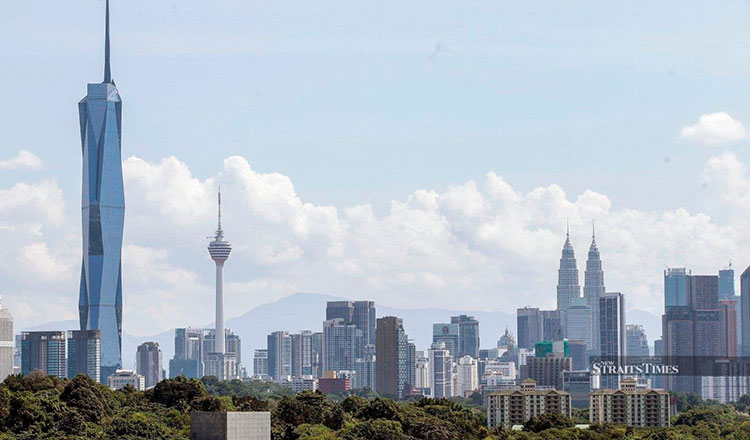 The objective of fiscal reform is not merely to reduce fiscal deficits or government debt, but to build a fairer, more stable, and more resilient economy for all. NSTP/Aizuddin Saad
#opinion
With rising government debt, increasing cost of living pressures and growing global economic uncertainty, Malaysia can no longer rely only on old approaches centred on broad-based subsidies and limited revenue sources.
Fiscal reform must therefore be implemented carefully, gradually, and in a more balanced manner to strengthen the country’s financial position without compromising public welfare.
For many years, petrol, diesel and electricity subsidies have played an important role in reducing living costs and supporting domestic economic activity.
However, under a blanket subsidy system, the benefits received often vary with household and economic-sector fuel and energy consumption levels.
This situation has caused government subsidy expenditures to continue rising while simultaneously limiting fiscal space for important sectors such as education, healthcare, public transport, and infrastructure development.
As such, a more targeted subsidy approach is better suited to Malaysia’s current economic conditions. The B40 group should continue to receive full protection, while the M40 should be supported selectively to mitigate the impact of rising living costs.
At the same time, the T20 group will continue to play an important role as a major contributor to national revenue through a more progressive tax system that reflects both its capacity and contribution to economic development.
In the case of diesel subsidies, for example, a more data-driven and technology-based approach needs to be strengthened.
Real-time monitoring systems, data analytics, and supply chain monitoring can reduce leakages and diesel smuggling, particularly in Sabah and Sarawak, which have long coastlines and back routes that are difficult to monitor.
The continued use of fleet cards and quota systems without effective monitoring leaves room for abuse and arbitrage activities arising from price differences between Malaysia and neighbouring countries.
At the same time, subsidy reforms must be carried out gradually to avoid inflationary shocks and sudden increases in the cost of living.
Strategic sectors such as agriculture, fisheries, logistics, and public transport should continue receiving support, as they directly influence food prices and transport costs.
In many cases, direct cash assistance to targeted groups is more effective than blanket subsidies, which entail high fiscal costs.
Malaysia’s tax system also needs to be strengthened in a more progressive manner without overburdening ordinary citizens. The country cannot continue depending on a relatively small group of taxpayers.
The government can broaden its revenue sources through the digital economy, luxury taxes, targeted capital gains taxes, and stronger efforts to reduce tax evasion.
At the same time, tax relief for education, healthcare, and first-home ownership should continue to be strengthened to assist the M40 group, which increasingly faces rising living costs.
Besides raising revenue and reducing subsidy leakages, the government must also focus on cutting wastage and improving the efficiency of public expenditure.
Public acceptance of fiscal reform will be stronger if there is greater transparency in national financial management, fewer unproductive projects, and tighter controls against leakages and wastage in public procurement.
Malaysia needs a more balanced and sustainable fiscal approach through a combination of targeted subsidies, a progressive tax system, and more efficient and transparent financial management.
The objective of these reforms is not merely to reduce fiscal deficits or government debt, but to build a fairer, more stable, and more resilient economy for the benefit of all segments of society.
Successful fiscal reform is one that balances public welfare, economic growth, and national financial stability simultaneously.
The writer is a professor at the Azman Hashim International Business School, UTM, and a fellow of the Institute of Inclusive Development and Advancement Malaysia.
-Khmer Times-