Thailand Destroyed the Bilateral Framework—Now Let International Law Work
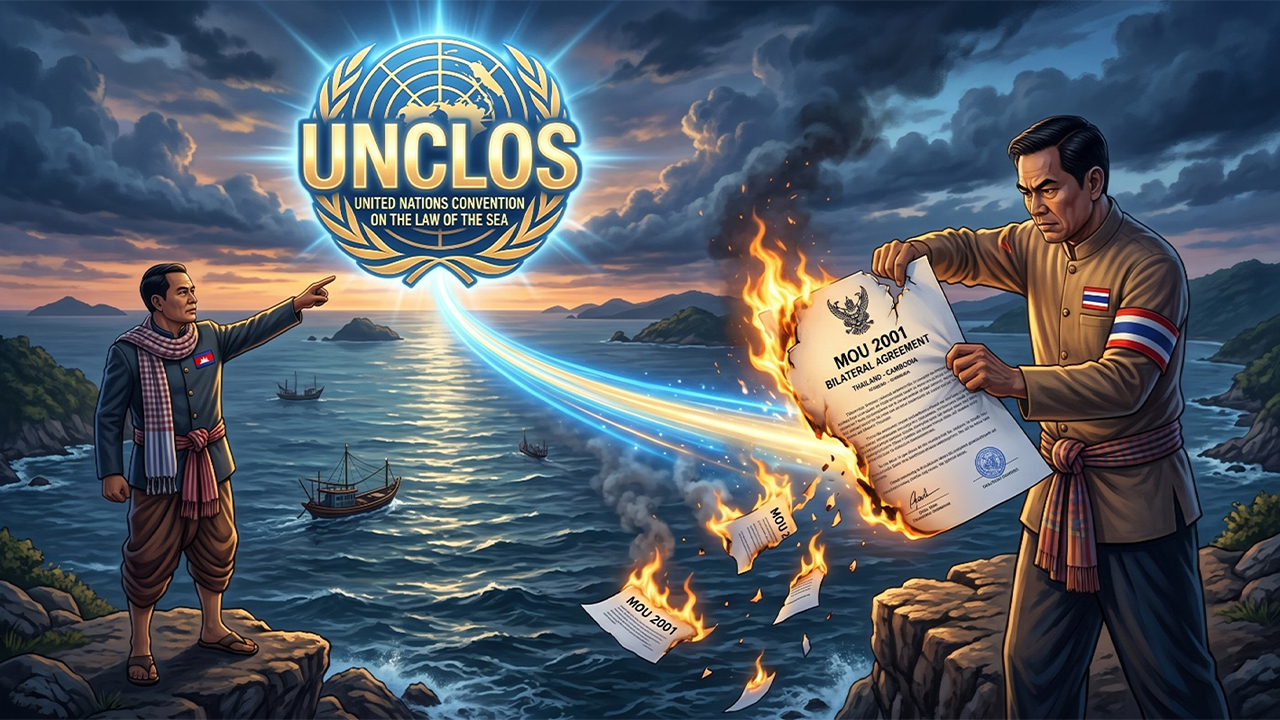 - An AI-generated image reflecting the Thai government cancelling 2001 MOU and Cambodia opting for UNCLOS. Supplied-
#opinion
Thailand cannot cancel the only existing bilateral framework for maritime negotiations with Cambodia and then ask Cambodia to return to bilateral talks as if nothing has happened.
For more than two decades, the 2001 Memorandum of Understanding, commonly known as MOU 44, served as the main bilateral framework for discussions on the overlapping maritime claims between Cambodia and Thailand. It was the agreed mechanism through which both sides could negotiate maritime delimitation and related issues. If Thailand genuinely believed in bilateral negotiation, it should have preserved that framework, strengthened it and used it in good faith.
Instead, Thailand unilaterally terminated it on 5 May 2026.
That decision was not a minor procedural move. It was a political act with legal and diplomatic consequences. By cancelling the MOU 2001, Thailand dismantled the very framework it now claims Cambodia should return to. Therefore, Thailand’s call for new bilateral talks is deeply contradictory.
It is Thailand itself that destroyed the bilateral road; it cannot now blame Cambodia for refusing to walk on a road Thailand has already broken.
Recent remarks reportedly made by the Thai foreign minister only confirm this contradiction. Thailand now says that, under the UN Convention on the Law of the Sea (UNCLOS), the process should proceed in stages and that the first method should be negotiation between the two parties. But this argument ignores one basic fact: the bilateral negotiation framework already existed, and Thailand was the party that cancelled it.
Cambodia should not be drawn into another undefined, open-ended and politically manipulated bilateral process. Creating a new bilateral mechanism to replace the one Thailand cancelled would reward Thailand’s unilateral action. It would allow Bangkok to destroy an agreed framework, create confusion and then pressure Cambodia into starting again under new terms more favourable to Thailand. That must not happen.
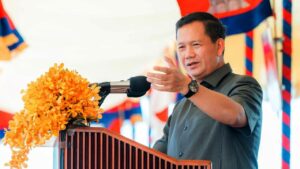
Senate president Hun Sen’s message is therefore clear, timely, and strategically important.
Cambodia should not engage in new bilateral negotiations on maritime issues after Thailand has cancelled the existing mechanism. Cambodia should proceed directly to the mechanisms available under the 1982 UNCLOS, without waiting for Thailand’s consent or political comfort.
This is not a rejection of peace. It is a rejection of delay. This is not hostility toward Thailand. It is a defence of rules, fairness and Cambodia’s sovereign rights.
Cambodia has already shown patience for more than 25 years. The bilateral framework existed. The opportunity for negotiation existed. The channel was there. But Thailand chose to terminate it. Cambodia regrets that decision, but Cambodia should also recognise the new reality Thailand has created. By cancelling the MOU 2001, Thailand has effectively helped move the issue away from a stalled bilateral track and toward international legal mechanisms.
Cambodia should now say plainly: thank you, Thailand, for making the next step clearer.
The way forward is no longer another round of vague bilateral discussion. The way forward is UNCLOS. In particular, Cambodia should move directly toward compulsory conciliation or other relevant mechanisms provided under the Convention. These mechanisms exist precisely for situations where bilateral negotiations have failed, been exhausted or been undermined by unilateral political decisions.
If Thailand is confident in its legal position, it should not fear an international process. If Thailand believes its claims are strong, it should welcome a structured, transparent, rules-based procedure. What Thailand cannot do is invoke UNCLOS when convenient, reject its mechanisms when uncomfortable and demand bilateral talks only after destroying the bilateral framework.
Cambodia must avoid falling into Thailand’s diplomatic trap.
“New bilateral talks” may sound reasonable to the public, but in reality they risk becoming another instrument of delay. They risk giving Thailand time to manage domestic pressure, reshape the narrative, and avoid accountability under international law.
Cambodia’s position should be firm and disciplined: peace, yes; dialogue, yes; but not endless dialogue without framework, without progress and without legal certainty. Cambodia remains committed to good-neighbourly relations, but good-neighbourliness cannot mean accepting unilateral cancellation by one side and strategic paralysis for the other.
The international community should understand Cambodia’s position clearly. Cambodia is not escalating the dispute. Cambodia is moving it from political uncertainty into a peaceful, lawful and internationally recognised process. That is exactly what responsible states do when bilateral mechanisms collapse.
Thailand made its choice when it cancelled the MOU 2001. Cambodia must now make its choice as well: not to rebuild a broken bilateral mechanism for Thailand’s convenience, but to proceed under UNCLOS with confidence, clarity and national dignity.
Cambodia has waited long enough. The time for circular talks is over. The time for international law has come.
Roth Santepheap is a geopolitical analyst based in Phnom Penh. The views and opinions expressed are his own.
-Phnom Penh Post-