Standing with Science Means Reaching the Last Child
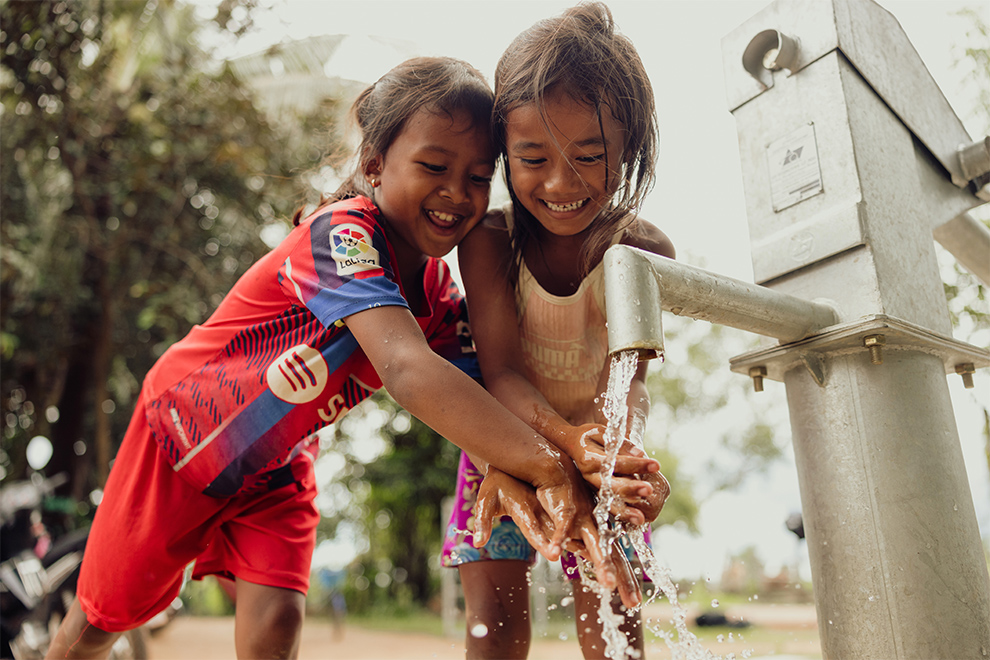 The author argues that improving the diets and nutritional status of vulnerable children through equitable, evidence-based health and nutrition interventions is more essential than ever. Supplied
#opinion
As the world marks World Health Day 2026, the global call to “Together for health. Stand with science” could not be more urgent.
In a time shaped by misinformation, climate shocks, conflict and widening inequality, science remains humanity’s most powerful tool to save lives. But in East Asia, the real question is not whether science exists or whether we believe in it. The real question is whether science is reaching the last child, those growing up in remote villages, fragile contexts, informal settlements and marginalised communities.
Because science only matters when it reaches the people who need it most.
From my perspective as a Health and Nutrition Advisor working across East Asia, this year’s World Health Day theme is a powerful reminder that scientific breakthroughs alone do not save lives. Vaccines, nutrition guidance, climate data and health technologies are essential, but they only create impact when they are delivered equitably, trusted by communities and translated into action at the household level.
Standing with science must therefore also mean standing with communities. It means ensuring that every child, especially the most vulnerable, benefits from what we already know works.
Progress has not reached every child
Over the past two decades, East Asia has made remarkable progress in child survival, maternal health, and primary health care. In Eastern Asia, under‑five mortality has fallen dramatically from an estimated 50.8 deaths per 1,000 live births in 1990 to just 5.8 in 2024 reflecting one of the fastest and most sustained improvements in child survival globally. Countries such as Vietnam, Thailand, China, Cambodia and Mongolia have strengthened their health systems and improved national indicators significantly.
Yet behind these encouraging numbers lies a difficult truth: progress has not reached every child equally.
In remote rural areas, conflict-affected zones, and ethnic minority communities, children still struggle to access basic health and nutrition services. Poverty, distance, climate shocks and fragile systems continue to determine whether a child survives and thrives. National averages often hide deep inequalities.
The challenge today is not a lack of scientific knowledge. We already know what works to improve maternal and child health, prevent malnutrition and strengthen community resilience. The challenge is ensuring that these solutions reach the last mile.
Malnutrition: a silent emergency we cannot ignore
One of the clearest examples of this gap is malnutrition.
Malnutrition remains one of the most urgent and persistent threats to child health in East Asia. It weakens immunity, limits cognitive development and increases the risk of disease and death.
More importantly, its effects last a lifetime.
Today, the region is facing a double, and increasingly triple burden of malnutrition.
Around one in two children under five in East Asia and the Pacific suffers from at least one micronutrient deficiency, while childhood overweight and obesity continue to rise rapidly. In countries like Laos and Cambodia, stunting and wasting still affect large numbers of children, especially in rural and marginalized communities.
This is not simply a food issue.
Malnutrition reflects deeper systemic gaps: maternal care, breastfeeding support, clean water and sanitation, food systems, social protection, and access to health services. And the tragedy is that most of it is preventable. Science has already shown us what needs to be done, from proper nutrition during the first 1,000 days to integrated community health services and multisectoral approaches. What is needed now is scale, investment and political commitment.
Science works when communities carry it forward
If science is clear, why are so many children still left behind?
The answer lies in delivery.
Across East Asia, experience consistently shows that health and nutrition interventions succeed when they are rooted in strong community systems. Policies and guidelines at national level are important, but real change happens when trusted local actors bring science into everyday life.
Community health volunteers, mother support groups, nutrition clubs and village health workers play a critical role in translating evidence into action. They help mothers understand breastfeeding, monitor child growth, improve hygiene practices and strengthen food security at household level.
This is science in practice.
It is not about introducing new technology alone. It is about investing in people who carry science forward, local health workers, community leaders and families themselves. When communities trust the system, science becomes real and sustainable.
Trust is a public health tool
Another lesson from East Asia is that trust is just as important as technology.
Families do not change behaviour simply because information is medically correct. They act when messages are clear, culturally relevant, and delivered by people they trust.
Public health succeeds when communities feel respected, heard, and involved.
Social accountability approaches that strengthen dialogue between communities and health providers have shown that trust can transform health outcomes. When families trust health services, they seek care earlier, follow medical advice and adopt healthier practices.
Science without trust remains theory.
Science with trust becomes life-saving action.
Climate change is reshaping health risks
Standing with science also means responding to the growing health risks driven by climate change. Across East Asia, climate shocks are increasingly threatening food systems, livelihoods and access to health services. Extreme weather, floods, droughts and harsh winters are pushing vulnerable families deeper into crisis. The One Health approach, recognising the connection between human, animal and environmental health is no longer optional. It is essential.
Scientific data on climate and vulnerability now allows governments and humanitarian organizations to anticipate risks and respond earlier, protecting children before crises escalate.
Science is helping us act earlier, respond smarter and build stronger resilience. But again, its impact depends on whether it reaches the communities most at risk.
Standing with science means choosing people
On this World Health Day, standing with science must go beyond slogans and commitments.
It requires concrete action.
Governments, development partners, and organisations must ensure that science is applied equitably, prioritising conflict-affected, climate-vulnerable and marginalised populations.
Nutrition must be integrated across health, agriculture and social protection systems. Community-led delivery must be strengthened so that evidence reaches households. And climate data must be used to build resilience before disasters strike.
Standing with science ultimately means choosing people.
It means choosing the child in a remote village who needs access to nutrition services. The mother who needs trusted health guidance. The community that needs resilient systems to withstand climate shocks.
Because science fulfils its purpose only when it reaches the last child.
And when it does, it has the power to transform not just health systems, but entire futures.
Thamilini Joshepkumar is regional health & nutrition senior advisor, World Vision East Asia. The views and opinions expressed are her own.
-Phnom Penh Post-
———————