The Chameleon’s Shadow: Thailand’s Domestic Politics, Border Economics, and Cambodia’s Path to Resilience
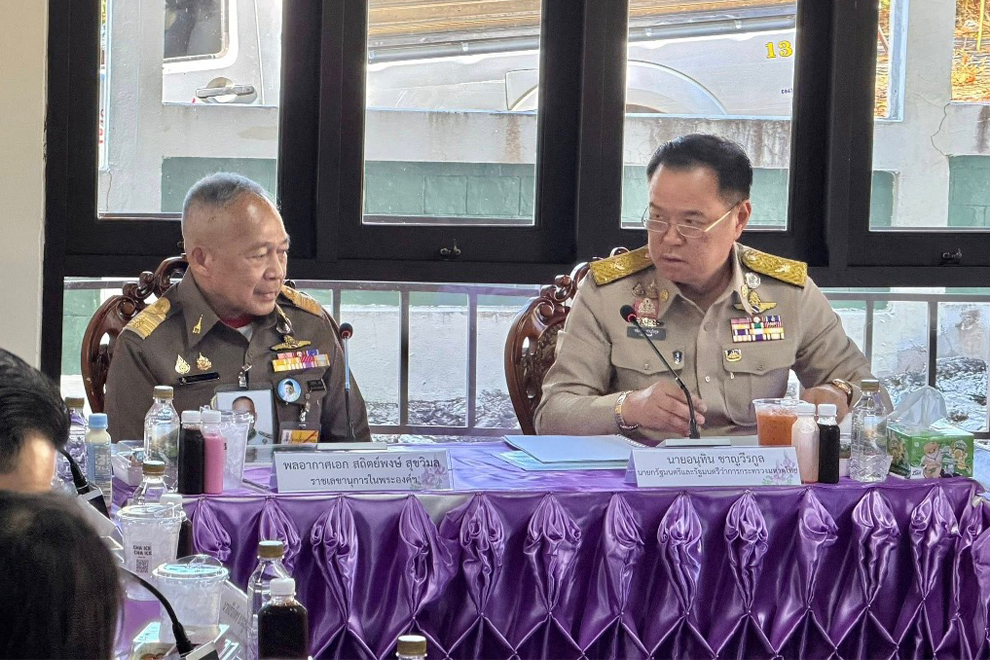 Thai Prime Minister Anutin Charnvirakul (right) visits Chonburi province in December. FB
#opinion
The political landscape of mainland Southeast Asia has shifted following the February 2026 Thai elections, which firmly installed Bhumjaithai Party leader Anutin Charnvirakul as Prime Minister. Nicknamed Noo (“Mouse”) but operating with the survival instincts of a political chameleon, Anutin’s premiership presents a complex and multifaceted challenge for Cambodia.
By examining the diplomatic, economic and agricultural realities of this new era, a clear conclusion emerges: Thailand’s current foreign policy is heavily influenced by domestic political optics, requiring Cambodia to urgently recalibrate its economic and diplomatic posture.
Cambodia must transform the current border disruption into a catalyst for structural economic independence by institutionalising diplomacy, investing in agro-processing and diversifying export logistics.
I. The Chameleon’s Calculus and the Cost of Nationalism
Understanding Anutin requires recognising his fundamental pragmatism. He is largely unburdened by rigid ideology and capable of shifting seamlessly from a pro-business technocrat to a hardline nationalist depending on prevailing political winds.
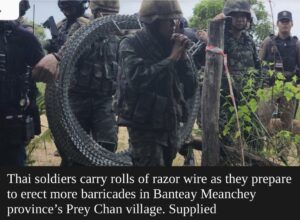
At present, his administration appears to be leveraging nationalism as a domestic political tool. To satisfy conservative constituencies that supported his rise to power during the 2025 border frictions, Anutin has adopted a firm “no retreat, no reopening of borders” stance.
This transactional and chameleon-like diplomacy prioritises short-term political survival over regional economic stability, generating significant economic consequences.
Border Trade Disruptions
The prolonged closure of key checkpoints has resulted in an estimated $460 million USD in monthly losses stemming from disrupted cross-border trade, labour migration and frontier tourism.
Stalled Maritime Cooperation
The nationalist shift has also frozen negotiations surrounding the 2001 Overlapping Claims Area (OCA) Memorandum of Understanding in the Gulf of Thailand. By rejecting a proposed 50/50 interest-sharing arrangement, Bangkok has delayed billions of dollars in potential joint energy revenue.
Thailand’s Strategic Diversification
While maintaining border restrictions with Cambodia for domestic political signalling, Thailand’s foreign ministry is simultaneously expanding economic diplomacy in the Middle East and Latin America to offset regional losses. This outward pivot reduces internal pressure on Bangkok to normalise relations with Phnom Penh.
II. Cambodia’s Agricultural Vulnerability
The economic impact of this nationalist posture is felt most acutely in Cambodia’s northwestern border provinces.
For decades, a structural imbalance has characterised cross-border agricultural trade: Cambodia exports raw, perishable commodities, while Thailand captures the majority of profits through processing and value-added activities.
With logistics disrupted, this dependency has become a significant vulnerability.
Staple Cash Crops
Exports such as cassava and red corn, which supply Thailand’s livestock and biofuel sectors, face rapid post-harvest degradation due to Cambodia’s limited drying and storage infrastructure.
Perishable Fruits
High-value crops like mangoes and longan remain heavily reliant on Thai intermediaries for packaging, grading and vapour heat treatment (VHT) prior to export to international markets.
III. Strategic Imperatives: Cultivating Economic Sovereignty
The era of personality-driven diplomacy and reliance on neighbouring infrastructure must end.
Prime Minister Anutin’s transactional approach highlights the necessity for Cambodia to adopt a more institutionalised and resilient strategy.
1. Institutionalise Diplomacy and Decouple Economics
Cambodia should anchor bilateral relations in formal state-to-state mechanisms. Territorial disputes must be managed by professional diplomatic channels while ensuring economic cooperation remains insulated from political volatility.
2. Accelerate Domestic Agro-Processing
The government should aggressively incentivise private investment in agro-processing infrastructure, including:
Cassava drying silos
Grain storage facilities
Vapour heat treatment (VHT) plants for fruit exports
Such investments would allow Cambodia to capture value-added revenue and reduce reliance on Thai intermediaries.
3. Strategic Market Diversification
Cambodia must diversify export logistics away from its western land borders. By leveraging the Cambodia-China Free Trade Agreement (CCFTA) and strengthening maritime infrastructure at Sihanoukville Autonomous Port and Kampot’s multi-purpose ports, Cambodia can establish direct global supply chains.
4. Deploy Targeted Financial Support
To prevent a cascade of debt defaults and distress selling among smallholder farmers, the Agricultural and Rural Development Bank (ARDB) should introduce:
Emergency working capital programmes
Temporary interest moratoriums for agricultural cooperatives
Prime Minister Anutin is neither a permanent adversary nor a reliable ally. Rather, he is a pragmatist responding to domestic political pressures.
While Thailand’s current border blockade presents serious short-term economic challenges, it may ultimately serve as a catalyst for Cambodia’s structural transformation.
By institutionalising diplomacy, strengthening agro-processing capacity, and diversifying export logistics, Cambodia can insulate its economy from political volatility along its borders and move toward true agro-industrial sovereignty.
Panhavuth Long is founder and attorney-at-law at Pan & Associates Law Firm. The views and opinions expressed are his own.
-Phnom Penh Post-
———————