War in Middle East and its ripple effects on Southeast Asia
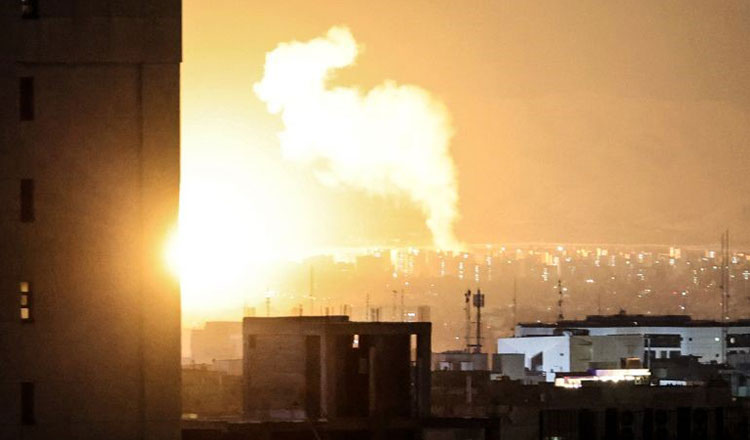 Smoke and fire rise from the site of airstrikes in a central area of the Iranian capital of Tehran on March 6. AFP
#OPINION
The escalation of war in the Middle East following the joint United States-Israeli attacks on Iran has triggered a wave of concern across Southeast Asia.
While geographically distant from the battlefield, Southeast Asia cannot remain insulated from the consequences of a widening conflict in one of the world’s most strategic regions.
The war’s ripple effects—ranging from energy security and economic stability to geopolitical alignments and the credibility of international law—are already being felt across the region.
In response to the outbreak of hostilities, most Southeast Asian governments have adopted a cautious and pragmatic tone.
Statements from ASEAN member states have generally emphasised restraint, de-escalation, and the urgent need to return to diplomacy.
Malaysia condemned both the attacks and retaliatory strikes while calling on all parties to exercise maximum restraint. Indonesia, Vietnam, Cambodia, Thailand, and Singapore have issued similar appeals for dialogue and adherence to international law.
A joint statement by ASEAN foreign ministers described the escalation as a “grave threat to the lives and safety of civilians as well as to regional and global peace and stability.”
This measured response reflects a long-standing ASEAN diplomatic tradition: avoiding direct alignment in great-power conflicts while prioritising regional stability and peaceful dispute resolution.
Southeast Asia has historically practised strategic pragmatism—balancing relationships with major powers while safeguarding national interests. The Middle East crisis once again tests the region’s ability to maintain this delicate equilibrium.
Energy and economic vulnerabilities
The most immediate impact of the conflict on Southeast Asia is economic. The Strait of Hormuz, through which a large portion of the world’s oil supply passes, is a critical artery for global energy markets.
Any disruption to shipping through this chokepoint reverberates across the global economy, and Southeast Asia—comprising mostly energy-importing economies—is particularly vulnerable.
Oil and gas prices have already surged amid fears of escalating hostilities. Countries such as Thailand, Singapore, and the Philippines rely heavily on Middle Eastern energy imports, and higher prices translate directly into inflationary pressure, rising production costs, and slower economic growth.
Thailand’s stock market plunge and fuel rationing in crisis-stricken economies highlight the fragility of regional energy security in times of geopolitical turbulence.
Beyond energy, Southeast Asia’s financial markets are also sensitive to global uncertainty. Currency fluctuations, capital flight, and declining investor confidence could further strain emerging economies.
For developing countries such as Cambodia, Laos, and Myanmar, higher energy and food prices risk aggravating social and economic vulnerabilities.
Human security concerns
Another pressing concern is the safety of Southeast Asian migrant workers in the Middle East. Millions of Southeast Asians—especially from the Philippines, Indonesia, and Thailand—work across the Gulf region. Governments have therefore prioritised the protection and potential evacuation of their citizens.
The Philippines alone has more than two million nationals in the Middle East, while Thailand has over 100,000 citizens working in Israel and nearby regions.
In times of conflict, these communities face immediate risks ranging from displacement to economic disruption. The safety of migrant workers is not only a humanitarian issue but also an economic one, as remittances from overseas workers constitute a major source of national income for several Southeast Asian countries.
Geopolitical implications
Beyond economics and human security, the war also carries significant geopolitical implications for Southeast Asia. One of the most sensitive issues relates to the credibility of international law.
Southeast Asian states have consistently emphasised respect for sovereignty, territorial integrity, and the peaceful settlement of disputes—principles enshrined in the United Nations Charter.
Many countries in the region rely heavily on these legal norms to safeguard their own security. When major powers appear to bypass international law in military interventions, it undermines the normative foundations upon which smaller states depend.
The perception that international rules are selectively applied risks eroding confidence in the rules-based international order. For Southeast Asian governments, this creates strategic anxiety. If international law becomes weakened or ignored, the region could face increased vulnerability to coercion or unilateral actions by more powerful states.
At the same time, the conflict could accelerate shifts in geopolitical perceptions. If the United States is seen as acting unpredictably or inconsistently with international norms, regional states may intensify efforts to diversify their partnerships and hedge their strategic alignments.
China, for instance, has sought to position itself as a defender of sovereignty and territorial integrity, using the crisis to strengthen its diplomatic narrative in the developing world.
However, Southeast Asia is unlikely to align fully with any single power. Instead, the region will continue to pursue a hedging strategy—maintaining relations with both Washington and Beijing while preserving strategic autonomy.
Strategic distraction and regional Security
Another consequence of the Middle East war is the potential diversion of US military attention and resources away from the Indo-Pacific.
Southeast Asian states closely watch the balance of power in their own region, particularly amid rising tensions in the South China Sea.
If US naval and military assets are redirected to the Middle East, it could create a perception of reduced American engagement in the Western Pacific.
The war therefore has implications not only for global geopolitics but also for the strategic calculations of regional actors.
Pragmatism as Southeast Asia’s strategic choice
Despite these challenges, Southeast Asia’s response has so far remained consistent with its long-standing diplomatic approach: cautious pragmatism.
Rather than taking sides in distant conflicts, regional governments prioritise stability, economic resilience, and diplomatic engagement.
Indonesia’s offer to mediate between the United States and Iran illustrates the region’s preference for dialogue over confrontation.
ASEAN itself has repeatedly emphasised the importance of diplomacy, international law, and multilateral cooperation as the only sustainable pathway to peace.
Southeast Asia understands that greatpower conflicts often carry unintended consequences for smaller states.
By maintaining neutrality and advocating peaceful solutions, ASEAN countries seek to minimise risks while preserving room for diplomatic manoeuvre.
Lessons for the region
The Middle East war also serves as a reminder of the interconnected nature of today’s world. Conflicts thousands of kilometres away can disrupt energy markets, destabilise financial systems, and reshape geopolitical dynamics across continents.
For Southeast Asia, the crisis reflects the importance of strengthening regional resilience.
Diversifying energy sources, enhancing economic integration, protecting migrant workers, and reinforcing international legal norms will all be critical in navigating an increasingly turbulent global environment.
In an era of intensifying geopolitical competition and recurring conflicts, ASEAN’s commitment to dialogue, restraint, international law, and multilateralism is relevant.
The war in the Middle East may be geographically distant, but its implications are global. For Southeast Asia, the challenge is not only to weather the immediate economic and security shocks but also to reaffirm the principles that underpin regional peace and stability.
Notably, the region must remain vigilant against any recurrence of Thai aggression against Cambodia. The use of force to alter the status quo or internationally recognised boundaries must neither be tolerated nor normalised.
Allowing such actions to stand would set a dangerous precedent for interstate relations in Southeast Asia.
Chheang Vannarith is Chairman of National Assembly Advisory Council. The views expressed are his own.
-Khmer Times-
—————-