Women can build a stronger Cambodia.
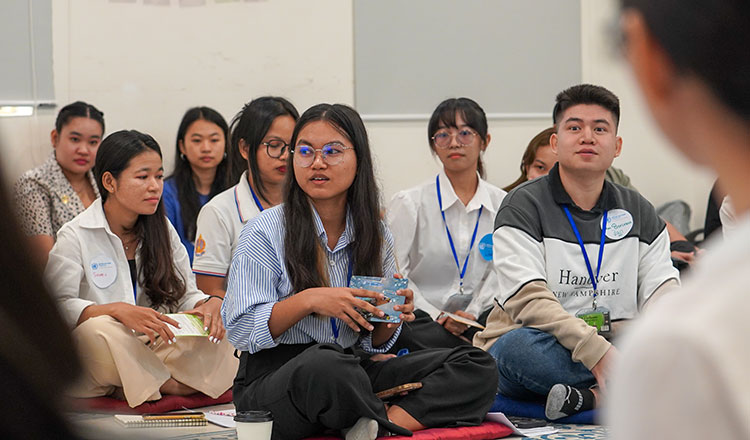 Women have a labour participation rate of nearly 79% in Cambodia, among the highest in ASEAN. Women’s Affairs Ministry
#opinion
Women are half of Cambodia’s population, and unlocking their potential is unlocking Cambodia’s future. Across farms, factories, classrooms and small businesses, women sustain families and drive local economies. Cambodia’s next chapter will be stronger when their efforts are matched with leadership.
Over the past 30 years, women have benefitted from peace, stability, poverty reduction and growth. Investments in girls’ education, maternal health, entrepreneurship, and national gender strategies have improved outcomes across generations. Female labour force participation is about 78.9%, among the highest in ASEAN.
As Cambodia moves towards higher productivity, diversified growth and graduation from Least Developed Country (LDC) status in 2029, the country has an opportunity to accelerate progress by ensuring women are not only participating but leading.
At the national level, women hold several of Cambodia’s highest leadership positions, including the National Assembly presidency, chairs of key commissions in both chambers, and three ministerships. They also lead major institutions such as the National Bank of Cambodia and the National Audit Authority, and serve as secretaries and undersecretaries across all ministries, contributing directly to policy and implementation
Women now hold about 14.6% of parliamentary seats. Despite a decline in women’s parliamentary seats, Cambodia is still committed to continue unlocking the significant potential in women political participation and expanding women’s leadership across all levels of government.
In the labour market, wage gaps persist; analysis using Cambodia’s Socio-Economic Survey data estimates a gender wage gap of roughly 19%. These are not only equity gaps but also clear opportunities to strengthen growth, governance, and community resilience.
The civil service demonstrates progress, where women now represent 42% of staff, up from 37% in 2014, and 28% of decision-making roles. These gains reflect the Royal Government’s commitment to gender equality and illustrate what sustained investment and clear targets can achieve.
Gender equality is a growth strategy. For Cambodia, this means ensuring women are fully included in the “next economy” of higher value agriculture and manufacturing, digital services, green jobs, and STEM-enabled innovation. Neary Rattanak VI (2024–2028) places these priorities at the centre of national action, with a focus on skills, digital inclusion, entrepreneurship and leadership.
Women lead much of Cambodia’s informal economy and many small enterprises; with access to skills, finance and markets, they can move into higher-productivity activities and diversify the economy. As digital and green transitions accelerate, investment in safe workplaces, digital skills, and connectivity is crucial: without it, inequality grows; with it, women can drive innovation, financial inclusion, and climate resilience.
Expanding affordable childcare and care services would enable more women to work, lead and build businesses. This must be accompanied by a shift in social norms, with families, communities and workplaces sharing care responsibilities, and supported by Cambodia’s social protection system.
International Women’s Day is a moment to recognise women’s role in peace and security. Cambodia’s modern history has been shaped by conflict and rebuilding, with women central to recovery- sustaining households, rebuilding communities and strengthening social cohesion. Today, women remain first responders, mediating disputes, supporting survivors of violence, and building trust in their communities.
Cambodia has deployed more than 10,000 UN peacekeepers since 2006, 900 of whom are women, demonstrating how women strengthen peace operations. Cambodia is also advancing the Women, Peace and Security agenda, with the preparation of its first National Action Plan Draft, recognising that peace is lived daily in homes, workplaces, and communities, especially where women face violence or exclusion.
Cambodia can accelerate progress by setting targets for women’s leadership, expanding childcare, improving access to finance and land, scaling up girls’ STEM and women’s digital skills, promoting inclusive workplaces, and strengthening responses to gender-based violence—investments that will boost productivity, human capital and social cohesion, aligned with Neary Rattanak VI and the Royal Government’s Pentagonal Strategy.
Cambodia stands at a pivotal moment: achieving national ambitions, Sustainable Development Goals, and LDC graduation requires women’s full participation as leaders, innovators, and decision-makers. The national gender strategy provides a clear roadmap, but the challenge is turning commitments into measurable results across every sector and province.
Empowering women is not a “women’s issue”—it is Cambodia’s most under-used resource for prosperity, stability and resilience. This International Women’s Day, let us commit to removing structural barriers, investing in women’s capabilities, expanding pathways to leadership, and strengthening accountability.
Together, the Royal Government of Cambodia and the United Nations reaffirm their shared commitment to gender equality: at home, in the society, in the economy, and in peace and security.
When Cambodian women rise, Cambodia rises—and when Cambodia stands in solidarity through women peacekeepers and peacemakers, it helps make the world safer for everyone.
Authors:
Dr. Ing Kantha Phavi, Minister of Women’s Affairs
Vladanka Andreeva, United Nations Resident Coordinator in Cambodia.
-Khmer Times-
——————-