US-Cambodia defence ties rebound as Washington backs sovereignty at Ream, signals deeper regional cooperation
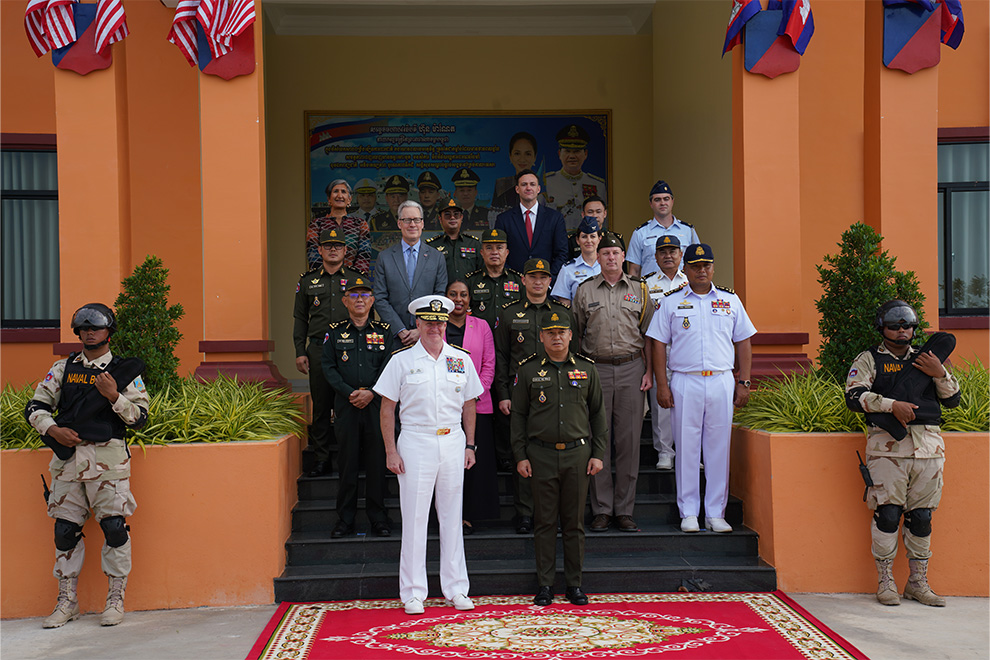
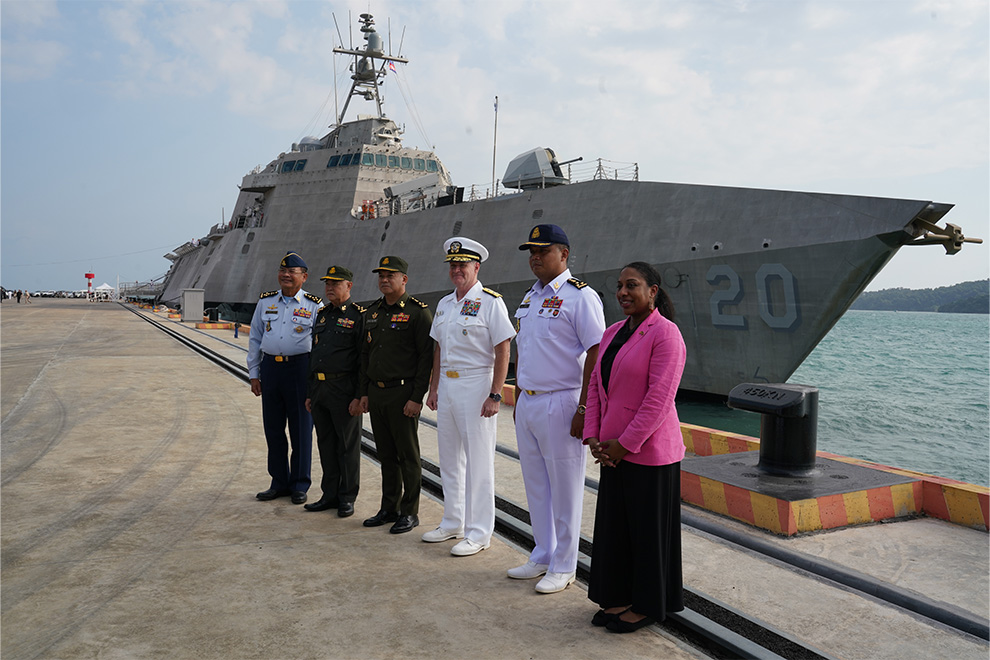 Defence minister Tea Seiha, Admiral Samuel Paparo, Commander of the US Indo-Pacific Command, and their delegations, at Ream Navy Base. Hong Raksmey
The United States and Cambodia signalled a decisive reset in defence relations on January 26, as Washington publicly affirmed Cambodia’s sovereignty over Ream Naval Base and announced an expansion of military cooperation after years of strain.
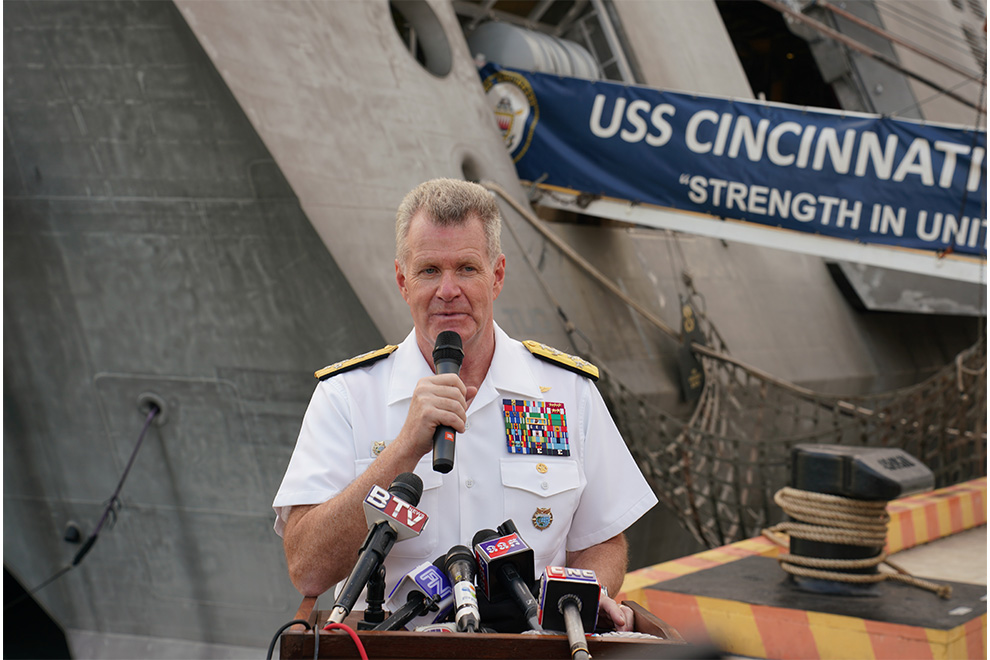
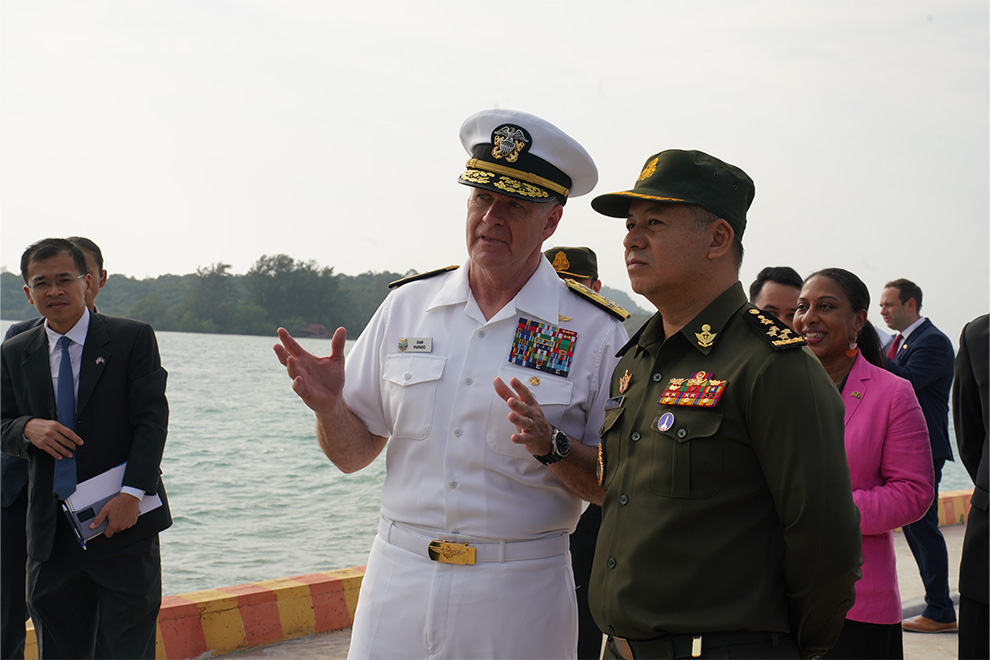
The shift was underscored during a meeting between Prime Minister Hun Manet and Admiral Samuel Paparo, Commander of the US Indo-Pacific Command, at the Peace Palace, followed by Paparo’s remarks to reporters at Ream Naval Base during the port visit of the USS Cincinnati.
Paparo said the US Navy’s presence at Ream reflected confidence in Cambodia’s sovereignty, directly addressing long-standing concerns in Washington over alleged foreign military use of the base.
“All along the way, our Cambodian friends assured us that Ream would be a sovereign port,” Paparo told reporters, as the USS Cincinnati was docked at Ream Navy Base.
“Accordingly, this is why the visit is an expression of our confidence in Cambodia’s own sovereignty and a good faith expression of our partnership moving forward,” he added.
The Ream port call — the first by a US Navy vessel in several years — has been widely seen as a test case for rebuilding trust, following a period in which defence ties cooled amid US suspicions that the base was being developed for exclusive use by China, claims repeatedly denied by Phnom Penh.
Prime Minister Hun Manet welcomed the visit, describing it as a “tangible result” of improving bilateral relations and praising what he called “excellent military cooperation” between the two countries.
He said Cambodia expected defence ties to continue expanding, noting that cooperation now extended beyond symbolic engagements to practical military exchanges and exercises.
The meeting highlighted what both sides described as a transition from diplomatic caution to forward momentum.
Paparo said US-Cambodia military cooperation had reached “the next level” after overcoming disruptions caused by the Covid-19 pandemic.
He pointed to recent strategic and defence dialogue talks held in Hawaii, Cambodia’s participation in ASEAN-US maritime exercises, and planning now under way to reinvigorate the Angkor Sentinel military exercise, which had been suspended for several years.
“Planning begins again in earnest in late February, early March,” Paparo said, adding that Angkor Sentinel could take place in late 2026 or early 2027.
Angkor Sentinel is a long-running joint military exercise between Cambodia and the United States, first launched in 2010, focusing on peacekeeping operations, humanitarian assistance and disaster response rather than combat training.
The exercise was designed to strengthen the capacity of the Royal Cambodian Armed Forces, particularly in support of Cambodia’s contributions to UN peacekeeping missions.
Angkor Sentinel was suspended in 2017 amid a downturn in bilateral defence relations, and recent statements by US officials about restarting planning for the exercise are widely seen as a signal of renewed military engagement and confidence-building between the two countries.
Paparo also said the two sides were working toward more frequent port visits, noting that since 2006 there had been 37 US Navy port calls to Cambodia.
“Our ambition is to deepen that partnership through the wellspring of mutual respect as we both cultivate a free and open Indo-Pacific, where all nations, large and small, can enjoy the fruits of investment, stability and security,” he said.
Beyond defence cooperation, the talks placed strong emphasis on regional stability, particularly the Cambodia-Thailand border situation.
Hun Manet briefed Paparo on recent developments and reaffirmed Cambodia’s commitment to the ceasefire and the Kuala Lumpur Joint Statement signed on Oct 26, 2025, pledging to resolve disputes peacefully in line with international law and existing agreements.
The prime minister also thanked US President Donald Trump for what he described as a key role in promoting the ceasefire and for witnessing the signing of the joint statement in Malaysia.
He confirmed that Cambodia had accepted an invitation from Trump to participate in the “Board of Peace”, framing the move as a demonstration of Cambodia’s goodwill and commitment to global peace.
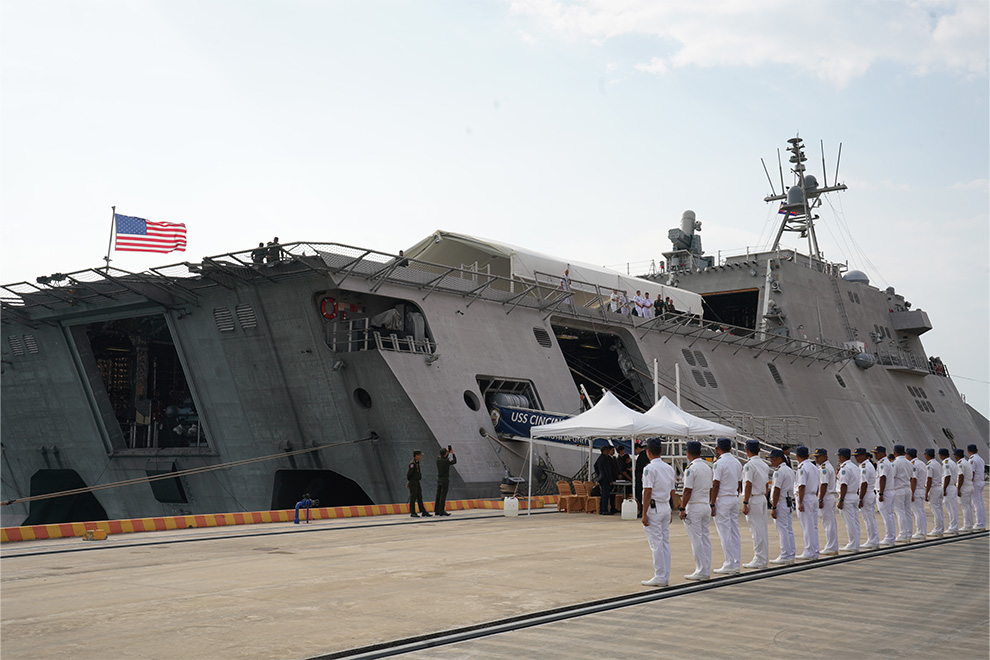
Cambodian Minister of National Defence Tea Seiha joined Manet in receiving Admiral Paparo, for a courtesy call and working discussion, which coincided with the visit of the US warship USS Cincinnati (LCS 20) to Ream Naval Base in Preah Sihanouk province.
The vessel is docked at the base from January 24 to 28, as part of efforts to promote relations and cooperation between the Cambodian and US navies.
“We thank the US for its continued attention to the Cambodian-Thai border situation and for the implementation of the spirit of the Kuala Lumpur Joint Declaration especially in promoting the work of the ASEAN Observer Team (AOT) and supporting the acceleration of the JBC process for the survey and demarcation of the land boundary between the two countries,” Seiha noted, via social media.
The meetings and port visit took place on January 26 at Ream Naval Base, Preah Sihanouk province.
Paparo said Trump was continuing to closely monitor the border situation and expressed US support for ASEAN-led mechanisms, including the ASEAN Observer Team, as well as for accelerating the work of the Joint Boundary Commission on border demarcation.
“We did have a discussion of the US role in helping bring about the peace on the border crisis,” Paparo said.
“The entire conversation really went through the prism of Cambodia and the US as peace-loving nations wanting to work together toward regional peace,” he added.
The admiral said the US military was in Cambodia “at the invitation of the Cambodian government”, stressing respect for Cambodia’s sovereignty and decision-making.
“We’re here because we’re on Cambodian land,” he said.
“When Cambodia gave us permission to visit, of course we jumped at the chance because of our desire to work more closely together,” he continued.
Paparo also revealed that the US Secretary of Defense has expressed interest in visiting Cambodia within the coming year, signalling continued high-level engagement.
Taken together, the visit, public statements and renewed military planning mark a clear recalibration of US-Cambodia relations — one that places defence cooperation, respect for sovereignty and regional peace at the centre of a partnership both sides say is back on an upward trajectory.
-Phnom Penh Post-