While number of displaced plunges, shelters grapple with basic services
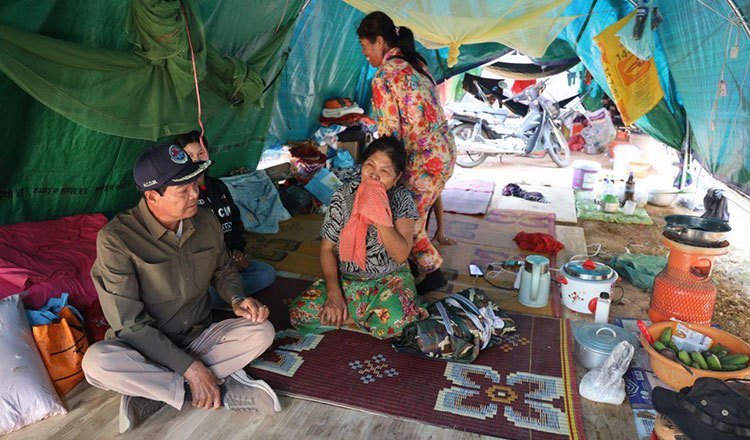 Photo: First Deputy Chairman of the National Committee for Disaster Management Senior Minister Kun Kim (L) visits the displaced at a camp in Thmar Puok district, Banteay Meanchey province. NCDM
#National
Synopsis: Despite a sharp drop in displacement since last year’s border clashes, more than 141,000 Cambodians remain uprooted as damaged homes, safety risks and disrupted services keep humanitarian needs critically high along the border with Thailand.
More than 141,000 people remain displaced across Cambodia following months of cross-border hostilities with Thailand, despite a significant reduction from the peak displacement recorded late last year, according to the latest Situation Report released by the Cambodia Humanitarian Response Forum (HRF).
The report, covering the period from January 10 to 16, says that as of January 15, the National Committee for Disaster Management (NCDM) recorded 141,850 displaced people living in 102 displacement sites and host communities nationwide. This is a sharp decline from December 27, 2025, when national tracking indicated that nearly 649,000 people were displaced.
However, humanitarian agencies warn that a substantial number of families are likely to remain displaced for an extended period amid damaged housing, disrupted services and safety concerns—including explosive hazards in areas of origin.
“While returns are progressing, movements remain uneven,” the report says, adding that some households have temporarily returned to camps after discovering that their homes are uninhabitable or essential services are unavailable.
Humanitarian partners continue to report critical gaps in shelter, sanitation, health, food security and protection services in displacement sites.
Many families remain in communal or temporary shelters with limited privacy and inadequate protection from the elements. Sanitation facilities are under pressure, prompting agencies to scale up emergency latrine construction. World Vision has built 15 additional latrines, while UNICEF has installed 58 toilets in camps across Oddar Meanchey and Preah Vihear. Thousands of hygiene kits have also been distributed.
Food security and nutrition remain major concerns as children under five face heightened risk of acute malnutrition. UNICEF screened 1,452 children under five, identifying nine acute malnutrition cases requiring therapeutic feeding. World Vision has expanded kitchen gardening and supplementary feeding programmes at several sites.
Health services remain affected, with some camps lacking functional primary care and emergency services. Common health concerns among children include diarrhoea, respiratory infections, malnutrition and mental health conditions.
Education has been severely disrupted in border provinces. As of January 15, a total of 69 schools in Banteay Meanchey, Oddar Meanchey, Preah Vihear and Pursat remain closed, affecting 12,601 students and 482 teachers.
At displacement sites, 41% reported no access to learning spaces, in addition to irregular attendance in temporary classes.
-Khmer Time-