An Open Letter on Peace, Cultural Heritage and the Urgent Need for De-escalation between Cambodia and Thailand
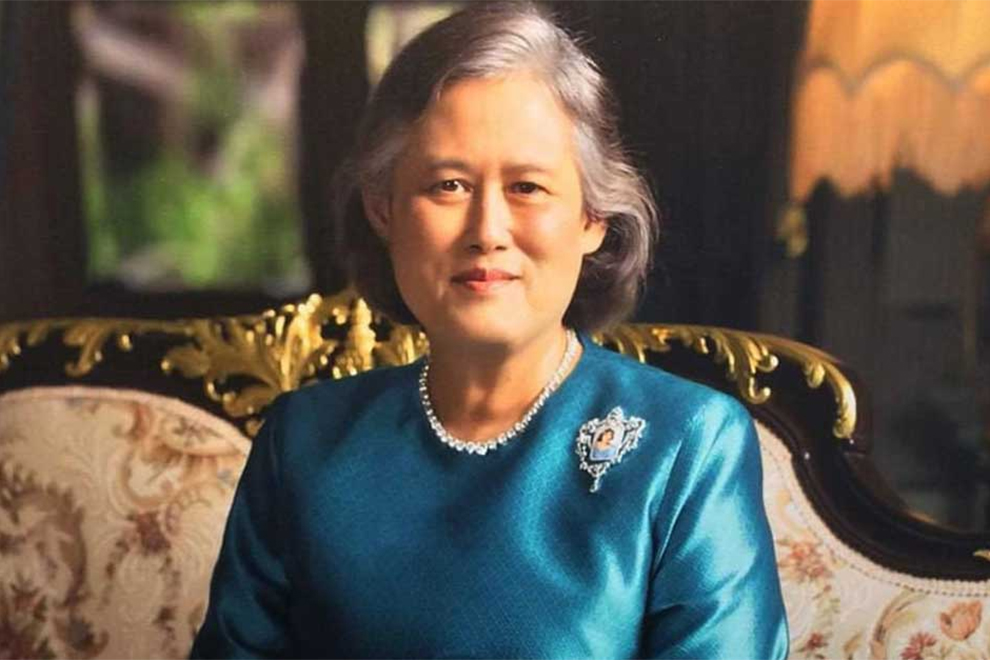 Photo: Princess Maha Chakri Sirindhorn of Thailand. The Thaiger
#opinion
Your Royal Highness
Princess Maha Chakri Sirindhorn
of the Kingdom of Thailand
Your Royal Highness,
I respectfully write this open letter with the sincere hope of contributing to peace, understanding and de-escalation between the Kingdom of Cambodia and the Kingdom of Thailand at this deeply troubling moment in our shared history.
At the outset, please allow me to express my profound respect and warm congratulations for Your Royal Highness’s exceptional academic achievements. Few royal figures — whether in Southeast Asia or beyond — have attained such distinguished scholarly standing. Your Royal Highness’s intellectual pursuits, linguistic mastery in English, French and Mandarin, and your deep knowledge of Pali, Sanskrit and Khmer place you among the world’s most respected cultural and academic leaders.
Your well-documented engagement with history, literature, geography and culture — particularly Khmer history and civilization, which predates the emergence of Sukhothai, Ayutthaya, Siam, and modern Thailand — reflects an understanding rooted in scholarship rather than politics. Your frequent visits to Cambodia, as well as your contribution to education through initiatives such as the school in Kampong Thom, stand as enduring symbols of goodwill, cultural respect and human solidarity.
It is precisely because of this moral and intellectual authority that many Cambodians look to Your Royal Highness with hope at this critical juncture.
Regrettably, Cambodia and Thailand now find themselves in a state of armed conflict. Civilians on both sides of the border have suffered immensely. Families have been displaced, livelihoods destroyed and sacred heritage irreparably damaged. This suffering weighs heavily on our peoples, whose histories, cultures and faiths have long been intertwined.
This conflict, however, extends beyond a mere border disagreement. The internationally recognised boundary between Cambodia and Thailand was clearly defined by the Franco–Siamese Conventions of 1904 and 1907 and has since been reaffirmed by binding international legal instruments, including the 1962 and 2013 judgments of the International Court of Justice.
The presence of landmines in Cambodia is a tragic legacy of past wars and has long been acknowledged by the international community.
Between 7 and 27 December 2025, Thai armed forces conducted coordinated military operations across multiple sectors of the internationally recognised boundary, resulting in incursions into Cambodian territory and the establishment of effective control over areas that lie unequivocally within Cambodia. During these operations, heavy weaponry — including fighter aircraft, long-range artillery and unmanned aerial systems — was used, causing extensive damage to civilian communities, schools, health centres, pagodas and agricultural land.
Most distressing of all has been the damage inflicted upon sacred and irreplaceable cultural heritage sites, including the Preah Vihear Temple, Ta Krabei, Ta Mone Thom, and Ta Mone Touch. These temples are not only Cambodian treasures but part of the shared heritage of humanity. The bombardment of the Preah Vihear World Heritage site resulted in widespread destruction of original architectural structures, inscriptions, conservation facilities and technical installations, severely undermining decades of preservation work by national and international experts.
According to official documentation by the National Authority for Preah Vihear, damage recorded between 24 and 28 July 2025 affected more than 140 locations within the temple complex and surrounding areas, displacing over 14,800 residents. Subsequent damage recorded between 7 and 27 December 2025 was even more extensive, with nearly all major architectural elements from Gopura I to Gopura V suffering severe impact due to repeated shelling and aerial bombardment.
Such actions stand in contradiction to Thailand’s commitments under the ceasefire agreement of 26 July 2025; the agreed minutes of the General Border Committee meetings of 7 August, 10 September and 23 October 2025; the Joint Declaration on Peace and Peaceful Settlement of Disputes of 26 October 2025; and the Joint Statement of the Special GBC Meeting of 27 December 2025. These instruments collectively affirm the obligation to refrain from unilateral actions and to resolve disputes strictly through peaceful means, in accordance with international law.
Cambodia, a nation that has endured decades of war, genocide and profound suffering, understands all too well the cost of conflict. Peace was ultimately achieved through dialogue, reconciliation, and the win-win policy that ended decades of violence without further bloodshed. For Cambodians, peace is not an abstract concept — it is the foundation of national survival and dignity.
As a small country in size, population and economic capacity, Cambodia seeks no confrontation and poses no threat to any neighbour. Our national priority remains peace, development and the well-being of our people. This peace has enabled Cambodia to rebuild from devastation, achieve sustained economic growth, lift millions out of poverty and progress toward graduation from Least Developed Country status by 2029.
Cambodia has consistently chosen the path of law, dialogue and international cooperation. We respect treaties, the decisions of the International Court of Justice, the UN Charter and the ASEAN Charter. We ask only that these same principles be honoured reciprocally.
Your Royal Highness, with your deep understanding of history, culture and the shared spiritual heritage of our region, we respectfully appeal to your moral influence to encourage restraint, dialogue and a genuine return to peaceful dispute settlement. The destruction of ancient temples and the suffering of civilians cannot serve the long-term interests of either nation. You can lie to your subjects but you cannot lie to yourself.
Peace will not be achieved through new maps or force of arms, but through respect for established agreements, historical truth and international law. Cambodia stands ready to work with Thailand, regional partners and the international community to restore calm, protect cultural heritage and ensure that border areas become zones of peace, cooperation and shared prosperity.
May wisdom, compassion and respect for our shared human heritage guide us away from further tragedy and toward lasting peace.
With the highest consideration and respect.
Ngy Chanphal
Cambodia
Ngy Chanphal is a Cambodian Senator. The views and opinions expressed are his own.
-The Phnom Penh Post-