Ceasefire brings calm but humanitarian needs linger
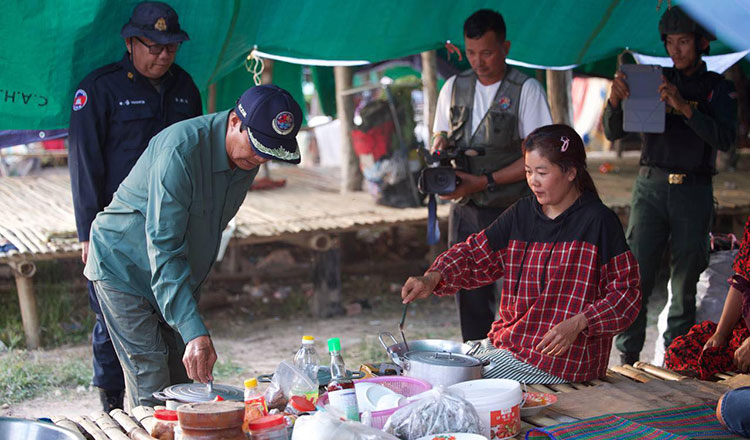 Senior Minister Kun Kim, (L) First Vice-President of NCDM, meets a refugee at a safety centre in Anlong Veng district, Oddar Meanchey province. NCDM
#National
Synopsis: National Committee for Disaster Management data show that more than a third of those displaced—240,014 people—have returned to their communities since the ceasefire. However, uneven access to basic services remains a challenge.
A fragile calm has returned to areas along the Cambodia–Thailand border following a ceasefire that took effect on December 27, but the humanitarian impact of months of fighting remains severe, with more than 400,000 people still displaced and essential services disrupted across multiple provinces, a comprehensive United Nations (UN) report said.
According to Situation Report 13 released yesterday by the Cambodia Humanitarian Response Forum (HRF), conditions along the border were generally calm during the reporting period from December 27, 2025 to January 2, 2026, though authorities and aid agencies cautioned that the situation remains fluid and vulnerable to deterioration.
The National Committee for Disaster Management (NCDM) reported that as of January 1, 2026, a total of 409,149 people had been displaced by the conflict, including 214,486 women and 131,400 children. Of these, 186,246 people were sheltering across 161 displacement sites. While this marks a significant reduction from the peak of 649,163 displaced persons recorded on December 27, humanitarian partners warned that needs remain acute both in displacement sites and among families which have begun returning home.
NCDM data show that more than a third of those displaced—240,014 people—have returned to their communities since the ceasefire. However, uneven access to basic services, damage to civilian infrastructure and lingering security risks continue to complicate safe and sustainable returns.
Civilian casualties and damage to infrastructure have compounded vulnerabilities. The Ministry of Interior reported 32 civilian deaths and 94 injuries since December 7, alongside widespread damage to private homes and public facilities, including schools, health centres, government buildings, roads, bridges and electricity networks. Religious and cultural sites have also been affected.
“These impacts, combined with prolonged displacement, are increasing risks for children, older people, persons with disabilities and those with chronic health conditions,” the HRF report said.
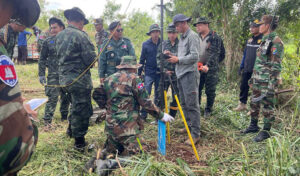
Disruption to essential public services remains a major challenge. In parts of the affected provinces, schools, health facilities and local administrative services are still suspended, while other areas have begun a phased resumption of services. Authorities say broader reopening will depend on sustained security, the restoration of basic services and the management of residual threats, including unexploded ordnance (UXO).
As people continue returning, humanitarian agencies face the dual task of meeting immediate needs in temporary displacement sites while supporting early recovery for households attempting to rebuild their lives.
Humanitarian partners, working under the coordination of the HRF and in support of government efforts, have mobilised a multi-sector response. A Joint Rapid Needs Assessment, launched with the NCDM on December 24, has completed data collection in five provinces, with a draft report produced this week. The final findings are expected to guide the next phase of response planning, particularly as patterns of return evolve.
Since the outbreak of border clashes in July 2025, HRF monitoring indicates that approximately 222,304 people across seven provinces have received some form of assistance through the combined efforts of 30 HRF members. Water, sanitation and hygiene (WASH) interventions reached the largest number of people, followed by food security, nutrition and shelter support.
In the education sector, partners have focused on maintaining learning continuity for displaced children. Plan International Cambodia, UNICEF and World Vision have established temporary learning spaces, distributed learning materials and supported early childhood education across several provinces. UNICEF reported that around 3,600 children aged three to five had gained access to early childhood education through more than 130 learning spaces by the end of December, while World Vision-supported sites benefited at least 14,000 children during the reporting period.
Food security and nutrition assistance have included food distributions, supplementary feeding for young children and planning for small-scale livelihood activities such as kitchen gardening and duck raising. Health partners have deployed mobile teams to safe centres, providing antenatal care, malnutrition screening, immunisation and referrals for high-risk pregnancies, alongside health promotion and hygiene messaging.
Social protection measures have also played a critical role. UNICEF supported the National Social Assistance Fund to relax conditionalities for cash transfer schemes, reaching more than 11,000 pregnant women, 12,000 young children and nearly 57,000 schoolchildren nationwide. Additional cash assistance for vulnerable households is being prepared in some of the most affected provinces.
Despite these efforts, protection needs remain significant, particularly for women and children. Aid agencies reported signs of fatigue, anxiety and psychosocial distress among children in displacement sites, as well as limited awareness of gender-based violence (GBV) reporting mechanisms. Gaps persist in gender-segregated sanitation facilities, accessibility for persons with disabilities and the availability of child-friendly spaces.
In response, protection partners have expanded mental health and psychosocial support services, distributed dignity kits to women and girls and strengthened child protection systems. World Vision alone reported that its child-friendly spaces continued to benefit at least 32,000 children during the reporting period.
The humanitarian response is coordinated through the HRF, co-led by the World Food Programme and DanChurchAid, in close collaboration with the NCDM and provincial authorities. Regular coordination meetings, sectoral planning and response monitoring tools are in place to track assistance and identify gaps.
With the release of the Rapid Needs Assessment expected shortly, the HRF plans to convene partners to agree on response priorities and the way forward. While the ceasefire has allowed some families to return home, humanitarian actors stress that sustained support will be essential in the weeks ahead.
-Khmer Times-