A mother in a wheelchair, a home in ruins: “I don’t know how we will survive”
 A mother in a wheelchair, a home in ruins: “I don’t know how we will survive”
#National
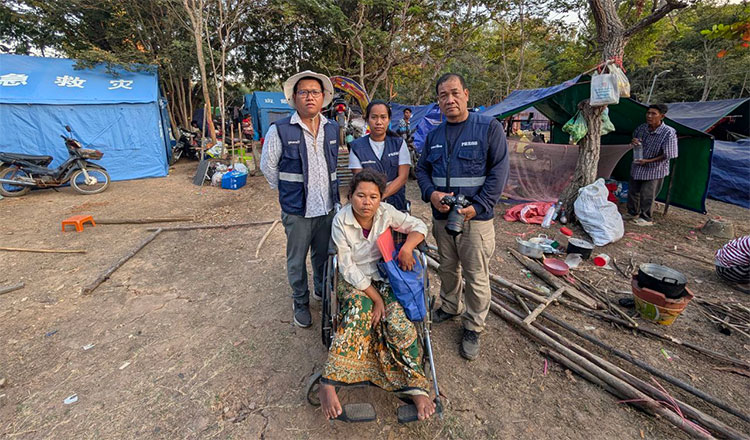
Banteay Meanchey province — Sitting quietly in a wheelchair beneath the shade of Chansy Samakki Rattanaram Pagoda, which has been set up as a temporary refugee camp, 40-year-old Koeung Rey wipes away tears as her two children stand close by — now her caregivers as well as her reason to endure.
She is among thousands of Cambodians displaced by recent fighting along the Cambodia–Thailand border as a result of Thai military aggression. Koeung Rey was forced from her home in Chouk Chhey village of O’Chrov district in Banteay Meanchey province after Thai military shelling destroyed her house and troops sealed off the area with barbed wire and shipping containers late last month.
A divorced and disabled mother of two, Koeung Rey said the home she lost was the result of decades of sacrifice and struggle.
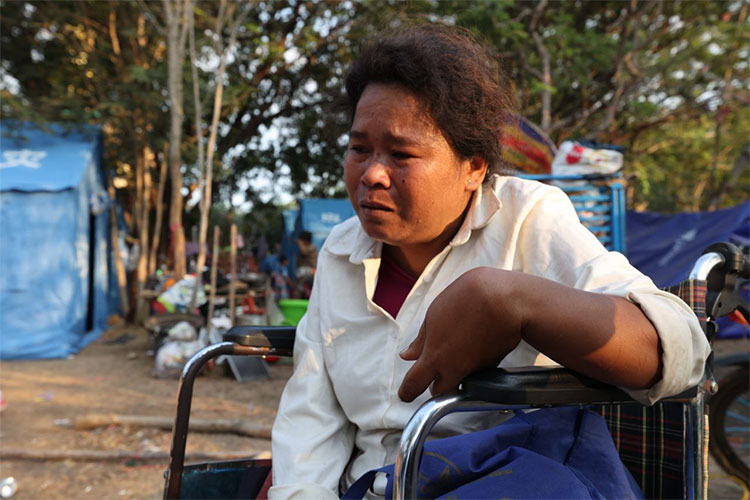
After giving birth to her second child more than 10 years ago, she left Cambodia to work as a maid overseas, determined to escape poverty and provide for her children. Upon returning home, illness struck, leaving her permanently disabled and confined to a wheelchair.
But she refused to surrender to despair.
Through years of hardship, she grew vegetables, raised chickens and saved every possible riel. With the help of microfinance loans, she finally built a small wooden house with a tiled roof — a symbol of stability and hope for her children, both of whom are still in school.
That hope vanished in late December when fighting intensified along the border. Her home was destroyed during nearly three weeks of Thai military airstrikes and indiscriminate bombardment before the village was illegally occupied.
“I had just finished building the house,” she said quietly. “Now it is gone. Almost a lifetime of struggle disappeared in a moment.”
For Koeung Rey, “home” meant more than walls and a roof. It was shelter from rain and heat, a place of safety for children who lost their father at a young age, and a promise of dignity after years of hardship.
Today, she remains burdened by debt for a house that no longer exists. Her health is deteriorating, and uncertainty continues to shadow her future.
“My children are still so young,” she said. “I don’t know how we will survive.”
From the displacement camp, Koeung Rey called for the return of occupied village land so families can rebuild their lives. She also appealed to fellow Cambodians and donors to help displaced families endure what she described as the darkest chapter of her life.
For now, she waits — in a wheelchair, in a pagoda shelter — holding on to the hope that one day her children will again have a place to call “home”.
-Khmer Times-