Silent victim: Why wars of aggression are environmental crimes
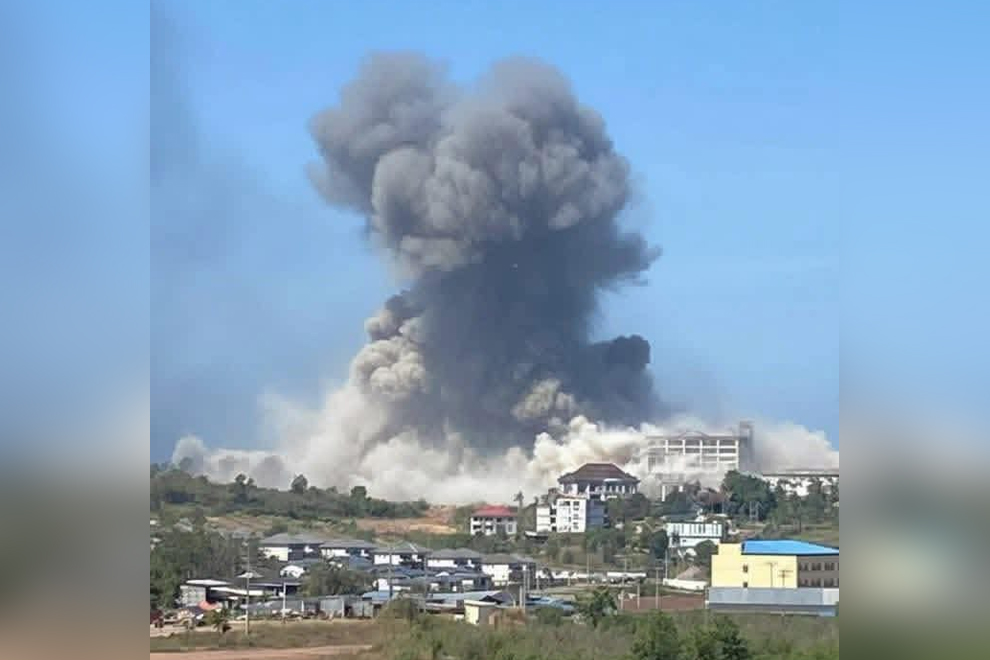 Thai military conducted an airstrike on the Thma Da area in December, 2025. FB
#opinion
Wars of aggression, using military force to violate the territorial integrity of another sovereign state, are not only violations of human rights and international law, but also crimes against the environment. All of these actions have caused pollution, and widespread, long-term and irreversible damage to ecosystems and biodiversity. These impacts are not limited to the battlefield, but can persist for generations.
Greater responsibility, and greater attention during conflict, is needed for the protection of the environment and natural resources as well as to strengthen global commitments to peace, to strengthen the rule of law, and to ensure the sustainability of the environment and natural resources for present and future generations.
1. Destruction of ecosystems and natural habitats
Military operations that cause war are a major cause of severe destruction of ecosystems and natural habitats. The use of heavy weapons, toxic fumes, bombings and other military activities have destroyed forests, farmlands, rivers and seas, which are the basis for human life, wildlife and aquatic life. When ecosystems are destroyed, the natural balance collapses, causing the loss of biodiversity and the extinction of many species of animals and plants. In addition to direct damage, war also causes serious environmental pollution.
Weapons, chemicals, oil and other military waste can seep into the soil and water sources, endangering human and animal health. The destruction of natural habitats deprives wildlife of their habitat and food, forcing them to move or die. At the same time, human communities that depend on natural resources are also affected by loss of land and agriculture, impacting their daily livelihoods. These consequences can continue from generation to generation, causing complex environmental, social and economic problems.
2. Land, air and water pollution
Warfare is a major cause of large-scale environmental pollution, especially on land, in the air and on water. The use of weapons, bombing and military activities, and the resulting remnants of war, release toxic substances into the environment, causing long-term impacts on human health, ecosystems and community livelihoods.
Land pollution occurs from weapon residues, unexploded ordnance, chemicals and oil from military vehicles. These substances can leach into the soil, damaging agricultural soil quality, causing crop failure and posing a risk to food security. In many areas, soil contamination by remnants of war can persist for decades and is difficult to clean up.
Air pollution occurs from toxic chemical gases sprayed from warplanes or emitted from the detonation and burning of military equipment. Toxic fumes and dust can affect the respiratory system and cause chronic diseases. Air pollution can also spread far from war zones through the air, affecting nearby areas.
Water pollution is a serious problem that cannot be ignored. Oil, chemicals and war debris can flow into natural water sources that people and animals depend on, such as rivers, lakes and oceans, destroying aquatic life and making fresh water sources unsafe for consumption. Communities that depend on water for drinking, agriculture and fishing are often severely affected, and are at risk of infectious diseases.
Noise pollution is an environmental problem that occurs when noise levels exceed normal levels and affect the health of people, animals and the surrounding environment. In war situations, noise pollution is particularly severe, especially from bombs, heavy artillery and fighter jets. these produce extremely loud sounds that can be heard for miles. Such sounds can cause people to feel scared, stressed and temporarily or permanently lose their hearing. For wildlife, the noise of explosions can disrupt their normal lives, causing them to flee their habitats, and lose their places to find food and reproduce.
3. Exploitation and abuse of natural resources
Invading forces often steal or exploit natural resources such as wildlife, timber, minerals, oil and water to support military operations or for profit. Illegal logging, unregulated mining and oil extraction cause severe environmental damage and deprive local communities of essential resources, which perpetuates conflict. Protecting and conserving natural resources during wartime is essential to ensuring the survival of people, animals and ecosystems for generations to come after the war is over.
4. Impact on wildlife and biodiversity
Disturbance by military weapons, destruction of habitats and displacement of people causes wildlife to flee or die and threaten extinction for vulnerable and endangered species. Protected areas and national parks, which are conservation corridors, are often turned into battlefields or unregulated areas that are difficult to manage and protect, often resulting in poaching and the loss of many rare species. All this loss of biodiversity will weaken ecosystems and make them difficult to restore.
War is a serious problem that has a huge impact on people, society and the environment. According to a report by the United Nations and the United Nations Environment Programme (UNEP), war not only causes human loss of life, but also severely damages wildlife and biodiversity, which has a long-term impact on ecosystems. War leads to the destruction of wildlife habitats. Bombing, the construction of military bases and deforestation have damaged forests, wetlands and protected areas.
According to UNEP, habitat loss is a major cause of many wildlife species declining or becoming extinct. In addition, war also causes serious environmental pollution. Weapons, chemicals and fuel residues from military activities can contaminate soil, water and air. UNEP documents state that these pollutants kill many aquatic animals and plants and disrupt food chains in ecosystems. In addition, war undermines the management of natural resources and protected areas. In conflict areas, authorities are unable to effectively enforce wildlife protection laws, which leads to increased hunting and illegal wildlife trade, which will lead to rapid biodiversity loss.
5. Long-term impacts on climate and health
Greenhouse gas emissions caused by war activities contribute to regional and global climate change through deforestation for military purposes, forest fires and the burning of fossil fuels, as well as the use of chemical and radioactive weapons, warplanes, tanks and warships. Bombings have caused climate disasters including natural disasters, droughts, resource depletion (soil and water, air pollution, ozone layer depletion, global warming) and pose risks of serious and acute diseases such as cancer, birth defects, severe skin diseases, respiratory diseases, kidney damage, mental illness, weakened immune systems, genetic and cellular mutations, infectious diseases, malnutrition, etc.
The destruction of infrastructure such as bridges, roads, hospitals and housing causes food shortages and lack of clean water, sanitation and disease, placing additional burdens on less developed countries like Cambodia in adapting to climate change.
6. Violation of environmental protection obligations
International legal norms on the environment are not respected when armed conflict is used to achieve military objectives. To reduce these negative impacts, countries should respect international law and strengthen environmental protection, even in conflict situations. Protecting the environment is protecting the lives and future of all humanity.
7. International law and principles concerning the environment and warfare
International law provides important protections for the natural environment during armed conflict. These protections are reflected in international humanitarian law, international criminal law and key environmental principles, as outlined below:
7.1. International Humanitarian Law (IHL)
Within the framework of International Humanitarian Law, Additional Protocol I (1977) to the 1949 Geneva Conventions provides specific protections for the natural environment:
• Article 35(3): It is prohibited to employ methods or means of warfare that are intended, or may be expected, to cause widespread, long-term and severe damage to the natural environment.
• Article 55(1): Care shall be taken in warfare to protect the natural environment against widespread, long-term and severe damage. Attacks against the natural environment by way of reprisals are prohibited.
7.2. International Criminal Law (ICL)
Under Article 8(2)(b)(iv) of the Rome Statute of the International Criminal Court, it constitutes a war crime to intentionally launch an attack in the knowledge that such attack will cause incidental loss of life or injury to civilians, damage to civilian objects, or widespread, long-term and severe damage to the natural environment, where such damage would be clearly excessive in relation to the concrete and direct overall military advantage anticipated.
7.3. Environmental Principles
Principle 24 of the Rio Declaration on Environment and Development (1992) recognises that warfare is inherently destructive to sustainable development. States are therefore required to respect international law that provides protection for the environment during armed conflict and to cooperate in the further development of such law, as necessary.
8. Conclusion and call to action
Fundamentally, war never yields positive outcomes for the environment; rather, it inevitably inflicts catastrophic destruction upon both wildlife and humanity as a whole. In this regard, all conflicts should be resolved through negotiation mechanisms and legal principles to achieve peaceful settlements. This is essential to preserve enduring peace and foster harmony between humans, as well as between humanity and the natural world.
Protecting the environment during times of conflict is not merely an option – it is a humanitarian obligation. We must collectively strengthen the enforcement of international law and enhance our global commitment to peace to ensure environmental sustainability and the protection of natural resources for future generations.
Eang Sophalleth is the Minister of Environment. The views and opinions expressed are his own.
-The Phnom Penh Post-