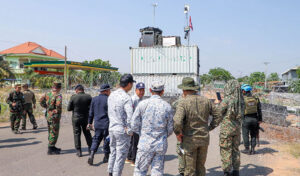
A land mine, a border, and two stories
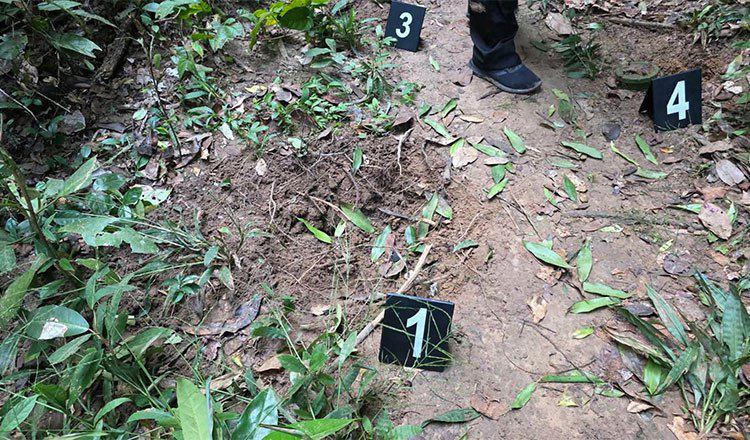 [Land mine indicators in a disputed war zone. Khmer Times]
-Opinion-
A land mine that wounded Thai soldiers along the Sisaket-Preah Vihear frontier has done more than maim. It has stalled a new peace effort between Thailand and Cambodia and revived old arguments about who is responsible for the explosives that still lurk in the soil. Thailand says its troops were hit during a patrol and has paused parts of a Malaysia-mediated truce; Cambodia denies it laid any new mines and wants a fact-based inquiry. The truth matters because this border remains one of the most contaminated in the world.
What we know—and what we don’t
Thai officials say a land mine injured soldiers in Sisaket province on November 10. The government responded by freezing elements of the ceasefire, including a planned release of 18 Cambodian detainees. Prime Minister Anutin Charnvirakul also demanded an apology from Phnom Penh. Cambodia rejects the accusation, saying the blast likely came from an old device and urging a joint investigation. These moves put a fragile de-escalation effort at risk just weeks after it began.
The ground reality
Decades of conflict left minefields scattered across the Thai-Cambodian border. Reports by the Landmine Monitor and Mine Action Review still show large, mapped hazardous areas—many of them near this frontier. In short, troops can still step on “old” mines even if nobody has laid a new one.
The area named by both sides—around Phnom Trop/Veal Intry near the Preah Vihear escarpment—saw clashes in the late 2000s and early 2010s. Not all of those hazards have been cleared. That makes an accidental detonation plausible, particularly if patrols stray off marked safe lanes.
How to tell if a mine is old or new
Attributing a mine to a time and a party is technical work. Investigators look at the device type and fuze, its condition, how deep it sits, signs of soil disturbance or root growth, and who controlled the ground when. They compare that evidence with clearance records and past incident logs. Until those facts are collected and published, claims on either side are opinions, not proof. Thailand says it will investigate; Cambodia says it will cooperate. Let them—ideally with neutral experts at the table.
Treaty law—and incentives
Both countries signed the Anti-Personnel Mine Ban Convention, which prohibits the use of antipersonnel mines and requires clearance and victim assistance. Cambodia has built international standing by hosting treaty meetings and filing the required reports. Planting new mines would jeopardise the funding and credibility that Phnom Penh needs to finish the job. That doesn’t prove innocence, but it makes the alleged behaviour unlikely on cost-benefit grounds.
Bangkok’s calculus
Why the swift political response? First, leverage: pausing the truce gives Thailand bargaining power over verification, border management and sequencing. Second, domestic politics: after months of violence, a hard line plays well at home and with the military. Third, message control: calling a device “new” justifies delaying steps like prisoner releases and weapons pullbacks—at least until an inquiry reports. These are explanations, not judgments. The investigation should decide.
What should happen now?
1. Run a joint, independent forensic investigation. Publish the technical annexe—device type, depth, photos, GPS coordinates, lab tests—so outsiders can see the evidence. If it’s an old mine, say so. If it’s new, say who laid it and when.
2. Don’t let one blast sink the entire truce. If safety demands a pause, limit it to the affected grid square and keep other steps moving. The longer forces remain in a standoff, the higher the risk of another incident.
3. Scale up practical cooperation. Mark and maintain clearly signed patrol corridors. Swap updated hazard maps weekly. Bring in neutral quality-assurance teams to check cleared lanes. It’s tedious work—but it saves lives.
The International Court of Justice clarified in 2013 that Cambodia has sovereignty in the region around the Temple of Preah Vihear. Legal lines, however, don’t remove mines.
Only clearance does.
We should resist the urge to declare certainty before the facts arrive. A credible investigation may show an old device did new harm. If it shows something else, accountability must follow. Either way, the safest path is the same: keep the cease-fire mechanisms alive, investigate professionally, and double down on the unglamorous work of clearing mines.
Because on that ridge, the difference between a quiet patrol and a catastrophe can still be a single step.
Shathel Fahs is a mine-action adviser who has worked on survey, clearance, and risk-education programs in post-conflict environments worldwide. The views expressed are the author’s own.
-Khmer Times-