Editorial 113-What Is a Green Economy?
 Editorial 113-What Is a Green Economy?
Opening Thought
“An economy becomes truly prosperous when meeting today’s needs does not destroy tomorrow’s possibilities.”
Editorial
An economy is the system through which people produce, exchange, distribute, and use goods and services. It includes farmers, fishers, workers, families, businesses, markets, banks, governments, schools, and natural resources.
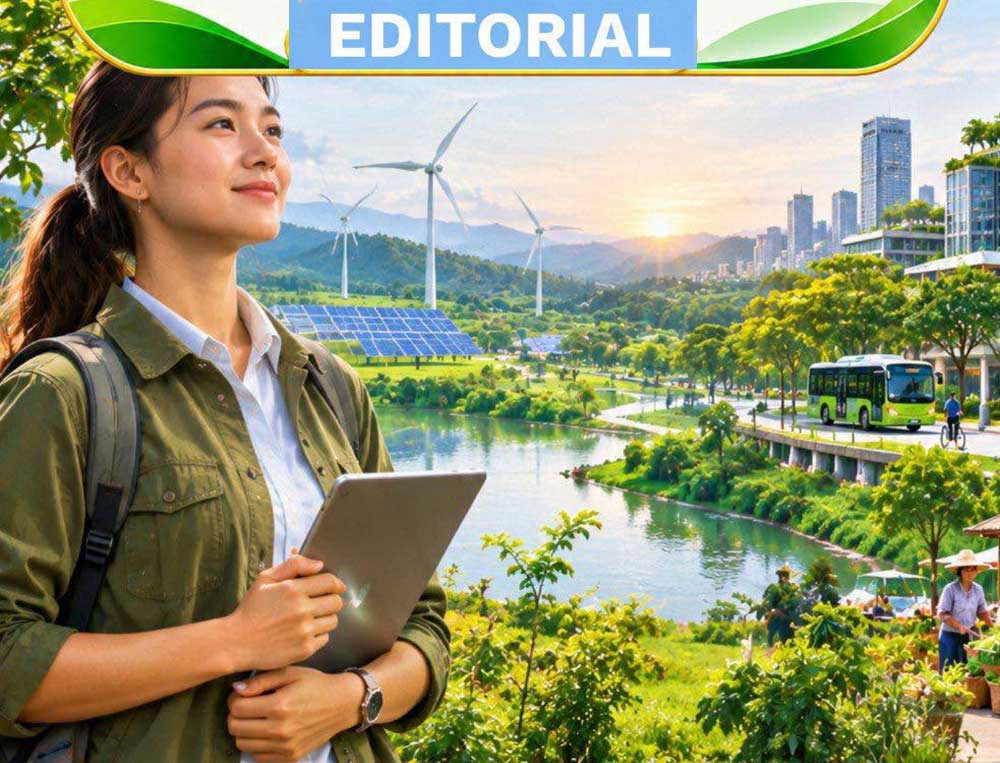
A green economy seeks human well-being and social fairness while reducing environmental risks and pressure on nature. It aims to use energy and materials efficiently, limit pollution, protect ecosystems, support decent work, and create opportunity that can continue.
“Green” does not mean that every activity must involve trees or solar panels. A repair shop can be green by extending product life. A water utility can be green by preventing leaks and protecting sources. A farm can become greener through soil, water, crop, and habitat practices fitted to its conditions.
An economy cannot become green through labels alone. A product may be advertised as environmentally friendly while hiding pollution, poor labor conditions, excessive packaging, or weak evidence. Credible claims need clear standards, measurement, and independent checking.
The green economy also cannot ignore poverty. A policy that protects nature but removes essential income without alternatives may deepen suffering and lose public support. Environmental improvement and human dignity must be planned together.
Growth is not the only measure of success. Income and production matter, especially where people lack basic needs. Yet health, education, clean air, safe water, time, resilience, equality, culture, and healthy ecosystems also contribute to prosperity.
Transitions create both opportunities and costs. New industries may provide jobs while older ones decline. Workers need training, social protection, fair participation, and time to adapt. Communities dependent on one activity need credible alternatives, not promises alone.
Students participate in the economy whenever they use electricity, food, transport, phones, clothing, school supplies, or money. Their role is not to feel guilty. It is to become thoughtful citizens and future workers, consumers, entrepreneurs, and leaders.
A green economy asks a simple but demanding question: can this activity meet real needs, treat people fairly, and remain within ecological limits?
When the answer is no, innovation begins. When the answer improves, prosperity gains a future.
Progress can be tracked at several levels. A household may save energy, a business may reduce waste per product, a city may improve transport, and a nation may protect ecosystems while raising living standards. Each level needs measures suited to its responsibility.
Buddhist Reflection
Right livelihood encourages work that supports life and avoids unnecessary harm. The middle path seeks material sufficiency without allowing greed to define success.
Today’s Reflection
Which quality besides money should be included when measuring prosperity?
Today’s Action
Choose one local business or service and list its benefit, workers, resource needs, environmental effects, and one greener improvement.
Today’s Pledge
Today I will understand prosperity as well-being, fairness, and possibility that can continue.
When we protect nature, we protect all beings—including ourselves.