Measles is making a comeback. Will we end it for good?
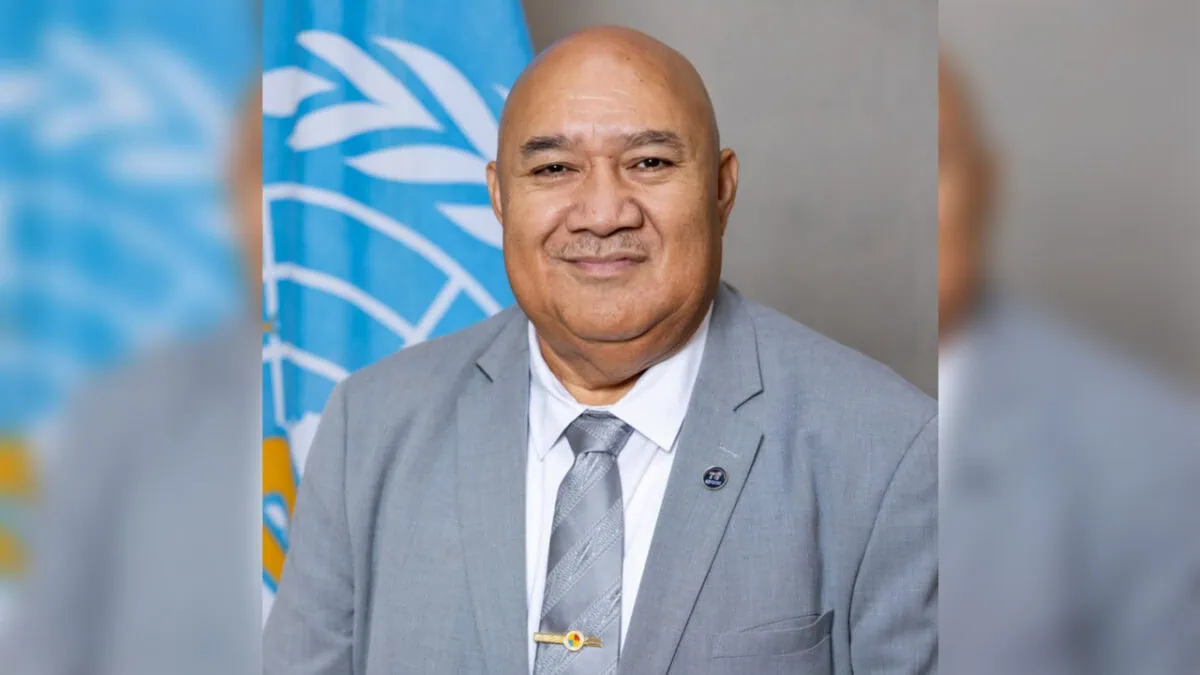 Dr Saia Ma'u Piukala, WHO regional director for the Western Pacific, has called for sustained efforts to maintain immunisation programmes. Supplied
For many years, measles felt like a disease of the past across the Western Pacific region.
This did not happen by chance.
It was the result of decades of political commitment, investment and public health work that steadily pushed measles closer to elimination.
Health workers carried vaccines across mountains, rivers, crowded cities and remote islands. Surveillance systems worked to detect outbreaks early. Countries collaborated to close gaps in vaccine coverage.
Globally, since 1974, vaccination has prevented an estimated 154 million deaths from a range of diseases. Measles vaccination alone accounts for around 94 million lives saved, including 12 million in the Western Pacific Region. It is the single most impactful vaccine intervention of the past 50 years.
But in recent years, amid vaccination challenges during the Covid-19 pandemic coupled with mounting antivaccine misinformation, measles outbreaks have been resurging, bringing back a disease we have long known how to prevent.
Behind every outbreak is a gap: a missed child, delayed action, weakened trust or communities not reached through regular vaccination programmes. In the Western Pacific — home to 2.2 billion people, more than a quarter of the world’s population — an immunity gap in one country quickly becomes a regional risk.
This should concern all of us because measles is not only about one disease. It is one of the clearest signals of whether health systems are strong, consistent and serving everyone.
Experts across the region agree that achieving measles elimination by 2030 is possible. Indeed, just last year WHO certified that both measles and rubella had been eliminated as a public health threat in all 21 Pacific island countries and areas.
We know what works: strong routine immunisation; watching closely for outbreaks and responding quickly when they happen; trusted health workers; and ongoing work with communities.
What is needed now is a renewal of political commitment, health policies grounded in science and sustained resources – both financial and human.
Governments, international and national donors and other partners must continue investing in immunisation as a key pillar of public health, even when outbreaks are not dominating headlines.
This is becoming more urgent in a fast-changing world.
Funding shortfalls lower vaccine supply, while hesitancy fuelled by false information reduces demand. Disasters, conflicts, rising energy costs and other uncertainties threaten vaccine supply chains. And rapid demographic shifts — from ageing to mobile populations — are changing immunisation requirements.
Governments are left to meet rising needs with limited resources. But immunisation is not just a cost. It’s a life-saving investment.
Immunisation does more than prevent diseases.
It strengthens health systems, protects economies from costly outbreaks, and supports healthier societies. Every US dollar invested in immunization generates up to $54 in social and economic returns. But these benefits are not reaching everyone equally. In 2025, there were over 1.6 million zero-dose children in the Western Pacific – children who have not received even a first routine vaccine. They face the greatest risks.
Immunisation is also becoming increasingly important throughout people’s lives, not just in childhood. As populations age, health needs change.
The Region has the tools, expertise and experience needed to succeed.
Recently, the nine countries yet to achieve measles elimination in the Western Pacific came together with WHO and experts to discuss how to achieve this by 2030. The message from Cambodia, China, Indonesia, Laos, Malaysia, Mongolia, Papua New Guinea, the Philippines and Vietnam is clear. Measles elimination is possible, but no country can achieve or sustain it alone.
Countries cannot rely only on emergency campaigns during outbreaks. There must be strong routine immunisation and surveillance systems that consistently reach every child and community, year after year.
In 2024 and 2025, nearly 20 million children were born in the region each of those years. All of them need protection through routine vaccination. We cannot become complacent.
The Western Pacific has already shown what collective action can achieve. For more than 25 years, the Region has sustained its polio-free status through political commitment, regional solidarity, strong surveillance and sustained investment in immunisation.
Countries now have an opportunity to build on that success and achieve another historic public health milestone: Measles elimination under WHO’s Immunization Agenda 2030.
But this will only happen if we act now. Governments must treat immunisation not as a short-term programme, but as a long-term investment in health security, stability and future generations.
The goal of achieving measles elimination regionwide by 2030 is ambitious. But ambition has always defined public health progress in the Western Pacific.
Measles moves fast. Our Region must move faster.
Dr Saia Ma’u Piukala is WHO regional director for the Western Pacific. The views and opinions expressed are his own.
-Phnom Penh Post-