Why are the military actions of some countries condemned, but not Thailand’s occupation of Cambodian territory?
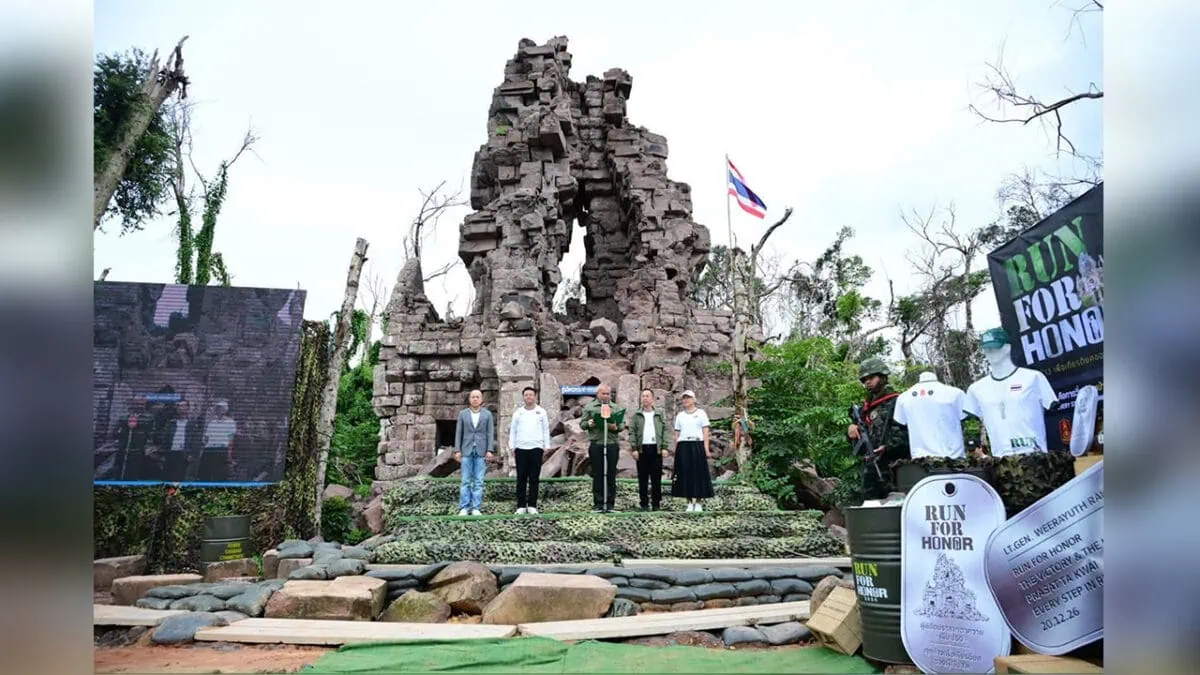 Thai military officials prepare for the ‘Run for Honor’ event, set to be held in December, near the occupied Ta Krabei Temple. Thai 2nd Army Region
#Opinion
I am not comparing major European conflicts with those of the ASEAN region, nor am I saying the situations are identical. I am simply asking a question about whether the same principles of sovereignty are being applied equally.
The majority of the international community are quick to refer to military actions as invasions and violations of a neighbouring country’s sovereignty; the response was condemnation, sanctions and enormous international pressure. The message was clear: no country should use force to violate another country’s sovereignty or change territorial realities.
So my question is simple: why is Cambodia receiving far less international attention when Thai armed forces have invaded and occupied Cambodian sovereign territory?
Why does the international response appear so different? Is international law only powerful when the country involved is powerful?
Cambodia is a small and vulnerable country. Unlike some other countries which have faced attack, it does not have comparable military capabilities, advanced weapons systems or the same level of powerful international military support.
That should make Cambodia more deserving of international attention, not less.
A weaker country should not have to become militarily powerful before the world takes its sovereignty seriously.
Thailand may have its own territorial claims and interpretation of the border. It has every right to defend its position. But territorial claims should be settled through international law, negotiation and agreed border mechanisms, not through military presence, occupation or unilateral actions on the ground.
If the international community considered the use of force to establish territorial facts unacceptable in other parts of the world, why should the principle be different when Cambodia is facing the same kind of threat to its territory?
If the world truly believes in a rules-based international order, there cannot be one standard for powerful countries and another for small countries.
If territorial integrity deserves protection in Europe, it deserves protection in Southeast Asia too.
Cambodia does not want war with Thailand. But Cambodia should not have to be forced to accept a fait accompli, or acquire a high level of foreign military support, before the world decides that its sovereignty matters.
International law should protect countries because they are sovereign, not because they are powerful.
Neang Sopheap is a Phnom Penh-based geopolitical analyst. The views and opinions expressed are his own.
-Phnom Penh Post-