Law Cannot Be Used as a Pretext: Why Thailand’s Attempt to Reframe Border Agreements Undermines International Norms
 Law Cannot Be Used as a Pretext: Why Thailand’s Attempt to Reframe Border Agreements Undermines International Norms
#opinion
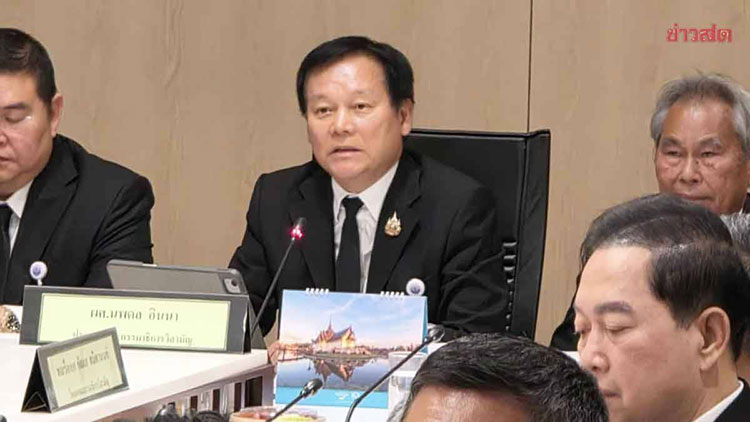
Recent reporting in several Thai media outlets regarding a Thai Senate committee recommendation to revoke a bilateral border memorandum with Cambodia reflects a familiar pattern: the selective use of legal language, historical claims, and security narratives to justify unilateral political objectives. While framed as a technical legal matter, the narrative presented raises serious questions about good faith, international law, and ASEAN’s commitment to peaceful dispute resolution.
At the core of the Thai argument is the claim that Cambodia committed “material breaches” justifying termination under Article 60 of the Vienna Convention on the Law of Treaties. However, international law does not allow a state to simply declare a breach without credible, mutually verified mechanisms. Allegations alone do not constitute legal proof. The Vienna Convention itself emphasizes that treaty termination must be exercised in good faith and cannot be used as a political instrument.
Cambodia has consistently demonstrated its commitment to peaceful dispute resolution based on international law, bilateral mechanisms, and ASEAN principles. Cambodia has repeatedly reaffirmed that border disputes must be resolved through technical mechanisms such as the Joint Boundary Commission (JBC), not through unilateral reinterpretations or political pressure.
What is particularly concerning is the attempt to redefine the basis of boundary demarcation by rejecting mutually used technical references such as agreed mapping frameworks while simultaneously proposing new geographic interpretations such as mountain ranges as boundaries. International boundaries are not determined by convenience or political preference but by legally recognized treaties, historical documentation, and mutually agreed demarcation processes.
The reference to the 1904 and 1907 Franco-Siamese treaties is particularly noteworthy. These treaties remain the foundational legal basis of the Cambodia-Thailand boundary and were reaffirmed through subsequent bilateral agreements. Selectively invoking these treaties while rejecting technical processes derived from them risks creating contradictions rather than solutions.
Equally important is the broader regional implication. ASEAN has long upheld the principle that disputes must be resolved peacefully and through dialogue. Any move that risks undermining existing cooperation mechanisms risks setting an unfortunate precedent that could weaken regional trust and stability.
Cambodia has no interest in escalating tensions and has consistently shown restraint and maturity in addressing border issues. Cambodia’s position remains clear and consistent: disputes must be resolved through peaceful negotiation, respect for signed agreements, and adherence to international law—not through unilateral actions justified by domestic political narratives.
The suggestion that revoking agreements would somehow strengthen negotiations is also questionable. Stability in international relations comes from continuity and trust, not from dismantling existing frameworks. Agreements are meant to reduce uncertainty, not become tools of pressure.
Ultimately, the real test is not legal interpretation but political sincerity. If the objective is truly a sustainable border settlement, then the path forward is clear: continued dialogue, respect for existing agreements, and avoidance of actions that may be perceived as coercive or unilateral.
Peaceful coexistence cannot be built on shifting legal interpretations. It must be built on mutual respect, good faith, and the shared understanding that borders must never be shaped by pressure, but by law.
Cambodia remains ready to continue constructive engagement with Thailand through existing bilateral mechanisms and in the spirit of ASEAN solidarity. The question is not whether mechanisms exist—they do. The real question is whether they will be used in good faith.
Roth Santepheap is a geopolitical analyst based in Phnom Penh. The views expressed are his own.
-Khmer Times-