ASEAN Special Meeting Shows the Limits of Regional Diplomacy While Thailand Keeps the Upper Hand
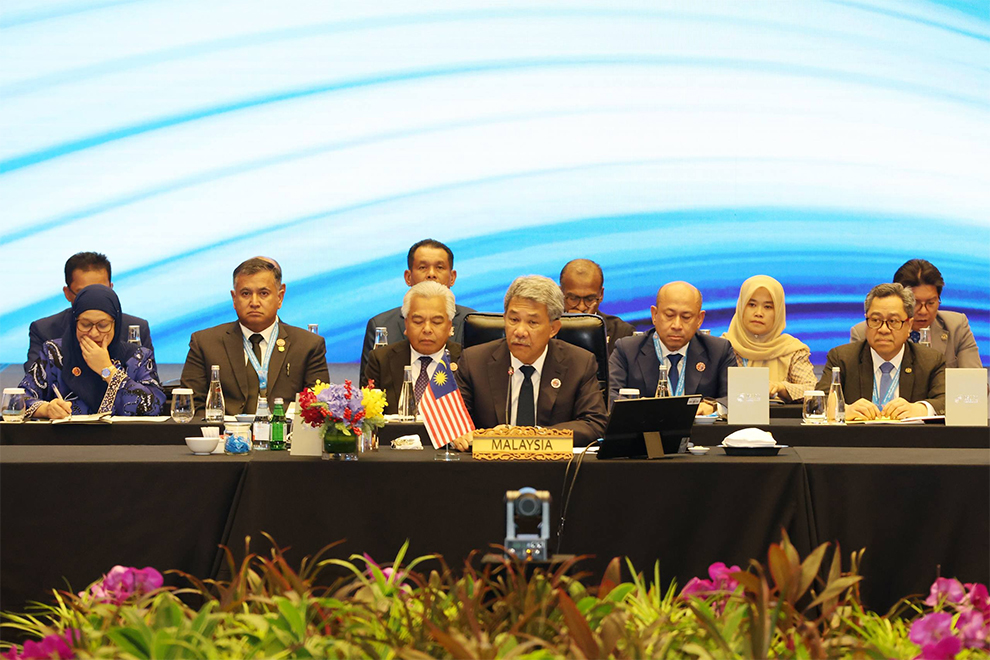 The ASEAN Foreign Ministers’ Meeting took place in Malaysia on December 22. AKP
#opinion
The ASEAN special foreign ministers meeting in Kuala Lumpur on December 22 was expected to help stop the fighting along the Cambodia Thailand border. Instead, it confirmed an uncomfortable reality. There was no agreed ceasefire, and the process was pushed toward a General Border Committee (GBC) meeting, scheduled for December 24.
This outcome did not happen by accident. Thailand entered the meeting with a clear advantage because it understands the ceiling of ASEAN action. ASEAN decision-making relies heavily on consultation and consensus, and its political culture prioritises sovereignty and non-interference. These principles shape what ASEAN can realistically deliver in a crisis between two member states. ASEAN can convene and encourage, but it struggles to impose timelines, enforce compliance or compel an immediate ceasefire if one party refuses.
That is why Cambodia’s push for urgency was easy to dilute.
Cambodian Prime Minister Hun Manet publicly raised the need to use satellite imagery to verify key incidents and identify violations, arguing for evidence-based diplomacy rather than competing narratives.
Reuters also reported that an ASEAN team supported by US satellite data was expected to present findings as part of regional efforts. Yet even when the technology exists, the politics still decides. In a consensus system, any serious verification mechanism can be weakened if one side does not accept it.
Thailand’s preferred pathway was clear from the result. Rather than accept an urgent ceasefire timeline, Bangkok emphasised a return to bilateral machinery through the General Border Committee, proposing talks at the border in Chanthaburi.
Thailand’s foreign minister argued that a ceasefire cannot simply be declared and must be discussed with commitments and an implementation plan. The Associated Press similarly reported Thailand’s view that it had not received a formal ceasefire proposal and that public ceasefire announcements were partly intended to increase pressure on Thailand.
For Cambodia and many observers, the concern is that this becomes a familiar tactic. The promise of another meeting can reduce regional and international scrutiny, while realities on the ground continue to shift. Bilateral mechanisms can be useful when both sides genuinely seek restraint. But they can also become delays when the stronger party benefits from time and ambiguity.
Thailand’s domestic posture makes this risk sharper.
Just before the Kuala Lumpur meeting, Prime Minister Anutin Charnvirakul struck a defiant tone, signalling that Thailand would act forcefully and in the way it deems appropriate to defend its land and people. He also dismissed the idea that anyone was pressuring Thailand to stop, reinforcing the impression that Bangkok would not bow to an agreement it does not control.
This matters because it suggests that Thailand came to ASEAN not to accept pressure-driven compromise but to preserve maximum freedom of action while projecting the appearance of diplomacy.
Electoral incentives may deepen this posture. Reporting noted a general election scheduled for February 8 and described domestic pressure on Anutin to look tough, supported by nationalist constituencies that favour settling the dispute through force rather than concession. When escalation becomes useful for domestic legitimacy, diplomacy becomes harder, especially diplomacy that depends on voluntary restraint.
So what did the ASEAN meeting actually show.
It showed that ASEAN remains essential as a convening platform but structurally weak as a mechanism to halt crises when one party resists constraints. It showed that Thailand can use ASEAN norms to block outcomes it dislikes while still claiming it is engaging. And it showed that evidence-based proposals, including satellite-supported verification, will remain politically optional unless major powers help translate them into a binding process.
This is where external actors become decisive, not as replacements for ASEAN but as reinforcements to ASEAN credibility.
The US has been urging de-escalation and a return to implementing the Kuala Lumpur Peace Accord framework. Thai reporting also described US Secretary of State Marco Rubio expressing hope for a return to ceasefire compliance by Tuesday, December 23, underscoring urgency after the ASEAN meeting ended without an agreement. Reuters reported that the US and China are pursuing separate diplomatic efforts, yet neither has secured a clear breakthrough.
If ASEAN cannot stop the violence alone, the answer is not to abandon ASEAN. It is to add credible layers that make delay and escalation more costly than restraint.
A workable path forward should include three elements.
First, a monitored ceasefire with verification that cannot be vetoed after the fact. If satellite and other technical tools are available, they should be institutionalised through a mutually accepted mechanism rather than left as a rhetorical proposal.
Second, protection for civilians and border communities, where humanitarian access and restraint commitments are immediate deliverables, not rewards for later negotiations.
Third, a multilateral backstop that raises the diplomatic price of continued escalation. That can include coordinated pressure from the US and China and stronger engagement from the UN to support monitoring and de-escalation diplomacy.
The main lesson from December 22 is simple. ASEAN’s special meeting did not fail because people did not talk. It failed because the regional system still allows a determined actor to resist restraint while benefiting from the appearance of dialogue. Thailand’s shift to the GBC meeting on December 24 may be presented as progress, but without verification, timelines and external guarantees, it risks becoming a shield for continued escalation rather than a bridge to peace.
Seng Vanly is an independent geopolitical analyst. The views and opinions expressed are his own.
-The Phnom Penh Post-