Cambodia’s Final Sprint to Eliminate Malaria: Sustaining Strategic Investment and Leadership Commitment
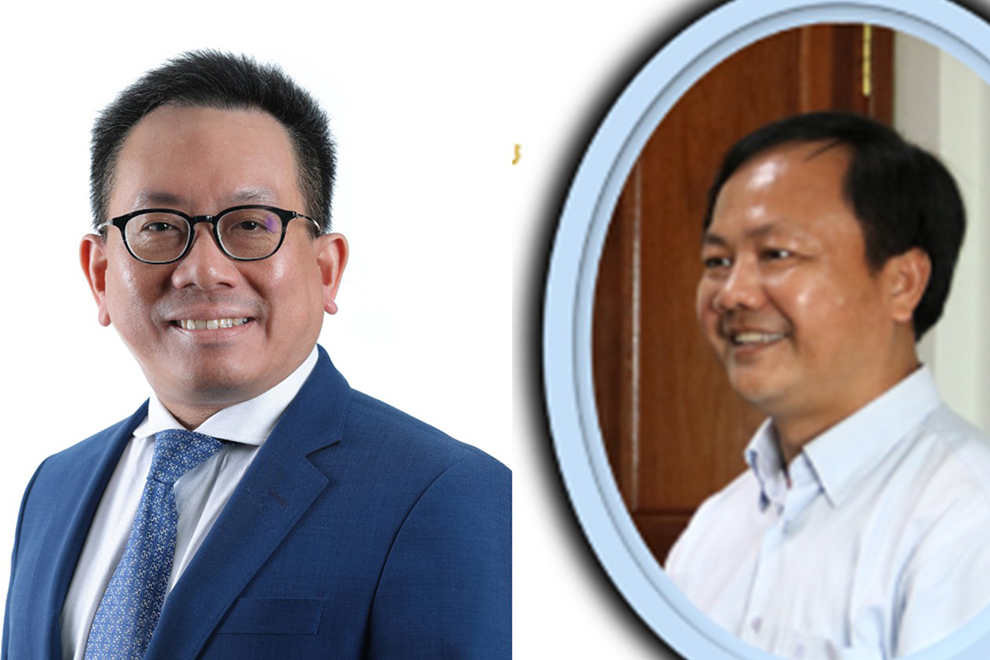 Dr Huy Rekol (left), director of the National Center for Parasitology, Entomology and Malaria Control, and Dr Xavier Chan, executive vice-president, Strategy and Programs, APLMAXX. Supplied
-Opinion-
Cambodia has already written one of the great public health success stories of our time. In just a few short years, malaria cases have fallen dramatically – from more than 62,000 in 2018 to just 355 in 2024.
Deaths from the disease have all but disappeared. The nation is now within striking distance of eliminating malaria altogether. Yet, as anyone who has climbed a mountain knows, the final steps to the summit can be the steepest. To finish this journey and attain malaria-free certification by 2030, Cambodia must tackle a distinct set of last-mile challenges with determination and foresight.
Reaching the last mile: Evolving strategies for hard-to-reach communities
The remaining malaria cases are no longer spread across the country but are instead concentrated in the hardest-to-reach corners: forest fringes, borderlands, and among mobile and migrant populations. These communities often live far from health facilities, speak diverse languages, and follow ways of life that make them difficult to reach with conventional health services.
To overcome these barriers, village malaria workers have been indispensable in bridging this gap, carrying out the bulk of testing and treatment in rural areas. Now, as malaria numbers fall, they are stepping up beyond routine services to preserve hard-won gains and help strengthen rural health systems. Notably, 84% of village malaria workers have broadened their scope to address other vector-borne diseases, all under the stewardship of Cambodia’s National Center for Parasitology, Entomology and Malaria Control.
Cambodia’s malaria elimination strategy now hinges on rapid detection and swift action. Operating within their communities, village malaria workers help track, investigate and treat without delay, particularly in the most remote villages — making sure that malaria cannot silently resurge.
In the same vein, innovative strategies from preventive drug regimens to proactive fever screening with forest workers, have also shown promise. The task now is to refine and sustain these targeted approaches, ensuring they remain responsive to shifting patterns of mobility and land use.
Sustaining momentum: Partnerships and domestic ownership
Elimination is not only a technical matter, but also a collaborative one, both locally and beyond. For decades, Cambodia has benefited from strong international partnerships and donor financing that made it possible to scale up malaria programmes rapidly.
The successes of the Global Fund’s Regional Artemisinin-Resistance Initiative (RAI) — which has helped to drive dramatic reductions in malaria cases and deaths across the region — demonstrates how sustained international partnerships, innovative financing and regional collaboration can empower countries like Cambodia to build the domestic capacity and community ownership needed to keep malaria at zero for the long term.
As global priorities shift, resources stand to dwindle just as Cambodia stands on the verge of victory. Encouragingly, commune investment pilot projects in Battambang demonstrate growing local commitment to sustaining malaria-free gains. After all, reaching zero is only the beginning — the real test lies in keeping Cambodia malaria-free for generations to come.
Regional solidarity: A shared responsibility for elimination
Strategic partnerships are vital not only within Cambodia’s borders but across the region; malaria is a regional issue as much as a national one. Cambodia sits at the heart of the Greater Mekong Subregion, a place historically known as the cradle of drug-resistant malaria strains. Continued vigilance in resistance monitoring and close cooperation with neighbouring countries along border regions are essential. Without effective cross-border control measures, malaria will inevitably resurge.
Success, therefore, is not only about what Cambodia achieves within its borders, but also how it contributes to and benefits from cross-border collaboration and regional solidarity.
Just as importantly, Cambodia has the opportunity to formulate replicable models for sustainable elimination — models that can be adapted across the Greater Mekong Subregion to address shared challenges like mobile populations, hard-to-reach communities and health system integration. By doing so, Cambodia not only secures its own future but also strengthens the collective resilience of the region.
A legacy for generations
This is why malaria elimination should be seen not just as a public health milestone, but as a national legacy. Declaring Cambodia malaria-free would place the country in the ranks of global leaders who have defeated one of humanity’s most persistent killers. It would free families from a disease that has haunted this region for centuries, while powerfully demonstrate the strength of Cambodia’s leadership, its health system, and its capacity to mobilize for the common good.
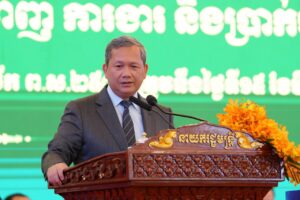
Prime Minister Hun Manet’s recent reaffirmation of Cambodia’s commitment to eliminating all forms of malaria by 2025 provides a timely and powerful basis for sustained cross-sectoral support and domestic investment.
Beyond elimination, Cambodia must also prepare for what comes next: Sustaining zero transmission, integrating malaria services into broader health systems and ensuring that the legacy of elimination is not fleeting. Cambodia’s story is one of resilience, innovation and hope. But to write the final, triumphant chapter and secure a healthier future for its people, strategic investment and domestic ownership must take centre stage.
For the senior policymakers, this is an opportunity to deliver a legacy — one that will be remembered in history alongside other great national milestones.
Dr Huy Rekol is director of the National Center for Parasitology, Entomology and Malaria Control, Ministry of Health, Cambodia. Dr Xavier Chan is executive vice-president Strategy and Programs, APLMA. The views and opinions expressed are their own.
-The Phnom Penh Post-