
Time for Cambodia to adopt delivery units
 Time for Cambodia to adopt delivery units
-Opinion-
Prime Minister Hun Manet may need delivery units to realise the national vision and his policy trademarks. The establishment of the proposed Macroeconomic and National Economic Transformation Unit (MANET), deliberately bearing his name, could send a strong signal and serve as a strategic move to drive results-based policy for the nation’s future.
MANET will play a pivotal role in transforming Cambodia into a competitive, knowledge-based economy with thriving strategic industries.
It is widely recognised that many good policies are not effectively implemented, which means they do not deliver better outcomes and impacts for the people. Chief reasons, among others, are institutional constraints in the coordination and mobilisation of resources, coupled with the absence of key performance indicators (KPIs) for the head of policy executing agencies. These combined causes sluggishness in the implementation.
Internal performance criteria should also be established for ministerial appointments and to foster healthy competition among peers, promoting competent leadership (Cambodia should prepare for generational shift with more frequent changes of ministers, Khmer Times, Editorial, September 5, 2025,).
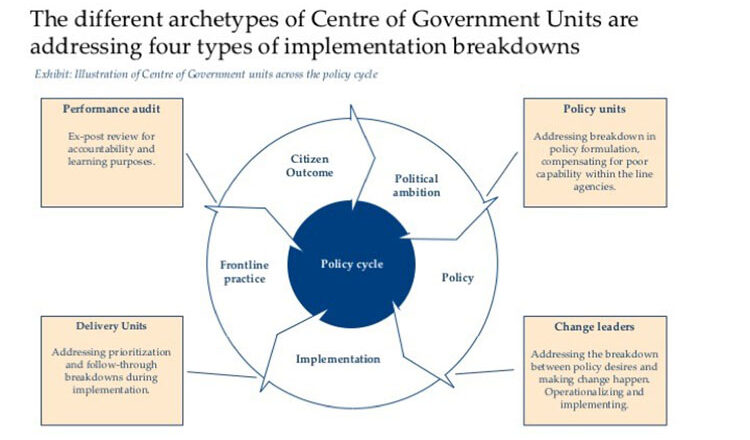
The concept of a delivery or facilitation unit, although initially perceived as a Western innovation originating in the United Kingdom, has demonstrated broad applicability and notable success across diverse contexts globally.
Its intellectual foundations lie in the “stat model” of performance management pioneered by the New York Police Department during the 1990s, whereby a dedicated team systematically collected and analysed operational data, allocated resources to address identified challenges, and continuously evaluated performance outcomes.
Michael Barber subsequently adapted these methodologies within the Department for Education and Employment’s Standards and Effectiveness Unit from 1997. In 2001, concerned with the limited progress on Labour’s first-term commitments and the absence of institutional mechanisms for monitoring delivery of government priorities, Prime Minister Tony Blair established the Prime Minister’s Delivery Unit (PMDU) under Barber’s leadership in the Cabinet Office.
Initially, the PMDU concentrated on enhancing performance in priority sectors, notably health, education, security, and transport (Tracking delivery, Global trends and warning signs in delivery units, Institute of Government, 2017).
MANET can function the same way with specific missions. The unit will act as a centralised strategic entity to drive the nation’s economic transformation. Backed by the to-be-established National Strategic Fund, leading experts and dedicated staff, MANET will facilitate the shift from a traditional resource-dependent economy to a knowledge-based, innovation-driven economy with a particular focus on spearheading investment in strategic industries and the reform agenda.
The unit must have the following features to warrant potential successes:
First, it carries and projects the Prime Minister’s vision on achieving top national development goals and objectives.
Second, it openly recruits and sets up special task forces equipped with strategic investment and industrial knowledge, mandated with clear terms of reference, performance incentives and indicators.
Third, it is allocated resources and given authority to lead, coordinate, and directly execute selective cross-cutting policy measures, such as regulatory reviews and guillotines, proactive trade and investment promotion, strategic finance and investment, technology adoption and skill development, etc.
Fourth, it enables ministries, national institutions, sub-national administrations, and various stakeholders to co-design policies and implementation plans, and to regularly collect data, reports, and insights for comprehensive research, analysis, and evaluation of the policies.
Fifth, it tracks the progress of the set priority policies, identifying bottlenecks and addressing delivery capability gaps. This is achieved through various methods, including using the dashboard, investigating, convening stakeholders, providing technical assistance, and conducting last-mile trouble shootings.
MANET must also support and implement strategic administrative reforms to reduce ballooning political appointments, thereby saving public financial resources and rewarding competent public servants, streamlining and separating public institution functions from mere regulators to proactive facilitators and service providers.
Finally, clear and measurable KPIs must be set as a criterion for office holders to perform and deliver outcomes to earn their position and promotion.
The public wishes no more than the success of Mr Hun Manet’s leadership and mandate, as well as national prosperity.
The author is a Phnom Penh-based geopolitical and security analyst. The views expressed are the author’s own.
-Khmer Times-