Editorial 120 -Every Business Has an Environmental Footprint
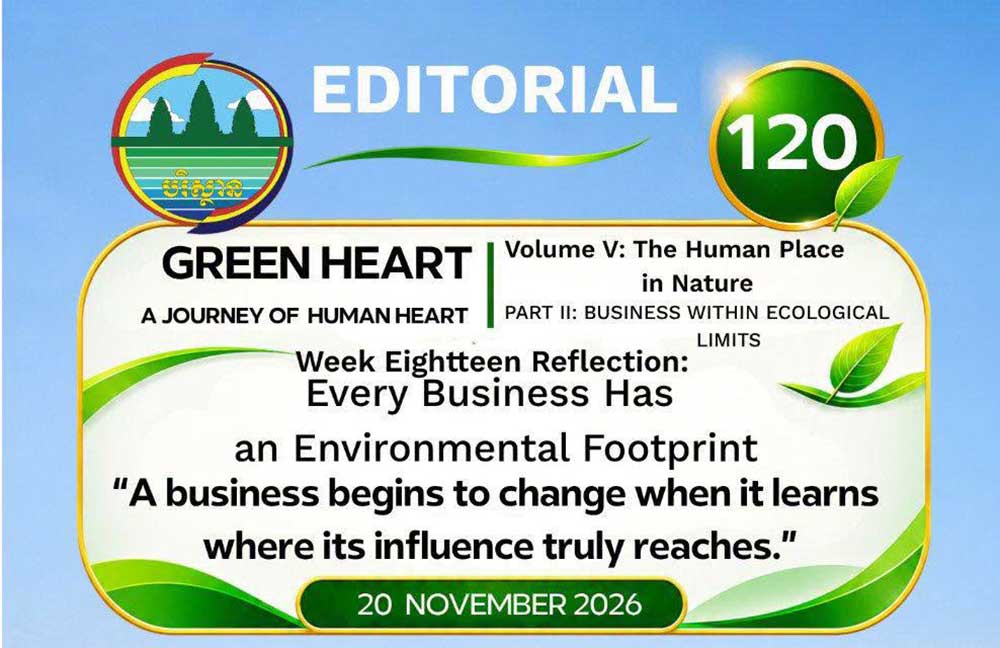 Editorial 120 -Every Business Has an Environmental Footprint
Opening Thought
“A business begins to change when it learns where its influence truly reaches.”
Editorial
A restaurant uses food, water, energy, packaging, transport, equipment, and cleaning materials. A software company uses buildings, devices, electricity, data centers, and travel. A farm, bank, school, hotel, and shop each have environmental footprints.
A footprint may include greenhouse-gas emissions, water use, land use, pollution, material extraction, waste, and effects on biodiversity. Different measures answer different questions. Reducing one impact can sometimes increase another.
Businesses often begin with direct operations: electricity bills, fuel, waste bins, water meters, and workplace conditions. These are important because the company can influence them immediately.
The wider footprint may be larger. Raw materials, suppliers, customer use, transport, product lifetime, and disposal occur across the value chain. A shop selling efficient equipment may create more benefit during customer use than it can achieve in its own office.
Measurement needs boundaries, baselines, and consistent methods. A company should explain what was included, what was estimated, and what remains uncertain. Otherwise, impressive percentages may hide missing categories.
Footprints should guide priorities, not become paperwork alone. Find the largest sources, identify feasible changes, assign responsibility, budget, act, and measure again.
Small businesses may lack staff or data. Simple records can still help: monthly electricity, fuel, water, materials, food loss, and waste. Industry groups, utilities, and public agencies can provide tools and training.
Environmental improvement should join worker safety and product quality. Saving energy by reducing ventilation in a polluted workspace is not a green success. Using less packaging while allowing food to spoil may increase total impact.
Businesses also create positive influence through products and services: repair, clean water, efficient buildings, education, public transport, recycling, restoration, or safer materials. Claims should measure real outcomes and avoid double counting.
The footprint is not a moral label proving that a business is good or bad. It is a map of responsibility.
Once the map is visible, management can move from vague intention toward practical improvement.
A good footprint plan names owners and deadlines. Purchasing may address materials, operations may address energy, finance may approve investment, and leadership may report results. Responsibility becomes effective when it has both a person and a budget.
Buddhist Reflection
Mindfulness notices consequences beyond the immediate transaction. Right livelihood asks whether work meets real needs while reducing harm to workers, communities, other beings, and the future.
Today’s Reflection
Which part of a business footprint may occur far beyond the business location?
Today’s Action
Map the footprint of one familiar business across operations, suppliers, customers, transport, product use, and end of life.
Today’s Pledge
Today I will look beyond appearances and support businesses that measure and improve their full influence.
When we protect nature, we protect all beings—including ourselves.