Denigrators of the world are wrong about Hinduism
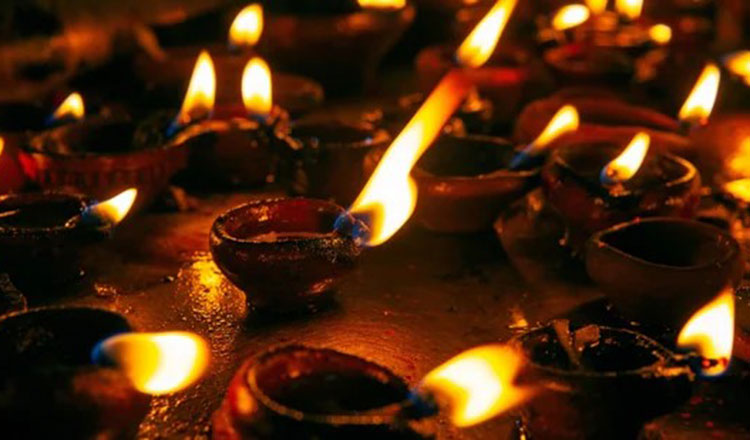 In evolving over millennia, instead of congealing into a brittle set of absolutes, Hinduism fully enables both diversity of opinion and local variations. Shutterstock
#opinion
I have heard uninformed foreigners – and some Indians – denigrate Hinduism for having lakhs of gods. These naysayers argue that Hinduism never had a unified core. No one god, no one religious text, no one supreme temple, no one pope, and no one set of prescribed rituals make it just a collection of diversities that cannot qualify it as a “coherent” religion in the way Abrahamic faiths are.
The high-priestess of American Indology, Wendy Doniger, asks superciliously, “Hinduism (dare I use the ‘H’ word, and may I stop holding up my hands for mercy with quotation marks?), is, like the armadillo, part hedgehog, part tortoise.” The academic ease with which Doniger conflates diversity with disparity is amusing. What she refuses to understand is that the surface diversity that convinces her that there is not one but many Hinduisms is precisely what Hinduism is about. In evolving over millennia, rather than congealing into a brittle set of absolutes, Hinduism has fully enabled both diversity of opinion and local variations, without losing the centrality of its narrative.
Nothing illustrates this better than the remarkable dialectic between Nirguna Brahman (attribute-less cosmic consciousness) and Saguna Ishvara (attribute-full depiction of a personal god). This duality in the perception of divinity is the key to understanding both Hindu philosophy and religion. Assured of the primacy of the nirguna infinite, which is formless, indivisible, omnipotent and immanent in everything, and of which the gods too are an emanation, Hindus have no inhibition in giving full play to the human imagination in creating, embellishing and humanising their saguna deities.
What foreigners, especially those of the Abrahamic faiths for whom divinity is prescriptive and singular, don’t understand is that for the Hindu mind, revelling in the plurality of the divine is an act of devotional joy. It is plural in projection, and singular in belief. The firm anchorage of the one and supreme Brahman, legitimises — without diluting the original concept — the festive variations in the depiction of Ishvara. Indeed, Hinduism provides ample, even exuberant evidence of this.
The pantheon of our gods, the range of attributes we give to them, the myriad ways we worship them, the uninhibited manner in which we portray them, the songs we compose for them, the art we create for them, the rituals with which we venerate them, the delight with which we humanise them, the personal rapport we build with them, is not a sign of mindless primitive polytheism, but the joyous depiction of a vision that is monotheistic in concept and plural in representation – the ability to see the One in the many, and the many in the One.
Why else would we have Maryada Purushottam Ram, the very epitome of rectitude, at one level, and Leela Purushottam Krishna, who defies all notions of conventional divinity, at another level? In truth, both are two sides of the same coin, each portraying the infinity of the Ultimate in myriad ways, and yet, each is a window to that same supreme cosmic consciousness. At the apex is the Trinity – Brahma, Vishnu and Shiva – with their divine consorts. The Devi herself is conceived in multifaceted ways: Uma, Lakshmi, Sarasvati, Durga, Kali and more.
The Bhakti poets explained this beautifully. In Tulsidas’ Ramcharitmanas, Ram sings powerfully in praise of Shiva, and Shiva pays a compelling tribute to Ram, because both are essentially manifestations of the same unity. Overarching the Shaiva-Vaishnava beliefs, the Nirguna Brahman is the only reality; the saguna is the grace of the playful energy of that reality. Tulsidas puts it succinctly: “Aguna saguna dui Brahma svarupa, akath agadha anadi anupa” (The attribute-full saguna, and the attribute-less nirguna, are two aspects of the same Brahman; both are indescribable, unfathomable, eternal and unparalleled). He then compresses tomes of philosophical debate to explain why the nirguna becomes the saguna: “Aguna arupa alakh aja joi, bhagata prem basa saguna ho joi” (That nirguna Brahman, which is attribute-less, imperceptible, indivisible and eternal, becomes the saguna Ishwara to fulfil the love of the devotee).
The ultimate Brahman, therefore, becomes the multidimensional Ishwara to become more accessible to devotees. There is both profundity and compassion in this benevolent transition. People like Doniger, used to religions with a predictable linearity, cannot comprehend this. For her – and so be it – Hinduism will remain an armadillo, part hedgehog, part tortoise.
Pavan K Varma is an author, diplomat, and former Rajya Sabha MP. The views expressed are personal.
-Khmer Times-