Hun Sen urges direct UNCLOS process, rejects bilateral maritime talks with Thailand
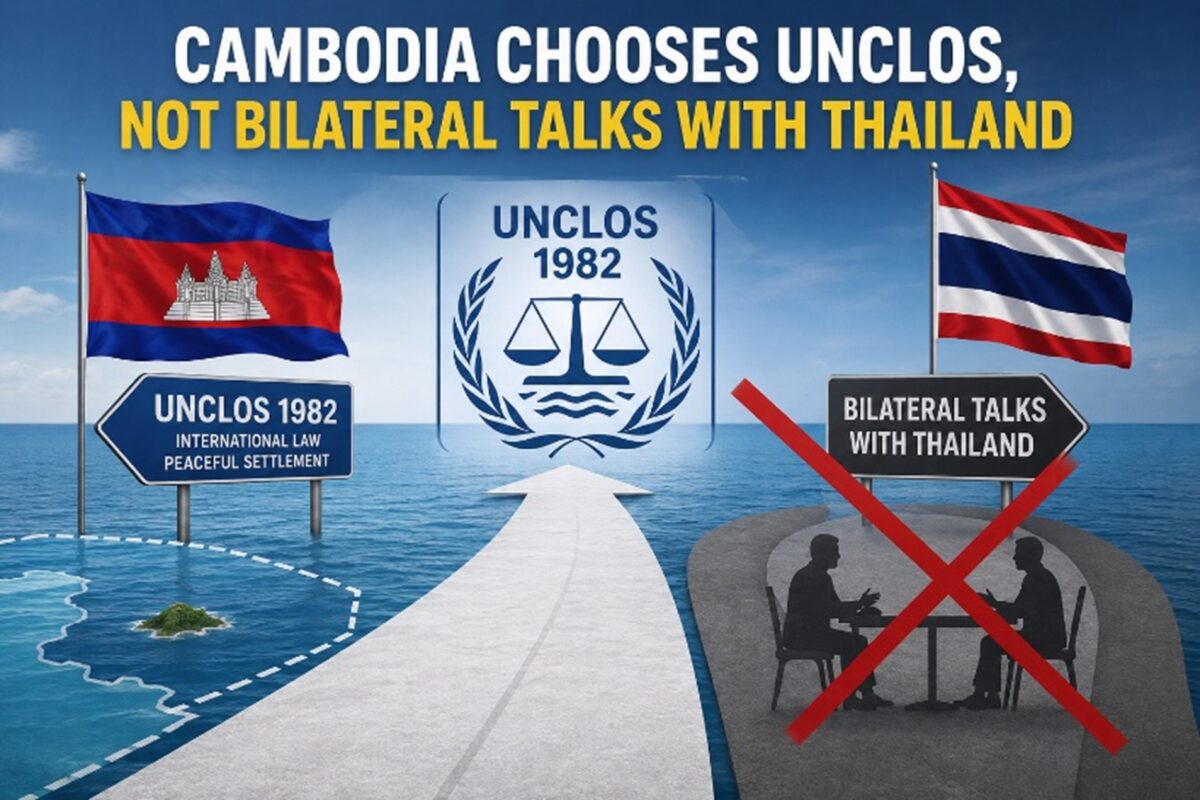 - Cambodian acting head of state Hun Sen urged the government to avoid any new bilateral maritime negotiations with Thailand and instead move directly to international mechanisms under the UN Convention on the Law of the Sea (UNCLOS). AI-generated by The Post-
#National
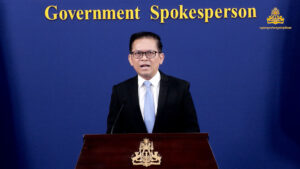
Cambodian Senate president Hun Sen has urged the government to avoid any new bilateral maritime negotiations with Thailand and instead move directly to international mechanisms under the UN Convention on the Law of the Sea (UNCLOS), following what appeared to be conflicting statements from Thailand’s leadership over the future of maritime dispute talks.
Hun Sentook to social media today, May 12, to share his thoughts. He referred to Thai media reports published yesterday, which quoted Sihasak as saying that since Thailand cancelled a 2001 MoU known as MoU 44, the process under UNCLOS should still begin with bilateral negotiations between the two countries.
“If this report accurately reflects the words of the Thai foreign minister, then the phrase, ‘the primary method should first be negotiations between the two parties,’ clearly contradicts Thailand’s own actions,” Hun Sen wrote.
“Thailand unilaterally cancelled the MoU 2001, thereby already dismantling an existing framework for bilateral negotiations concerning the overlapping maritime claims,” he added.
Hun Sen, who is currently serving as acting head of state while King Norodom Sihamoni is abroad, said Cambodia should not pursue any replacement bilateral mechanism with Bangkok.
“In my capacity as acting head of state, I would like to remind the Royal Government not to engage in any bilateral negotiations with Thailand on maritime issues, and instead to proceed directly to the mechanisms provided under the 1982 UNCLOS without waiting for any agreement from the Thai side,” he said.
The statement follows growing confusion over Thailand’s position after apparent differences emerged between Prime Minister Anutin Charnvirakul and Foreign Minister Sihasak.
On May 6, Anutin publicly acknowledged that after Thailand withdrew from MoU 2001, both countries would now have to operate “under the same set of rules” governed by UNCLOS.
“Thailand no longer has the MOU 44, so whatever discussions take place from now on, new rules and frameworks must be agreed upon together,” Anutin said at the time.
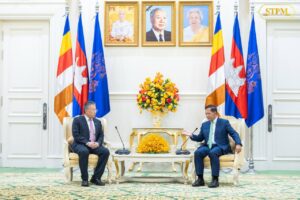
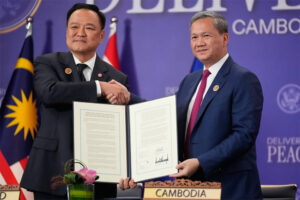
The Thai premier later disclosed that he had informed Cambodian Prime Minister Hun Manet of Thailand’s withdrawal during a meeting on the sidelines of the ASEAN Summit in Cebu on May 11.
According to Anutin, Manet responded that Cambodia had “no alternative” but to pursue compulsory conciliation under UNCLOS, while Thailand supported the use of UNCLOS principles as the common legal framework for future discussions.
However, later the same day, Sihasak appeared to distance Thailand from Cambodia’s position.
Speaking to Thai media, the foreign minister rejected reports suggesting Bangkok had agreed to compulsory conciliation and insisted that any process under UNCLOS should begin with direct bilateral negotiations.
“The most appropriate starting point was for Thailand and Cambodia to negotiate directly and exhaust bilateral talks before considering other mechanisms under the convention,” Sihasak said on May 11.
He also criticised what he called “unilateral Cambodian statements” and argued that compulsory conciliation could not proceed without agreement from both sides.
But on May 12, Sihasak appeared to shift back toward Anutin’s position.
According to reports published by Thai outlet The Nation, the foreign minister said Thailand would discuss maritime claims with Cambodia only under UNCLOS and confirmed that MoU 44 had already been terminated.
“As for MOU 44, we have already terminated it,” Sihasak said. “Thailand and Cambodia will hold talks under UNCLOS.”
He also dismissed reports that Cambodia’s registration of MoU 44 could affect Thailand’s claim over Koh Kut Island, insisting that under UNCLOS “it will be clear that Koh Kut already belongs to Thailand.”
Hun Sen, however, argued that Thailand’s cancellation of the MoU had already eliminated the bilateral framework previously governing maritime negotiations.
“On May 6, I reminded the government not to create a new bilateral mechanism to replace the old bilateral mechanism that Thailand had cancelled,” he wrote.
“We regret Thailand’s cancellation of the MOU 2001, but we also thank Thailand for helping us move toward using international mechanisms instead.” He added.
The dispute intensified after Thailand formally withdrew from MoU 2001, which for more than two decades had served as the principal bilateral framework for negotiations over overlapping maritime claims.
Manet has described the Thai move as regrettable, saying Cambodia had consistently prioritised peaceful bilateral mechanisms under the MoU framework before Bangkok abandoned the arrangement.
Cambodia has since announced plans to invoke compulsory conciliation procedures under UNCLOS, arguing that international law now provides the only viable path forward following Thailand’s unilateral withdrawal from the agreement.
-Phnom Penh Post-