No Robe Can Cover Karma: The Unavoidable Truth of Accountability
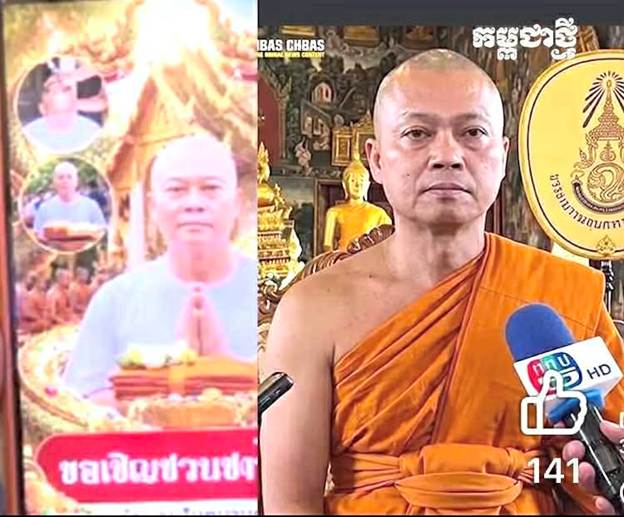 Former Thai Second Army Region military commander Boonsin Padklang is reportedly being ordained as a monk. Social media
#opinion
The recent news that former Thai military commander Boonsin Padklang is preparing to enter the monkhood is being presented by some as a moment of quiet reflection — a transition from the battlefield to the temple. However, in the gravity of this moment, we must speak with honesty: no robe can cover karma.
In the profound teachings of Gautama Buddha, karma is not a symbolic concept or a ritualistic aesthetic. It is real, precise and inescapable. It is a law of cause and effect that follows actions, not appearances. It measures the truth of one’s heart and the consequences of one’s hand — not the ceremony of one’s retirement.
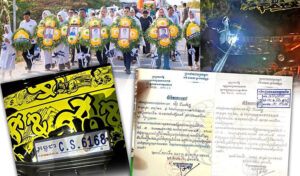
The events along the Cambodia–Thailand border in 2025 were far from routine military maneuverers. They were moments of acute tension that raised harrowing concerns regarding sovereignty, security and, most importantly, the human cost. When military command results in the loss of civilian lives, the death of soldiers, the destruction of family homes and the desecration of sacred pagodas, these are not merely “strategic outcomes”. They are moral consequences.
These actions are also matters of international law. Under the principles upheld by the UN and international humanitarian law, the protection of civilians and cultural heritage is not a choice — it is an obligation. The destruction of religious and cultural sites is an injury to faith, identity and shared history. In both the eyes of the law and the teachings of Buddhism, intention matters, but the weight of the consequence remains.
We must ask ourselves: Can merit-making erase the suffering caused to others?
Buddhist teaching provides a clear, if difficult, answer: No. While merit can be accumulated through good deeds, it does not act as a ledger to “cancel out” wrongdoing that has not been acknowledged or redressed. True merit does not begin with a change of clothes; it begins with the truth.
If actions were taken that caused harm, responsibility must follow. This is not a call for revenge or political posturing; it is a demand for moral clarity and justice. Institutions like the UN and ASEAN exist to replace the rule of force with the rule of law. When lives are lost and sacred spaces are damaged, international norms demand accountability rather than silence.
To step into the monkhood without addressing the shadows of the past risks sending a dangerous message: that those in power can act, lives can be lost and responsibility can simply be set aside once the uniform is removed.
Neither law nor karma allows for such an escape. Karma records every order and every life affected with perfect accuracy. International law does the same through the enduring demand for justice.
One may change their status. One may change their path. One may even change their clothes. But no one can change the truth of what has been done. No robe can cover karma, and no silence can erase responsibility.
Tesh Chanthorn is a Cambodian citizen who longs for peace. The views and opinions expressed are his own.
-Phnom Penh Post-