Price of distraction: Thailand’s manufactured hegemony and domestic policy failure reality
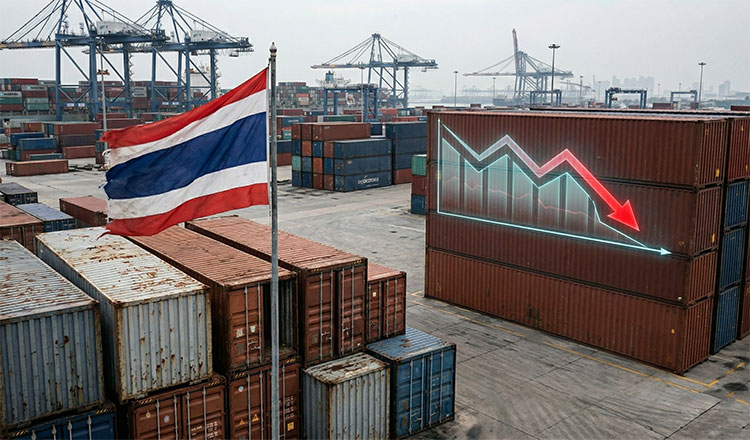 Thailand must be accountable for its war crimes and compensate for its crimes against Cambodian civilians and destruction of economic infrastructure in Cambodia.
#editorial
As we move through 2026, Thailand remains trapped in a self-inflicted cycle of economic stagnation and political paralysis. With household debt suffocating the private sector at 170% of GDP and growth languishing at a dismal 1.5%, the Thai establishment has once again resorted to its most cynical survival strategy: the “rally round the flag” effect. By manufacturing a crisis of “border defence,” the military-backed government is attempting to bury its domestic malfunctions under the rubble of a reckless, illegal invasion of Cambodian territory.
Manufacturing consent through conflict and the glorification of Thai military prowess is a bitter irony when measured against the reality of the ground. By amplifying tensions with Cambodia, the Thai military manufactures the very “threat” it claims only it can solve. This cycle of manufactured crisis ensures the military remains central to the political narrative, diverting the public’s gaze from the reality of the “Sick Man of Asia”.
The tragedy of this strategy is that it is fundamentally self-sabotaging. While the rhetoric of “defending the Motherland” might stir populist fervour, it decimates the investor confidence required to lift Thailand out of its middle-income trap. In an era where the RCEP and ASEAN-centric trade are the only paths to growth, aggressive posturing towards a neighbour disrupts the supply chains and cross-border trade essential for Thai SMEs.
Every baht spent on border security and military hardware is a baht not spent on transitioning Thailand from low-tech manufacturing to high-value industries. Using the border as a political theatre ensures that the national budget remains a tool for military patronage rather than a roadmap for recovery, and that national budgets are funnelled into destructive hardware rather than fixing an economy that is currently failing.
Forcing a neighbour into a manufactured conflict to stabilise one’s own domestic polling is not leadership; it is a confession of policy failure. It reveals a government that has run out of ideas to fix its economy and has decided instead to sell its people a phantom enemy. The irony of this “tough on the border” stance is that it accelerates Thailand’s economic decline, while the military-backed government uses nationalism to maintain its grip on power.
Equally critical, the human cost of this distractionary war is staggering. Thailand’s aggressive incursions have forced more than half a million Cambodian people to flee their homes at the peak of the armed conflict, creating a displaced population stripped of their fundamental rights to decent housing, education, and economic opportunity.
The Thai military’s conduct has shown a flagrant disregard for international norms and the laws of armed conflict. Strategic strikes have not been limited to military outposts but extended to schools, markets, bridges, and sacred places of worship. In a move that defies international obligations to protect global history, the shelling and destruction of the Preah Vihear Temple—a UNESCO World Cultural Heritage site—represents a permanent scar on the world’s shared cultural legacy.
Most harrowing are the documented reports of the use of cluster munitions and toxic gas. These are not the tools of border management; they are instruments of war crimes that will leave a legacy of unexploded ordnance for generations to come.
Beyond the battlefield, the Thai establishment has turned its domestic frustrations towards the most vulnerable: migrant workers. In direct violation of human rights and specific ASEAN instruments designed to protect labour, there have been instances of horrific violence, including rape, committed with impunity against Cambodian migrant workers.
Such systemic abuse is a symptom of a state that has lost its moral compass. By dehumanising a neighbour and migrant workers, the military-led apparatus seeks to create a common enemy to distract a frustrated Thai public from the fact that their own leaders have failed to contain the economic and political crises at home.
Thailand’s leadership must be held to account for the crimes it committed through the invasion and occupation of Cambodia; crimes against Cambodian civilians, including long-term and indirect killings of civilians through cluster munitions and unexploded ordnance; the destruction of civilian and economic infrastructure; and the blatant destruction of world cultural heritage.
A nation cannot bomb its way out of an economic recession, nor can it use the blood of its neighbours to ink over the cracks in its own political system.
The path to Thailand’s recovery does not lie in the occupation of foreign soil or destruction of world heritage; it lies in structural reform, reduction of household debt, and restoration of human rights. Until Bangkok chooses to address its domestic rot rather than projecting it outwards, the Kingdom will remain a prisoner of its own making—and the region will continue to pay the price for its distraction.
Thailand must be accountable for its war crimes and compensate for its crimes against Cambodian civilians and destruction of economic infrastructure in Cambodia.
-Khmer Times-
—————-