Sak Yant: Tracing the Original Roots and Regional Legacy
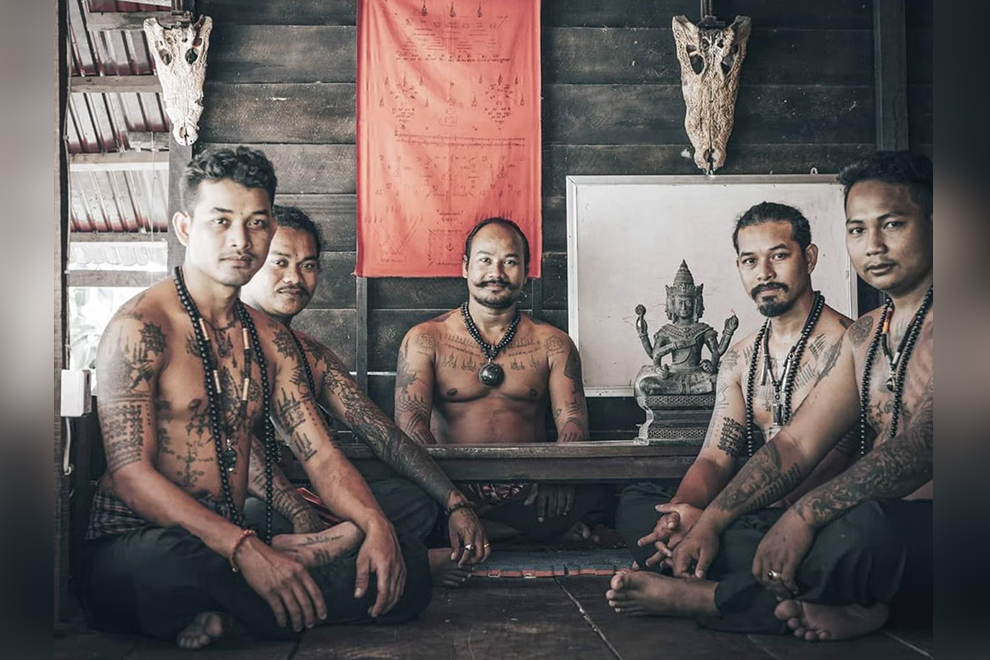 A group of Federation Khmer Sakyantra members with traditional Khmer Sakyant art. Bamboo Sakyant
#opinion
Sak Yant, the sacred tattoo tradition known for its spiritual power and protection, has long been associated with Thailand. However, historical and cultural evidence suggests that its original roots can be traced back to ancient Cambodia, during the time of the Khmer Empire.
The foundation of Sak Yant lies in the concept of yantra — sacred geometric designs used in Hinduism and early Buddhism. These symbols were widely practiced across the Khmer Empire, which dominated much of mainland Southeast Asia between the 9th and 15th centuries. Evidence of these sacred forms can still be seen in temple carvings and inscriptions, especially at Angkor Wat, where Sanskrit and Pali texts reflect deep spiritual and ritual traditions.
Historically, Khmer warriors are believed to have used sacred tattoos for protection, strength and good fortune in battle. These early practices demonstrate that the spiritual system behind Sak Yant existed in Cambodia long before it became widely recognised elsewhere.
In later centuries, the tradition was adopted and further developed in Thailand. Buddhist monks and spiritual masters, known as Ajarn, refined the practice into a structured ritual that includes blessings, chants and symbolic meanings. Today, temples such as Wat Bang Phra are internationally known centres for Sak Yant tattooing.
Thailand has played a key role in preserving and promoting Sak Yant, transforming it into a globally recognised cultural and spiritual practice. Despite this, the deeper historical roots of its symbols and meanings remain closely linked to Khmer civilisation.
Understanding Sak Yant requires recognising both its origin and its evolution:
• Its origin lies in Cambodia
• Its modern development and global popularity are driven by Thailand
This shared heritage reflects the interconnected history of Southeast Asia, where culture and tradition have long crossed borders and evolved together.
Tesh Chanthorn is a Cambodian citizen who longs for peace. The views and opinions expressed are his own.
-Phnom Penh Post-
———————