Crisis leadership needed now more than ever
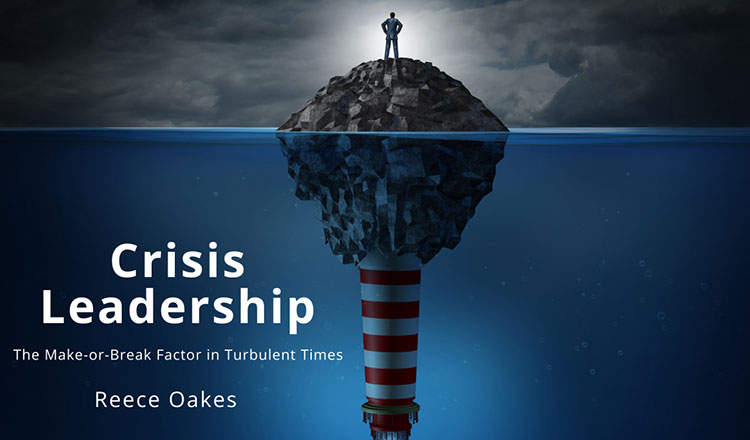 When the storm hits, will your leadership rise to the challenge? Linkedin
#opinion
Crises have become a defining feature of our time. From pandemics and wars to economic shocks and climate disasters, governments and institutions increasingly operate in environments marked by uncertainty, speed, and disruption. In such moments, leadership is often judged not by intentions but by the ability to organise effective responses under pressure.
Yet many crises reveal a recurring problem: leaders respond heroically but systems respond chaotically. The absence of a structured crisis leadership architecture often leads to confusion, slow decision-making, fragmented communication, and erosion of public trust.
Effective crisis leadership therefore requires more than courage or charisma. It requires a clear structure that enables rapid sensemaking, coordinated action, credible communication, and forward-looking innovation.
A practical crisis leadership framework can be organised around five interconnected components.
The leadership core: Direction and legitimacy
At the centre of any crisis response is the leadership core. This is where strategic direction is set and key decisions are made. In times of uncertainty, institutions need a focal point of authority capable of prioritising actions, allocating resources, and maintaining accountability.
The leadership core must also uphold legitimacy. Crises inevitably generate fear, misinformation, and political contestation. When leaders demonstrate transparency, responsibility, and ethical accountability, they strengthen the public trust that is essential for effective crisis response.
Without legitimacy, even the best crisis strategies will struggle to gain public cooperation.
The sense-making cell: Understanding the crisis
The first challenge in any crisis is understanding what is actually happening. Situational awareness often lags behind unfolding events, and misinformation can quickly spread.
A dedicated sense-making cell plays a crucial role in addressing this challenge. Its task is to collect and analyse information, track emerging risks, identify early warning signals, and continuously update the operating picture.
In fast-moving crises, leaders must make decisions with incomplete information. A strong sense-making function reduces uncertainty by providing leaders with the most accurate and timely analysis possible.
The operations cell: Turning decisions into action
Decisions alone do not solve crises. Execution does.
The operations cell translates leadership direction into immediate action. It coordinates resources, manages logistics, implements policies, and ensures that decisions are actually delivered on the ground.
This function is particularly critical in complex crises involving multiple agencies and stakeholders. Without effective operational coordination, responses become fragmented and slow.
An effective operations cell ensures that institutions move from deliberation to delivery.
Communication and legitimacy: Protecting trust
In the digital age, crises unfold not only in the physical world but also in the information space.
The communication and legitimacy cell manages internal and external communication during crises. Its responsibilities include providing accurate updates, countering misinformation, and framing the crisis truthfully.
Credible communication protects public trust and maintains morale within institutions. When leaders communicate clearly and consistently, citizens and stakeholders are more likely to cooperate with difficult decisions and emergency measures.
When communication fails, confusion and distrust often worsen the crisis itself.
The plan-ahead and innovation cell: Preparing the future
Crises rarely end quickly. Even as institutions respond to immediate challenges, leaders must also prepare for the next phase.
The plan-ahead and innovation cell focuses on the medium-term horizon. It scans emerging trends, tests new approaches, and prepares strategies for recovery and renewal.
Innovation often emerges during crises because existing systems prove inadequate. Leaders who encourage experimentation and learning can transform crises into opportunities for institutional improvement.
In this sense, crisis leadership is not only about survival—it is also about transformation.
Four stages of crisis leadership
This leadership structure becomes most effective when applied across the full lifecycle of a crisis.
The first stage is pre-crisis readiness. Institutions must invest in preparation before disasters strike. This includes building contingency plans, establishing communication channels, training personnel, and strengthening early warning systems.
Preparation does not eliminate crises, but it significantly reduces their impact.
The second stage is acute crisis response. During the initial shock of a crisis, leaders must prioritise protection of lives and critical systems. Clear mission direction, rapid coordination, and credible communication become essential.
Speed and clarity often determine whether a crisis escalates or stabilises.
The third stage is adaptive stabilisation. Once the immediate shock subsides, institutions must shift from emergency response to adaptive management. This phase involves coordinated problem-solving, coalition-building, and experimentation with new solutions.
Crises evolve, and leadership must evolve with them.
The final stage is recovery and renewal. Effective leaders ensure that crises become catalysts for learning. Institutions must evaluate what went wrong, repair damaged trust, and redesign systems to enhance resilience.
A crisis that produces no lessons will almost certainly be repeated.
Leadership for an era of permanent crisis
The world is entering what many analysts describe as an era of “permanent crisis.” Geopolitical competition, wars and conflicts, technological disruption, supply chain fragility, environmental pressures, and global health risks are likely to produce more frequent and complex shocks.
In this environment, leadership must become more institutionalised and less improvised. Crisis response should not depend solely on individual heroism but on systems that allow leaders and institutions to act quickly, coherently, and responsibly.
The difference between chaos and resilience often lies in whether institutions have built the structures needed to lead through uncertainty.
Crisis leadership, ultimately, is not simply about managing disasters. It is about protecting societies, preserving legitimacy, and guiding institutions toward recovery and renewal when the world turns chaotic.
Chheang Vannarith is Chairman of National Advisory Council. The views here are his own.
-Khmer Times-
—————-