CMAC head: Thailand trying to turn ‘elephants into ants, ants into elephants’
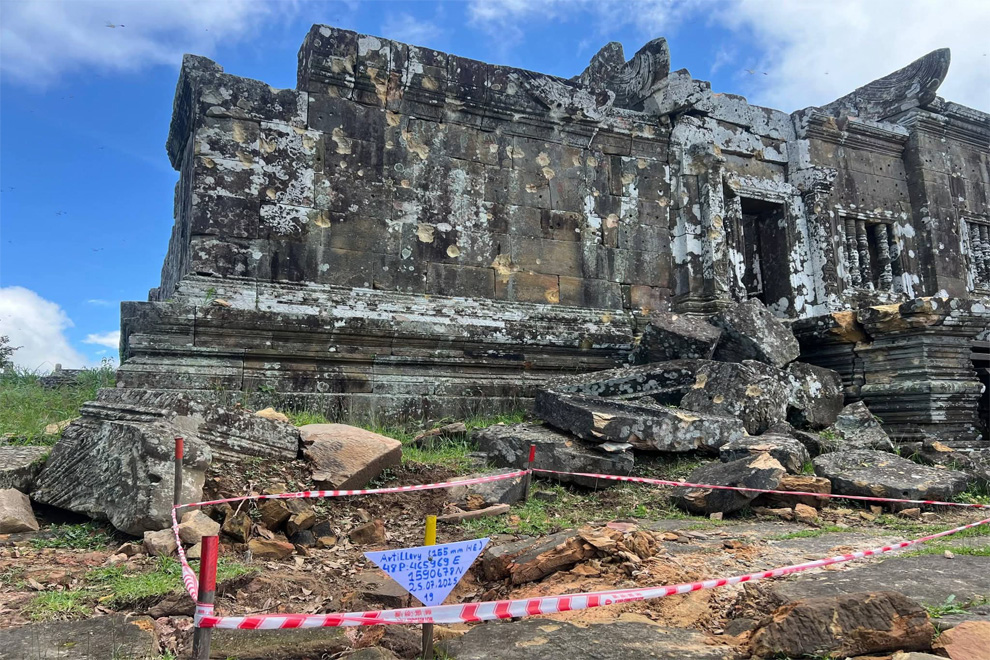 CMAC identified this impact crater, caused by a Thai 155mm artillery round, near the Preah Vihear temple. CMAC
Heng Ratana, director-general of the Cambodian Mine Action Center (CMAC), has hit back at Thailand, accusing it of distorting facts and slandering Cambodia over unexploded munitions, border violations and landmines.
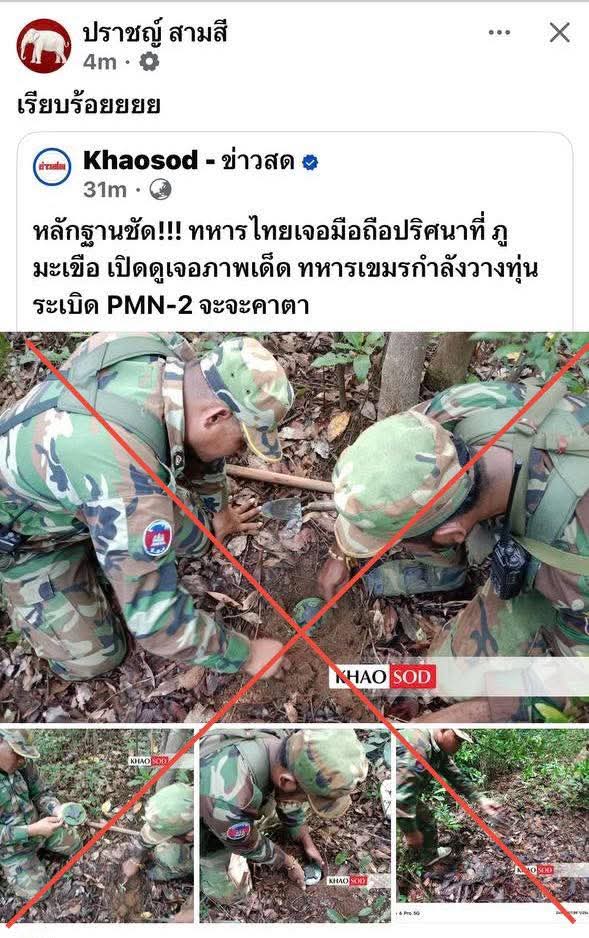
He likened Thailand’s actions to an attempt to “turn an elephant into an ant and an ant into an elephant” by concealing its own brutality and fabricating stories — most recently the claim that soldiers in Cambodian army uniforms had planted landmines.
In a series of social media posts, Ratana presented concrete examples to refute Thailand’s accusations.
MK-84 bomb manufactured in 1996
Ratana recalled the case of a one-tonne MK-84 bomb dropped by an F-16 fighter jet in Thma Daun village, Kork Mon commune, Oddar Meanchey province.
He explained that Thailand has falsely accused Cambodia of trying to pass off remnants from the 1970-1973 US bombing campaign as modern Thai munitions.
He dismissed the claim, noting that the MK-84 bomb was manufactured in 1996, while a MK-82 bomb dropped on Wat Tamone Sen Chey was produced in 2023.
“How can bombs manufactured in 1996 and 2023 be remnants of the 1970–1973 war?” he questioned, noting that five other unexploded bombs remain buried at the site.
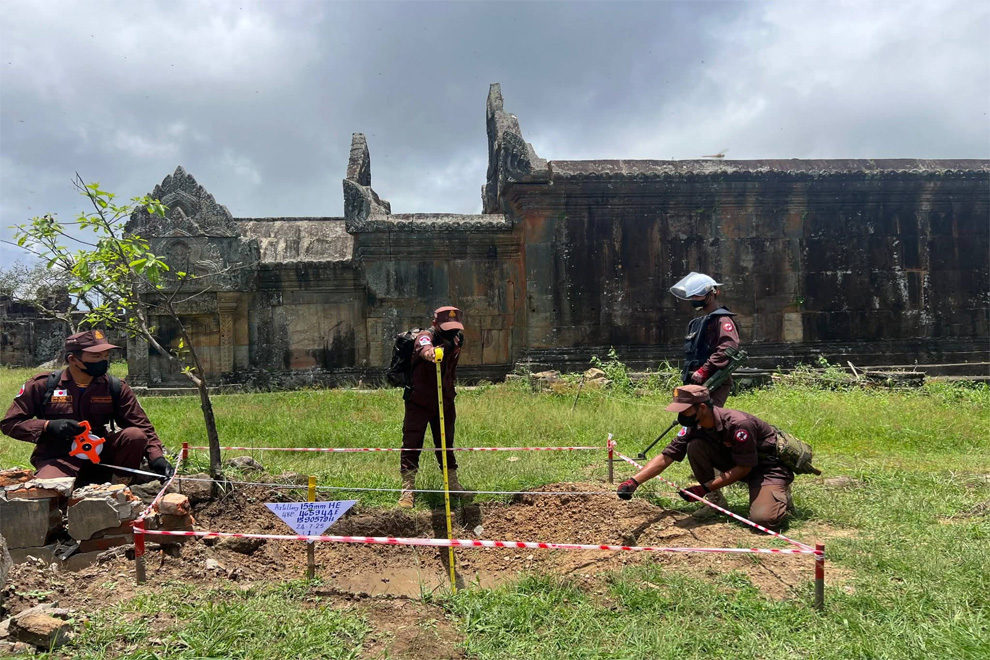
Damage to Preah Vihear Temple
Ratana also referred to the destruction of Preah Vihear Temple caused by 155mm shells, cluster munitions and other types of explosives.
He said that when images of craters and damage appeared online, Thailand accused Cambodia of digging craters to discredit Thailand.
“Once again, Thailand tried to play the victim,” he said.
Landmines in the border area
On the landmine issue, Ratana noted Thailand has accused Cambodia of planting new PMN-2 mines in Thai territory.
He called the allegation unreasonable, pointing out that the area in question is disputed land that cannot be clearly defined as belonging to either country.
Ratana stressed that in today’s era of artificial intelligence and technological advancement, the international community is wise enough to assess such matters.
“Bombs such as MK-82, MK-84 and cluster munitions have clear origins — manufacturers, sellers, transporters and users,” he said.
The Phnom Penh Post